Lying Ab Press
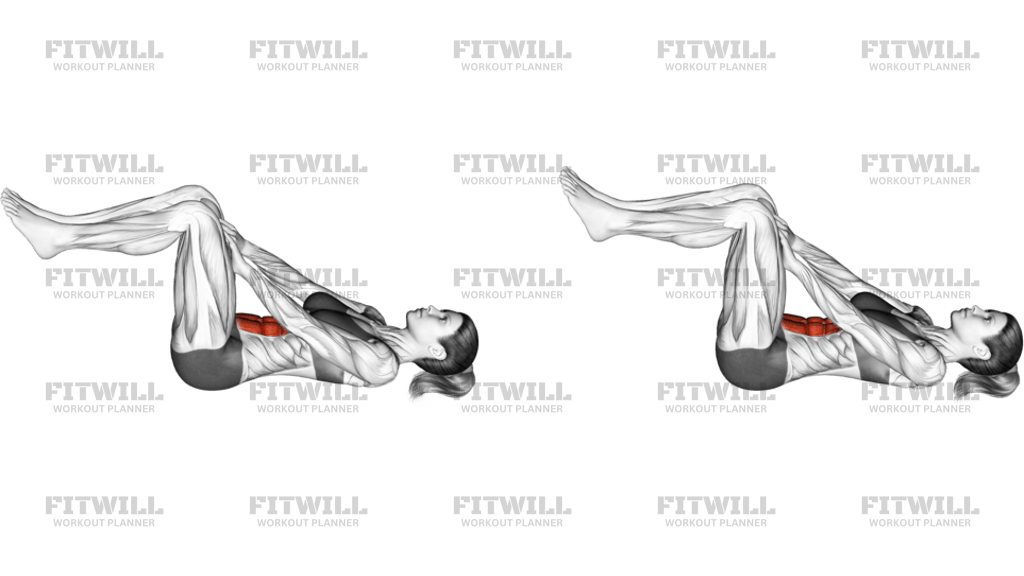
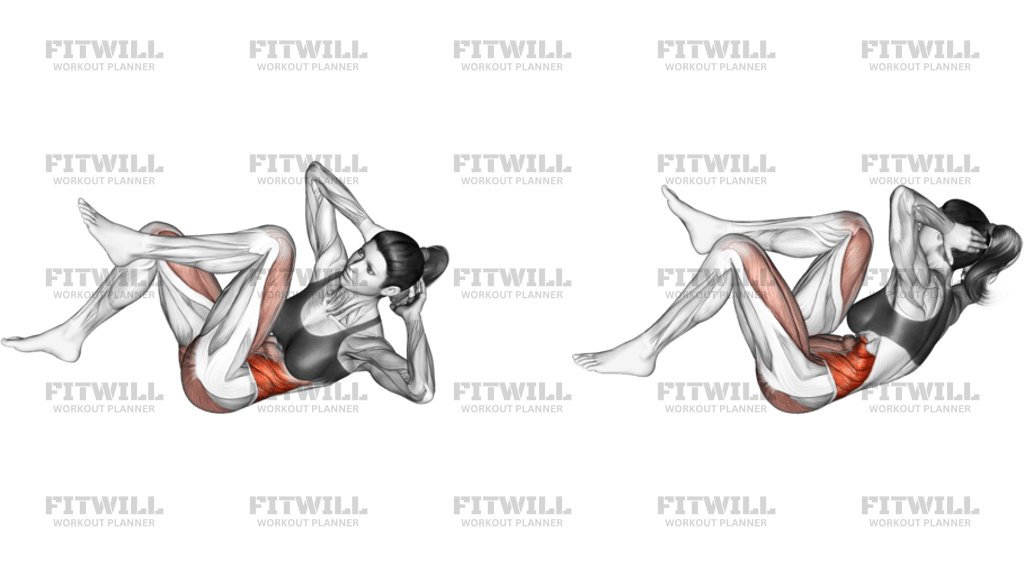
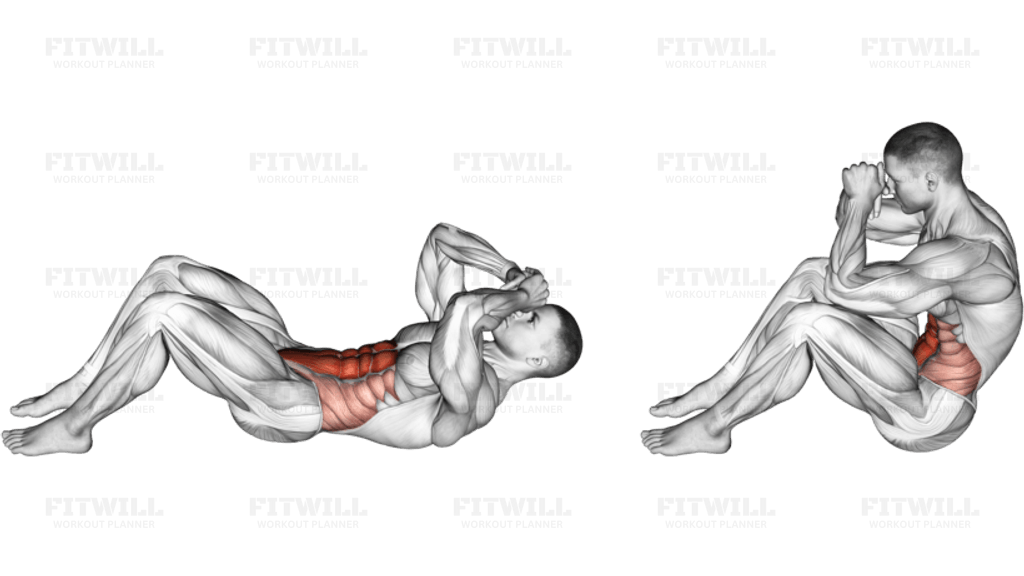
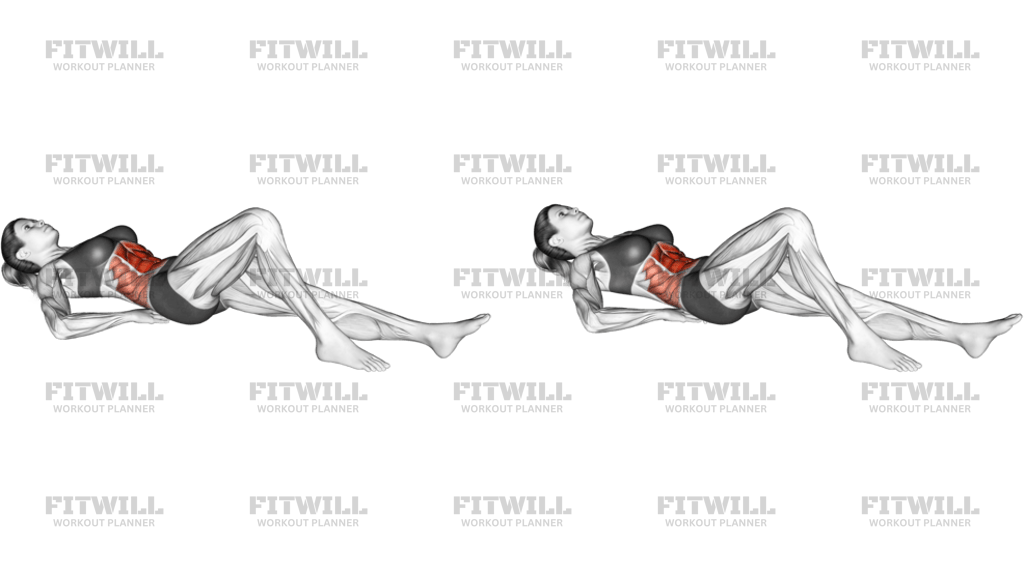
Lying Ab Press is a floor-based core drill performed in a tabletop position. You lie on your back with your hips and knees bent, feet lifted, and your hands pressing into the fronts of your thighs. The exercise combines a small upper-body curl with an isometric hand-and-thigh press, so the abdominal wall has to hold the ribcage and pelvis together instead of letting the body collapse into the floor or turn the movement into a hip-driven crunch.
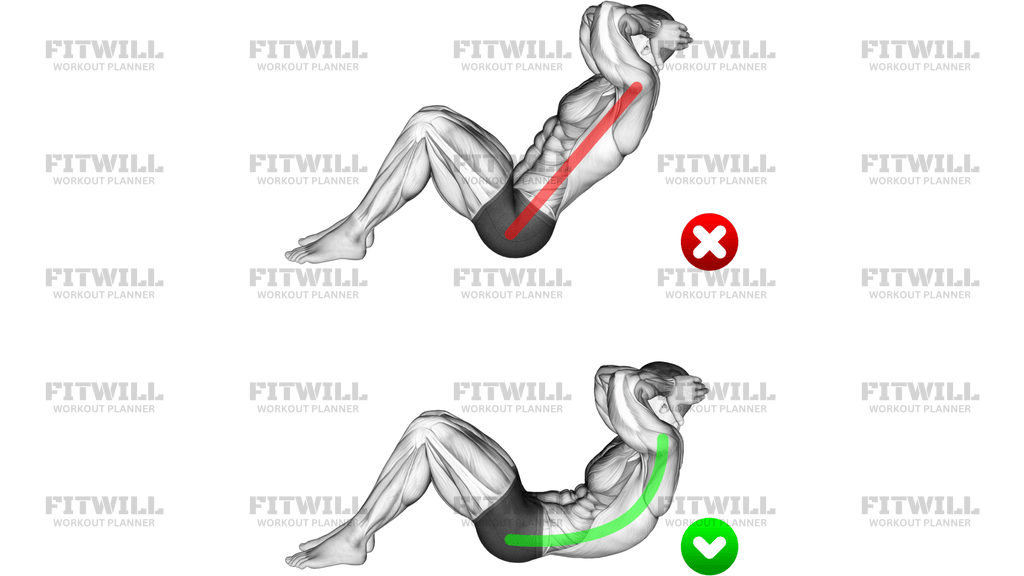
The main emphasis is the rectus abdominis, with the obliques, transverse abdominis, and hip flexors helping to stabilize the trunk and legs. That setup matters because this drill is won or lost by body position: if the ribs flare, the low back arches, or the thighs drift away from the hands, the tension shifts out of the abs and into the neck or hips. The image shows a controlled, compact position for a reason, since the exercise is meant to teach the trunk to brace cleanly under pressure.
Start by flattening the lower back gently into the floor, then curl the head and shoulders just high enough to keep the upper back active without turning the rep into a full sit-up. From there, press the hands into the thighs and let the thighs resist back into the hands. The result should feel like a strong abdominal clamp: short, deliberate, and stable. Breathe out as you create tension, then keep the breath short and controlled so the brace stays consistent.
This movement works well in warm-ups, core circuits, rehabilitation-style trunk work, or as accessory training when you want abdominal tension without heavy spinal loading. Beginners can use it because the lever is simple and the load is just body weight, but the position still demands precision. If the hip flexors dominate, shorten the curl or bring the knees a little less tightly toward the torso. If the neck or lower back starts to take over, end the set and reset instead of chasing more range or longer holds.
Use Lying Ab Press when you want clean trunk control, not momentum. The best sets are the ones where the legs stay quiet, the ribs stay down, and the pressure between hands and thighs never turns into a shrug or a rock. Done well, it teaches the abs to stabilize the torso in a position that carries over to bracing, lifting, and any exercise where the midsection has to stay organized under load.
Fitwill
Log Workouts, Track Progress & Build Strength.
Achieve more with Fitwill: explore over 9600 exercises with images and videos, access built-in and custom workouts, perfect for both gym and home sessions, and see real results.
Start your journey. Download today!




Instructions
- Lie on your back with your hips and knees bent to about 90 degrees and your feet lifted off the floor.
- Reach both arms straight toward the fronts of your thighs so your hands are positioned just above the knees.
- Gently curl your head and shoulders off the floor until your ribs stay pulled down and your lower back stays heavy.
- Press your hands into your thighs and let the thighs press back so the abs have to resist the force.
- Keep the knees stacked over the hips and do not let the legs drift toward your chest or away from the start position.
- Exhale as you create the press, then keep the tension steady with short, controlled breaths.
- If you are doing reps, release only enough to reset the brace, then press back into the next rep without rocking.
- Lower your shoulders and legs with control when the set is finished, then fully relax before repeating.
Tips & Tricks
- The goal is abdominal pressure, not maximum arm force, so match the press from the hands with an equal press from the thighs.
- Keep your chin slightly tucked and your gaze up to the ceiling so the neck does not take over the work.
- If your hip flexors cramp, back the knees a little farther away from the chest and shorten the lever.
- Keep the rib cage anchored down; if the ribs pop up, the abs lose the line of tension.
- A firm exhale usually improves the brace more than holding your breath and pushing harder.
- Think about pulling the front of the pelvis toward the ribs instead of flaring the chest or arching the lower back.
- Use short holds or small controlled pulses; big up-and-down motion turns this into a crunch instead of an ab press.
- End the set as soon as you start rocking, jerking, or losing pressure between the hands and thighs.
Frequently Asked Questions
What muscle does Lying Ab Press target most?
The rectus abdominis is the main target, with the obliques and transverse abdominis helping to stabilize the trunk.
Is Lying Ab Press more of a crunch or an isometric hold?
It is mostly an isometric abdominal press with a small upper-body curl, not a full crunch or sit-up.
Where should my hands and legs be positioned?
Your hands should press into the fronts of your thighs while your hips and knees stay bent in a tabletop position.
Why do I feel this in my hip flexors?
If the knees drift too close to the chest or the torso loses its brace, the hip flexors start taking over the movement.
Can beginners perform this exercise?
Yes. Beginners usually do best with short holds, a small curl, and very controlled breathing.
What is the biggest form mistake?
The most common error is letting the low back arch off the floor and turning the press into a neck- or hip-driven effort.
How long should each rep or hold last?
Start with short holds of about 5 to 15 seconds or brief controlled pulses, then extend only if the brace stays solid.
How can I make it harder without adding weight?
Keep the shoulders slightly higher, extend the knees a little farther from the torso, or lengthen the hold while keeping the ribs down.