Hip Flexor Stretch Rear Foot Elevated
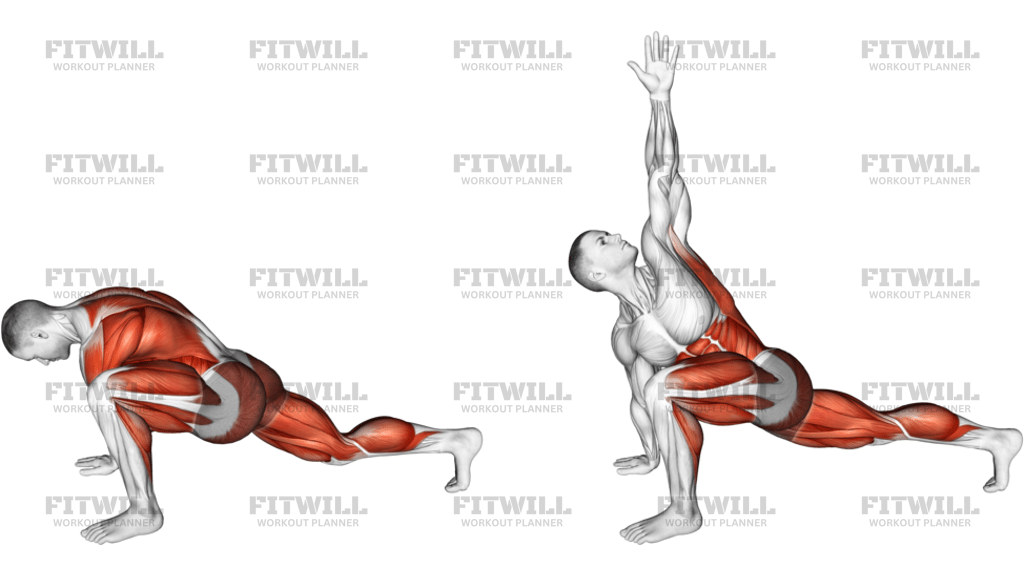
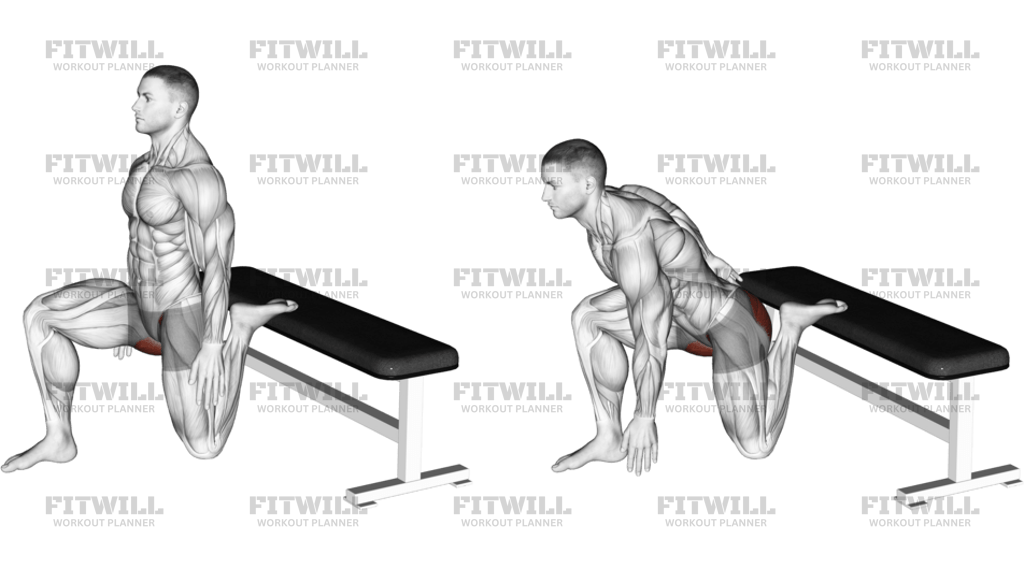
Hip Flexor Stretch Rear Foot Elevated is a rear-foot-elevated half-kneeling stretch that opens the front of the hip and thigh on the leg that is supported behind you. The rear foot sits on the bench while the rear knee stays on the mat, which creates a long line through the hip flexors, rectus femoris, and surrounding quad tissue when you shift forward correctly. It is a bodyweight mobility drill, not a strength lift, so the value comes from position, breathing, and how cleanly you control the pelvis.
The setup matters because the stretch changes completely if the low back takes over. When the pelvis stays square and the ribs stay stacked over the hips, the tension stays in the front of the rear hip instead of turning into lumbar extension. A gentle glute squeeze on the elevated-leg side helps posteriorly tilt the pelvis and makes the stretch feel sharper without needing a bigger, riskier lunge.
Use the exercise to restore hip extension after sitting, running, squats, lunges, or conditioning work. It is especially useful when the front of the hip feels short, pinchy, or locked up and you want a controlled way to lengthen it without loading the spine. A low, stable bench or box works best, because too much height usually pulls the body into compensation before the target tissues are ready.
Good reps are slow and deliberate. Start tall, set the front foot far enough forward to protect the front knee, then shift the hips forward until you feel the stretch build along the front of the rear hip and upper thigh. Keep breathing through the stretch, avoid bouncing, and back off if the sensation moves into the low back, the front of the front knee, or the ankle on the rear foot.
This movement is a strong fit for warmups, cooldowns, and mobility blocks, and it also works well between heavier lower-body sets when you need a reset without fatigue. The goal is a clean, repeatable position that leaves the hip feeling longer and more open, not a forced range. If you can keep the torso calm, the pelvis tucked, and the rear-side glute active, the stretch becomes much more effective and much safer.
[ Workout Log & Planner ]
Put your next workout in Fitwill
Keep your plan and training log ready when you are.


Instructions
- Place a mat in front of a stable bench or box and kneel with your rear knee on the mat and your rear foot/instep supported on the bench behind you.
- Step the front foot forward far enough that the front heel stays down and the front shin can stay close to vertical.
- Square both hips toward the front and stack the ribs over the pelvis before you move into the stretch.
- Lightly tuck the tailbone and squeeze the glute on the rear-leg side so the stretch starts in the front of the hip instead of the low back.
- Shift the hips forward a few inches until you feel a firm stretch through the front of the rear hip and thigh.
- Keep the rear knee pointed down and the front knee tracking in line with the toes as you settle into the end position.
- Breathe slowly and hold the position without bouncing, forcing, or arching the lower back.
- If you want more stretch, reach the arm on the rear-leg side overhead while keeping the pelvis tucked and the ribs down.
- Ease back out of the stretch with control, reset your stance, and repeat on the other side.
Tips & Tricks
- A low bench or box usually gives the best result; high setups often pull you into a back arch before the hip opens properly.
- If the stretch disappears when you stand taller, your front foot is probably too close to the bench.
- Keep the rear-side glute active the whole time; that is what turns this from a vague lunge into a real hip flexor stretch.
- A small posterior pelvic tilt is more useful than forcing a deeper lunge.
- Exhale as you settle into the end range to help the ribs drop and the hip open.
- If the front knee feels stressed, shorten the range and move the front foot a little farther away.
- Keep the rear foot supported and relaxed on the bench; if the ankle is cranked, use a lower surface or more padding.
- The stretch should feel strong in the front of the rear hip and quad, not sharp in the low back or groin.
- Hold each side long enough to let the tissue settle, but do not force the end position by pushing through pain.
Frequently Asked Questions
What does Hip Flexor Stretch Rear Foot Elevated stretch the most?
It mainly targets the front of the rear hip, especially the hip flexors and upper quadriceps on the elevated-leg side.
Can beginners perform this exercise?
Yes. Beginners usually do well with a low bench, a shorter stance, and a light glute squeeze to keep the stretch controlled.
Why do I feel this in my low back instead of my hip?
Your pelvis is probably tipping forward and your ribs are flaring. Tuck the tailbone, squeeze the rear glute, and keep the torso stacked.
Should the front shin stay vertical in this stretch?
Mostly, yes. A more vertical shin usually keeps the front knee comfortable and lets the stretch stay in the rear hip.
How long should I hold the rear-foot-elevated hip flexor stretch?
A 20-40 second hold per side is a practical starting point, with a few rounds if you need more opening.
Can I raise the arm on the same side as the rear leg?
Yes. Reaching overhead on the rear-leg side can intensify the stretch as long as you keep the ribs from arching.
What kind of bench or box should I use?
Use something stable, low, and non-slip. A surface that is too high makes it harder to keep the pelvis square.
When is this stretch most useful?
It is especially useful after lower-body training, running, long periods of sitting, or any session where the hip flexors feel tight.