Plyo Side Lunge Stretch
Plyo Side Lunge Stretch is a dynamic lateral mobility drill that opens the inner thighs, hips, glutes, and ankles while asking the torso to stay organized as you shift from side to side. It is best thought of as an active stretch rather than a static hold: you load one leg, lengthen the other, and move with enough control to keep the stretch productive instead of sloppy.
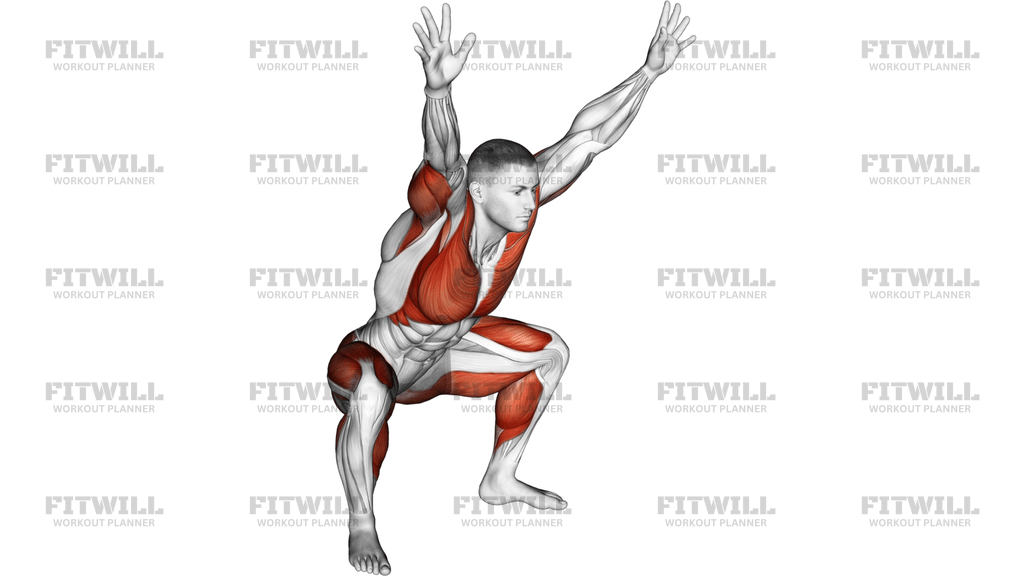
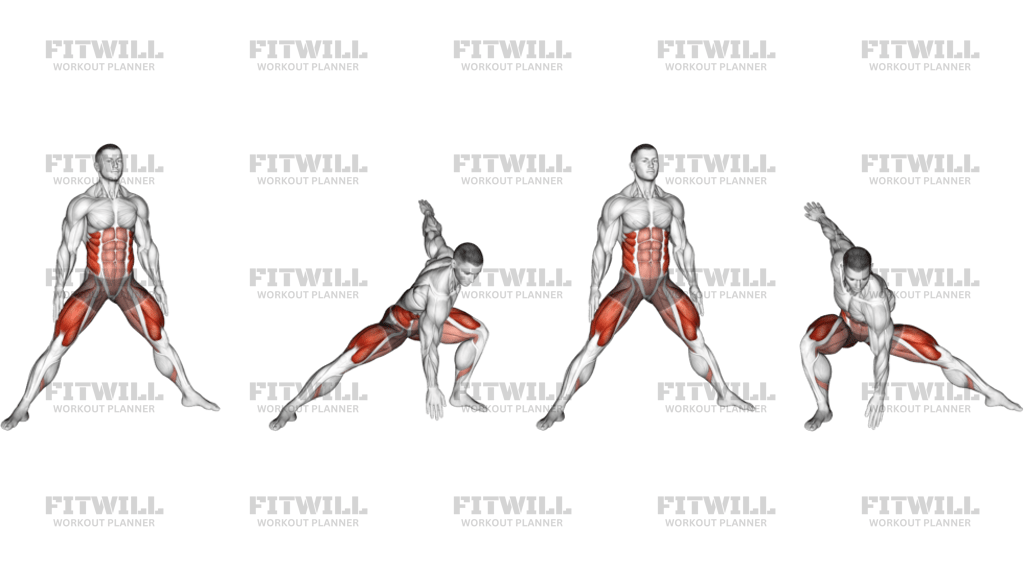
The image shows a wide stance, one knee bending deeply while the opposite leg stays long, one hand reaching toward the floor, and the other arm reaching overhead. That setup matters because it lets you bias the adductors and the side of the hip on the straight leg while keeping the chest open enough to avoid rounding through the lower back. The reach overhead also helps create length through the side body, which is a useful part of the position for athletes who need lateral mobility.
To perform it well, shift your hips sideways and slightly back as you sink into the lunge, then come through center and change sides under control. Keep the planted foot grounded, let the bent knee track in line with the toes, and avoid collapsing all your weight onto the inside edge of the foot. The movement should feel athletic and deliberate, not like a deep forward fold or a knee twist.
This drill fits well in a warm-up before squats, lunges, change-of-direction work, or any session where the hips need to move freely in the frontal plane. It can also work as part of a mobility circuit or recovery block if you keep the range calm and pain-free. If your groin is tight, shorten the stance and use a smaller shift at first. If the floor reach forces your trunk to round, stay higher and keep the ribs stacked over the hips.
The main goal is repeatable quality: smooth side-to-side transitions, steady breathing, and a stretch that feels strong but controlled. When the position is right, you should feel the adductors lengthening on the straight leg, the bent side glute doing work to support the shift, and the trunk staying tall enough to keep the movement clean. That combination makes the exercise useful as both a mobility drill and a movement prep drill for lower-body training.
[ Workout Log & Planner ]
Put your next workout in Fitwill
Keep your plan and training log ready when you are.


Instructions
- Stand on an exercise mat with your feet wider than shoulder width and your toes turned slightly out so you have room to shift side to side.
- Keep your chest lifted, ribs stacked over your hips, and your arms relaxed before you start the first rep.
- Shift your hips toward one side and bend that knee while the opposite leg stays long and the foot stays flat on the floor.
- Let the bent-side hip sit back as if you are reaching toward that heel, not dropping your torso straight down.
- Reach the inside hand toward the floor or shin for balance while the opposite arm reaches overhead to open the side body.
- Keep the bent knee tracking over the middle toes and avoid letting it cave inward as you settle into the stretch.
- Pause briefly in the deepest pain-free position, then push the floor away to return through center with control.
- Repeat to the other side with the same range and pace, breathing steadily through each transition.
Tips & Tricks
- Treat the movement like a guided mobility drill, not a race to the floor.
- Keep the straight leg long and loaded through the whole foot so the stretch stays in the inner thigh instead of dumping into the knee.
- If your chest is folding toward the ground, reduce the depth and keep more length through the spine.
- Use the overhead arm to open the side of the body; do not crank the torso into a hard twist.
- A narrower side-to-side shift is better than forcing a huge range that makes the hips rock and the knees collapse.
- Breathe out as you sink into the lunge and inhale as you drive back through center.
- If the groin feels pinchy, shorten the stance and stay a little higher.
- Keep the transitions smooth and grounded; the drill should look athletic, not bouncy.
Frequently Asked Questions
What does Plyo Side Lunge Stretch work most?
It mainly loads the adductors, inner thighs, hips, and glutes while the trunk stabilizes the side-to-side shift.
Is this more of a warm-up or a static stretch?
It is best used as a dynamic warm-up drill because the side-to-side transition keeps the hips active and ready to move.
Do I need to touch the floor with my hand?
No. Reach only as far as you can while keeping the chest lifted and the bent knee stable.
How wide should my stance be?
Wide enough to shift into one hip without rounding the back, but not so wide that you lose control of the planted foot.
Why is my bent knee drifting inward?
The stance is probably too wide or the hip is dropping too fast. Reduce the range and keep the knee tracking over the middle toes.
Can beginners do this movement?
Yes. Start with a shorter stance, smaller range, and slower side-to-side shifts until the position feels natural.
What should I feel on the straight leg?
You should feel a strong lengthening along the inner thigh and sometimes the side of the hip, not a sharp pull in the knee.
Does the word "plyo" mean I need to jump?
No. In this drill it points to an athletic, continuous side-to-side pattern. Keep it grounded unless your program specifically calls for a jumping variation.