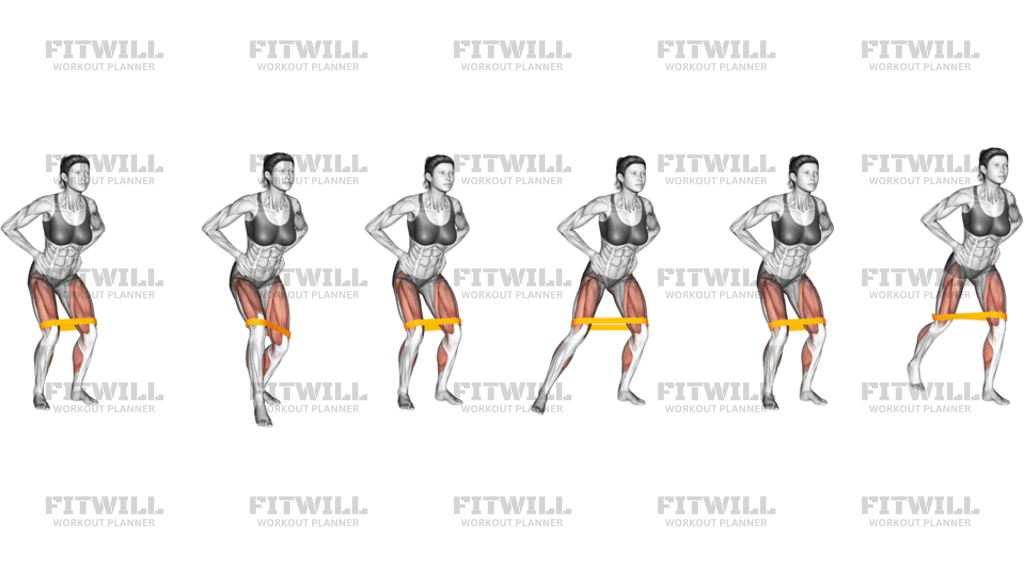
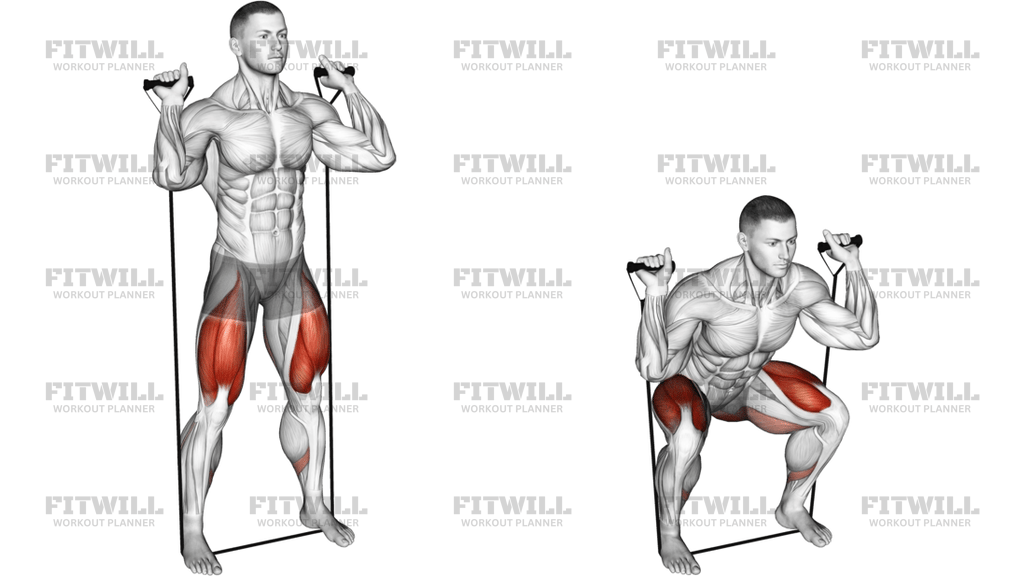
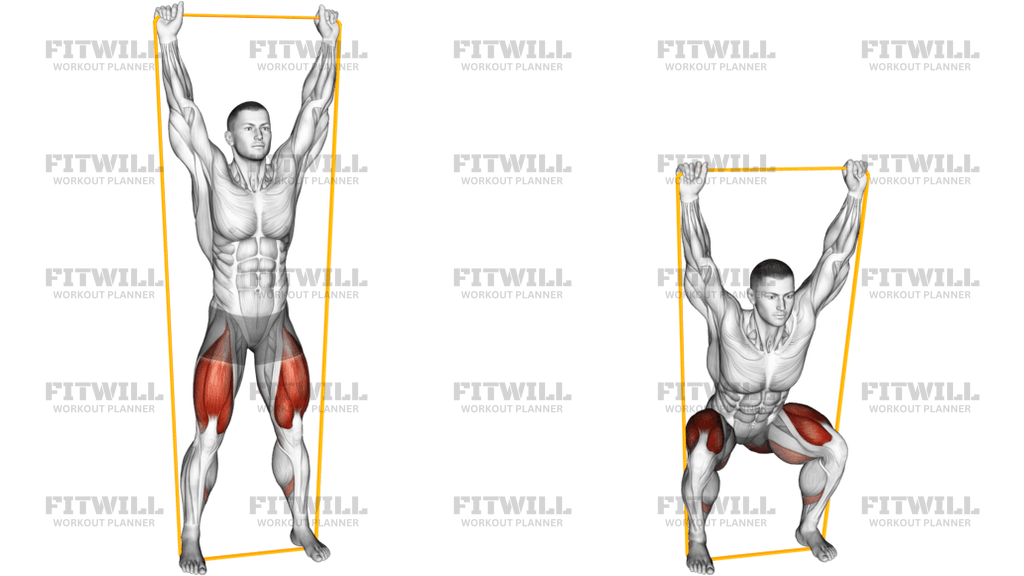
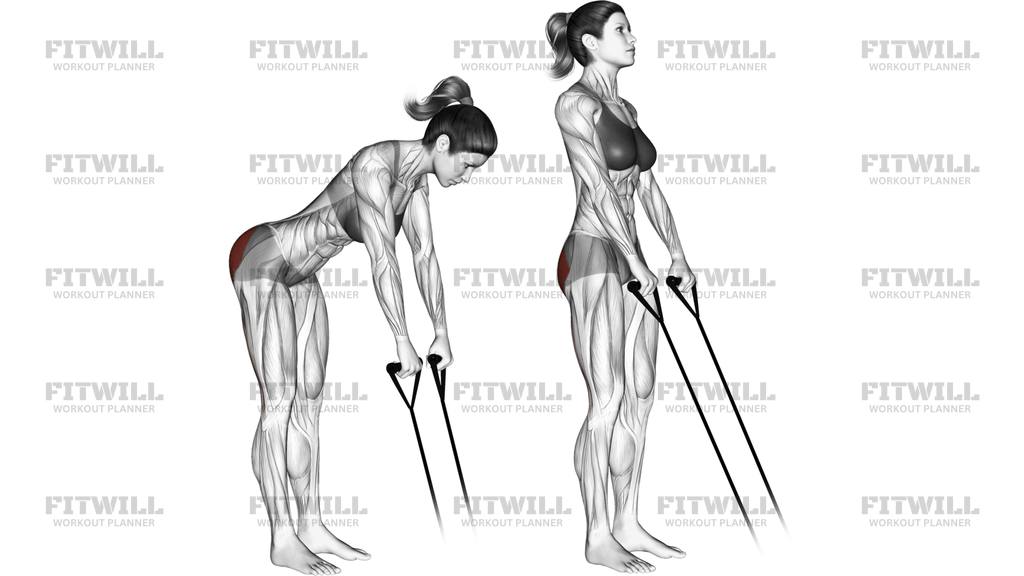
Bar Band Split Squat
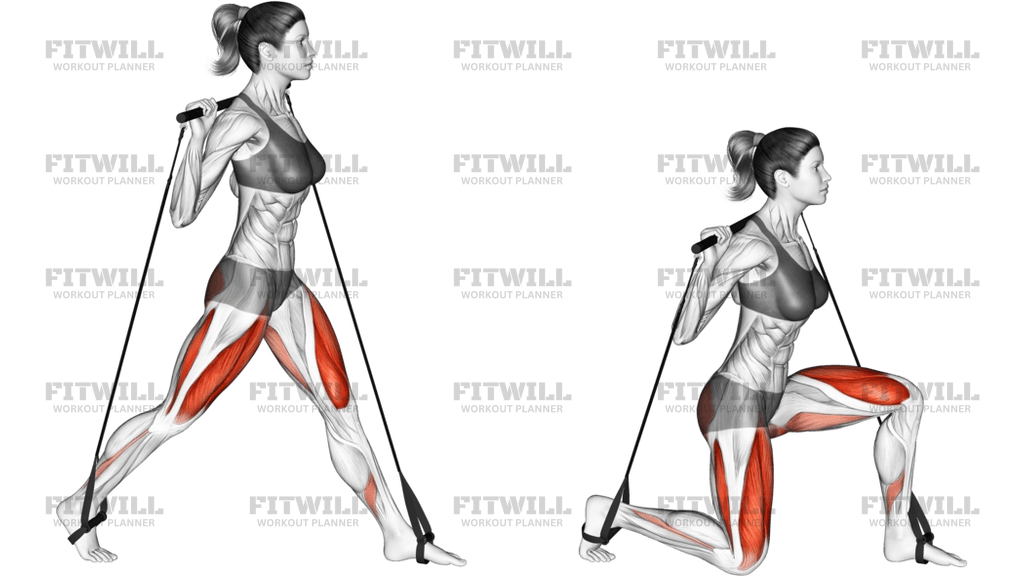
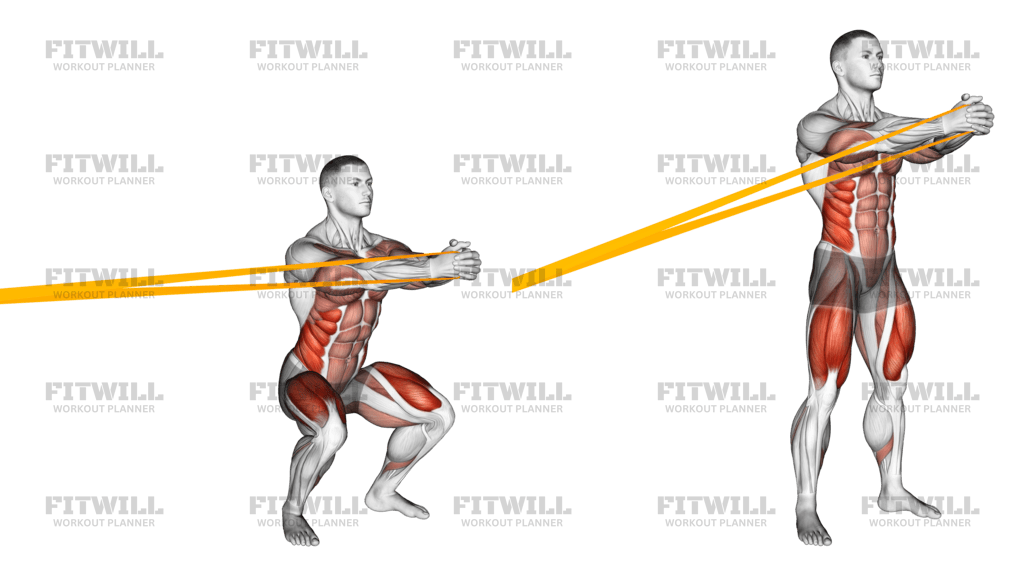
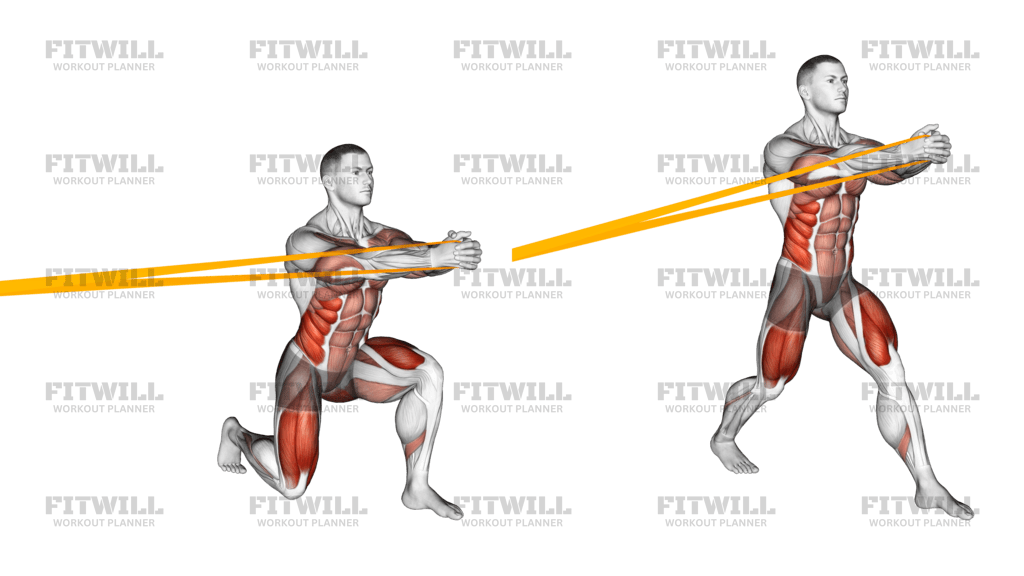
Bar Band Split Squat is a split-stance lower-body exercise that loads one leg more heavily while the back leg helps you balance and control the path. In this version, the band adds tension through the standing phase, so the rep feels smooth at the bottom and more demanding as you rise. That makes it a practical way to train the glutes, thighs, and hip stabilizers without needing a machine.
The setup matters because a small stance change can shift the work from the front leg into the hips, low back, or balance strategy. Set the feet in a long enough split stance to keep the front heel planted and the rear knee able to travel down without forcing the pelvis to twist. Keep the torso tall, ribs stacked, and shoulders level so the band tension stays organized instead of pulling you out of position.
At the bottom of the rep, the front knee should track in line with the toes while the rear knee moves toward the floor under control. The front leg does most of the driving, with the glute and quad working together to stand you back up. If the stance is correct, you should feel tension through the front hip and thigh rather than a rushed bounce off the rear leg or a collapse at the knee.
The band changes the strength curve, so the top half of the rep usually feels harder than a bodyweight split squat. Use that to your advantage by lowering slowly, pausing briefly near the bottom if needed, and exhaling as you drive up. Keep the handles or upper-body support steady so the trunk does not rotate or lean forward to steal work from the legs.
This exercise fits well in lower-body accessory work, unilateral strength training, warm-ups, and home sessions where you want a simple setup with continuous tension. It is also a good teaching drill for split squat mechanics because the band gives clear feedback when the stance is too short, the front heel rises, or the torso drifts. Choose a resistance level that lets you keep the front leg loaded and the movement smooth from the first rep to the last.
[ Workout Log & Planner ]
Put your next workout in Fitwill
Keep your plan and training log ready when you are.


Instructions
- Step into a long split stance with the front foot flat and the rear foot on the ball of the foot.
- Set the band so it is secure and bring the handles or upper-body support to shoulder height.
- Stack your ribs over your pelvis, keep your chest tall, and brace before the first rep.
- Lower by bending the front knee and hip while the rear knee travels down toward the floor.
- Keep the front knee tracking over the middle toes and let the front heel stay planted.
- Descend until the rear knee is close to the floor or the front thigh reaches a controlled depth.
- Drive through the front heel and midfoot to stand back up without bouncing off the bottom.
- Finish tall with level shoulders, then reset your stance before the next rep.
- Inhale on the way down and exhale as you push through the standing phase.
Tips & Tricks
- If the front heel wants to rise, shorten the stance slightly and keep more pressure through the midfoot.
- A small forward torso lean is fine, but folding at the waist turns the rep into a back-dominant hinge.
- Keep the front knee from caving inward; think about pushing it gently in line with the second and third toes.
- Lower under control for at least two seconds so the band does not yank you into the bottom position.
- Choose a band that lets you finish every rep with the hips and trunk still square to the front.
- Let the rear knee skim close to the floor, but do not dump weight onto it or bounce out of the bottom.
- If the band pulls your shoulders forward, reset your upper back before the next rep and keep the handles steady.
- Stop the set when the front leg can no longer drive the stand-up phase without twisting or shifting sideways.
Frequently Asked Questions
What does Bar Band Split Squat train most?
It mainly trains the front leg glute and thigh, with the rear leg and core helping stabilize the movement.
Where should my feet be in the split stance?
Set the front foot flat enough that the heel stays down and the rear foot far enough back for the rear knee to drop comfortably.
Should the rear knee touch the floor?
No. It can come close, but it should not slam into the floor or force you to lose tension in the front leg.
Do I need to keep the torso perfectly upright?
A small forward lean is normal, but the torso should stay braced and controlled instead of folding over the front thigh.
Can beginners use the band version safely?
Yes, if they start with a short range of motion, a light band, and a stance that feels stable before adding load.
Where should the band or handles sit during the rep?
Keep the band secure and the handles or upper-body support level near shoulder height so the band tension stays consistent.
What is the most common form mistake?
The biggest mistake is letting the front knee cave inward or bouncing out of the bottom instead of driving smoothly through the front foot.
How do I make the exercise harder without changing the movement?
Use a stronger band, slow the lowering phase, or hold the bottom position briefly before standing up.