Bar Band Squat
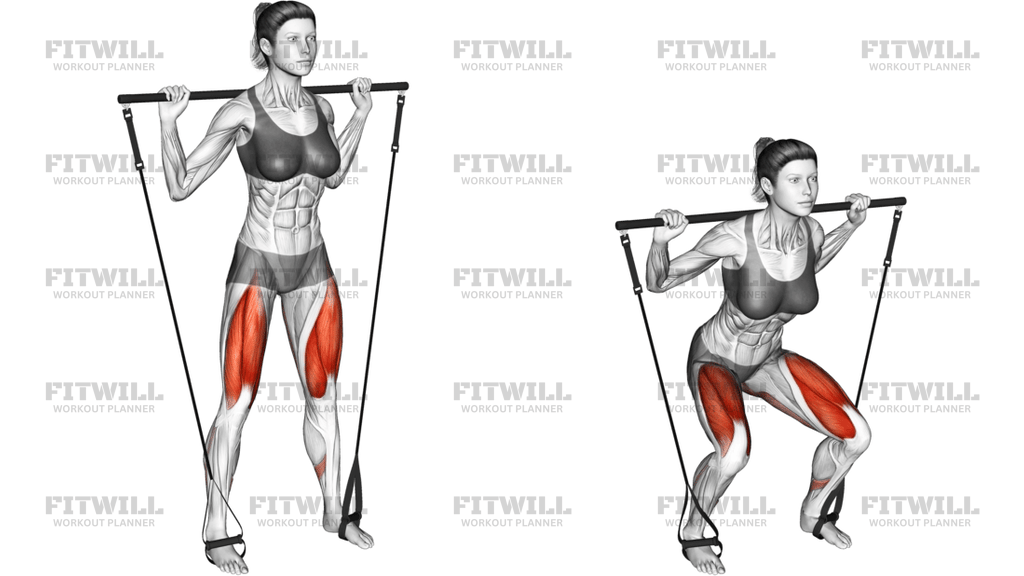
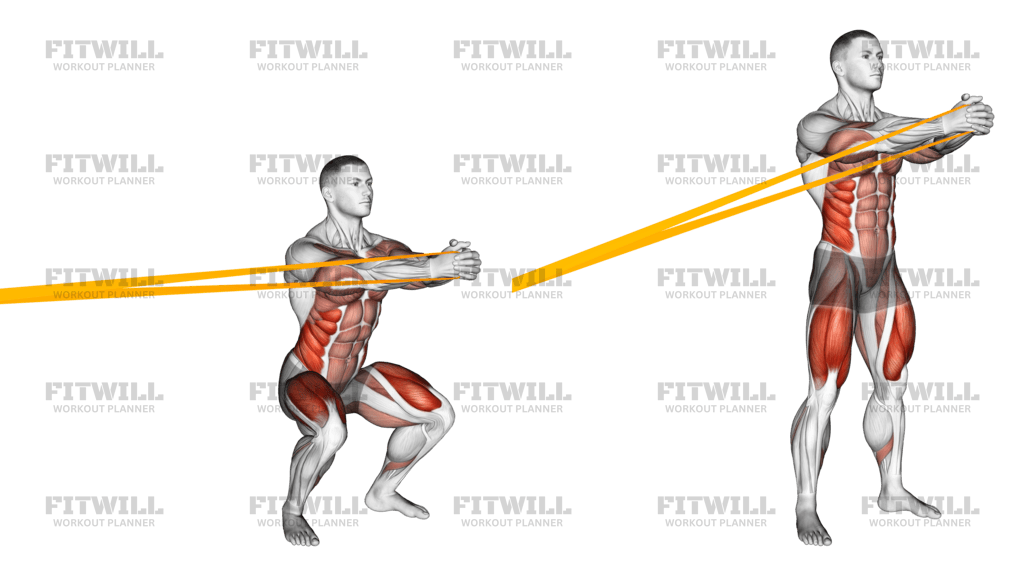
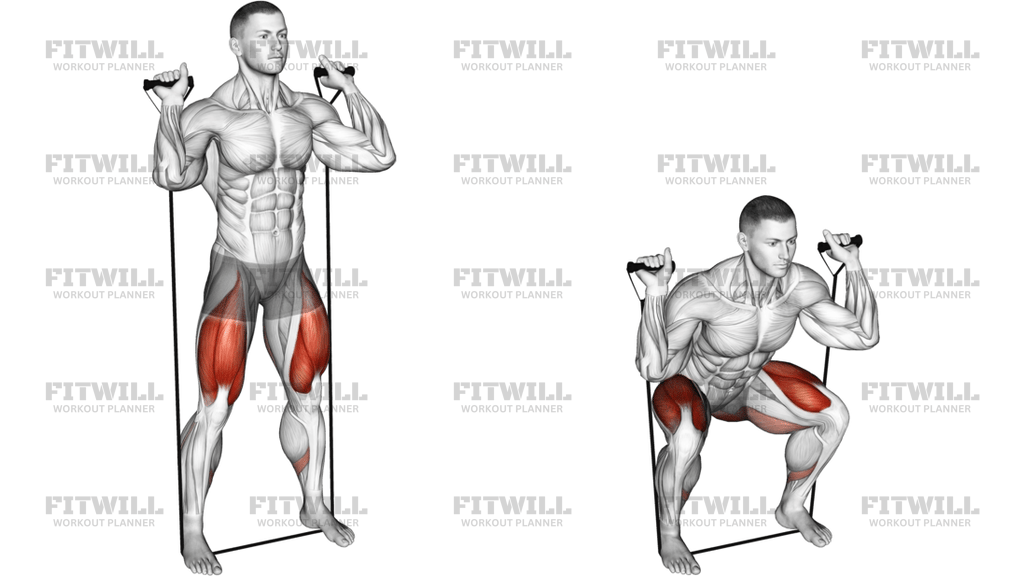
Bar Band Squat is a band-resisted back squat done with a bar across the upper back and bands anchored under the feet. The bands add more tension as you stand up, so the hardest part of the rep is usually near the top. That makes the exercise useful for building leg drive, hip extension, and squat control while still keeping the movement pattern familiar.
The main training emphasis is on the thighs, especially the quads, with the glutes, hamstrings, core, and lower back helping to keep the torso and pelvis steady. In anatomy terms, the primary work comes from the quadriceps, with support from the gluteus maximus, biceps femoris, rectus abdominis, and erector spinae. Because the load is attached both to the bar and to the bands, the setup has a big effect on how balanced and useful each rep feels.
A clean repetition starts with the bar settled securely on the upper back and the feet placed evenly on the bands. Step out far enough to create tension before you squat, but not so far that the bands pull you off balance or force your knees inward. Keep the ribs stacked over the pelvis, brace before you descend, and let the knees track in line with the toes as you sit between the feet.
On the way up, drive through the full foot and stand tall against the band resistance without bouncing out of the bottom or leaning back at the top. The bands should challenge the ascent without turning the lift into a jerky, forward-drifting hinge. A smooth tempo matters here because the resistance changes through the range of motion, and the goal is to control that change instead of fighting it.
This exercise is useful in strength blocks, lower-body accessory work, or as a variation when you want squat practice with a different resistance curve than a standard barbell squat. It can be scaled by changing band tension, stance width, and depth, but it should always feel stable enough to keep the bar path clean. If the bar shifts, the feet collapse, or the knees cave, the resistance is probably too aggressive for the current setup.
[ Workout Log & Planner ]
Put your next workout in Fitwill
Keep your plan and training log ready when you are.


Instructions
- If you are using a rack, unrack the bar and settle it across the upper back with the bands running down to the floor under each foot.
- Stand on the bands with both feet flat, then step out until you feel even tension on both sides before you start the first rep.
- Set your feet about shoulder-width apart, turn the toes slightly out, and keep the pressure centered through the whole foot.
- Grip the bar just outside shoulder width, pull the upper back tight, and keep the chest proud without over-arching the lower back.
- Inhale, brace your torso, and sit down by bending at the hips and knees at the same time.
- Lower under control until your thighs reach your preferred squat depth while the knees track in line with the toes.
- Drive up through the midfoot and heels, standing against the band tension without letting the torso fold forward.
- Finish the rep by extending the hips and knees fully, then reset your brace before starting the next repetition.
Tips & Tricks
- Set the band tension before you squat, not after you are already moving. If the bands pull you off balance at the start, step in or out until both sides feel even.
- Keep the bar pinned to the same spot on the upper back for every rep. If it rolls up or down the traps, the squat path will usually get sloppy too.
- Let the knees travel forward and out in line with the toes instead of locking them behind the feet. This keeps the squat centered and reduces hip shifting.
- Control the descent because the bands only get tighter as you stand. A fast drop makes the bottom harder to own and can throw you out of position.
- Keep the whole foot planted. If the heels lift, shorten the depth slightly or reduce band tension before adding more load.
- Use a stance that lets you reach depth without the hips tucking hard at the bottom. A slightly wider stance often works better than forcing a narrow one.
- Exhale through the sticking point on the ascent, but keep the torso braced until the rep is finished. Letting air out too early can collapse the chest.
- Stop the set when the bar drifts forward, the knees cave inward, or one foot starts taking more load than the other. Those are setup problems, not signs to grind harder.
Frequently Asked Questions
What muscles does Bar Band Squat work most?
It mainly targets the quadriceps, with the glutes, hamstrings, core, and lower back helping to stabilize the bar and pelvis.
Where should the bar sit during Bar Band Squat?
The bar should rest across the upper back on the traps or rear deltoids, not on the neck. Keep it secure before you start the descent.
How far apart should my feet be on the bands?
Start around shoulder-width and adjust from there until you can keep the feet flat and the knees tracking over the toes through the whole rep.
Do I need a squat rack for this exercise?
A rack is helpful for unracking and reracking the bar, but the working part of the movement happens while you are standing on the bands and squatting under control.
How deep should I squat on Bar Band Squat?
Go as low as you can while keeping the bar stable, the heels down, and the knees tracking cleanly. Depth should match your mobility and control, not force.
What makes the band resistance different from a regular squat?
The bands make the rep harder as you stand up, so the top half of the lift becomes more demanding and you have to control the ascent instead of just driving out of the bottom.
Is Bar Band Squat beginner friendly?
Yes, if the band tension is light enough to keep the bar path steady and the stance is comfortable. Start conservatively and earn the range before loading it harder.
What is the most common form mistake?
People usually step too far onto the bands or rush the descent, which makes the knees cave, the bar drift, or the torso tip forward.
How can I make the exercise harder without changing the weight?
Use a stronger band, a slightly slower descent, or a deeper squat if your mobility and bar position stay clean.