Kneeling Side Leg To Kick
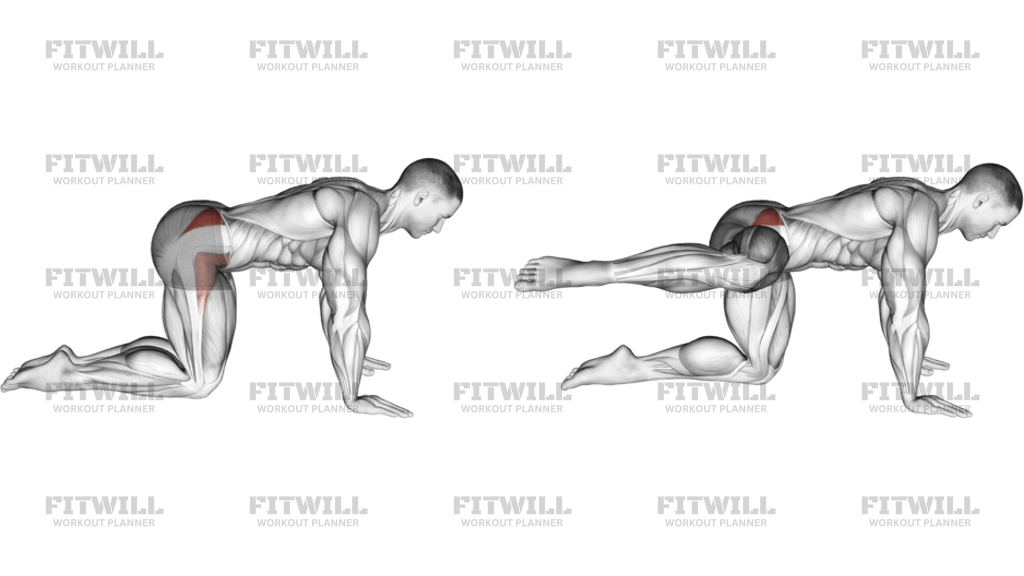
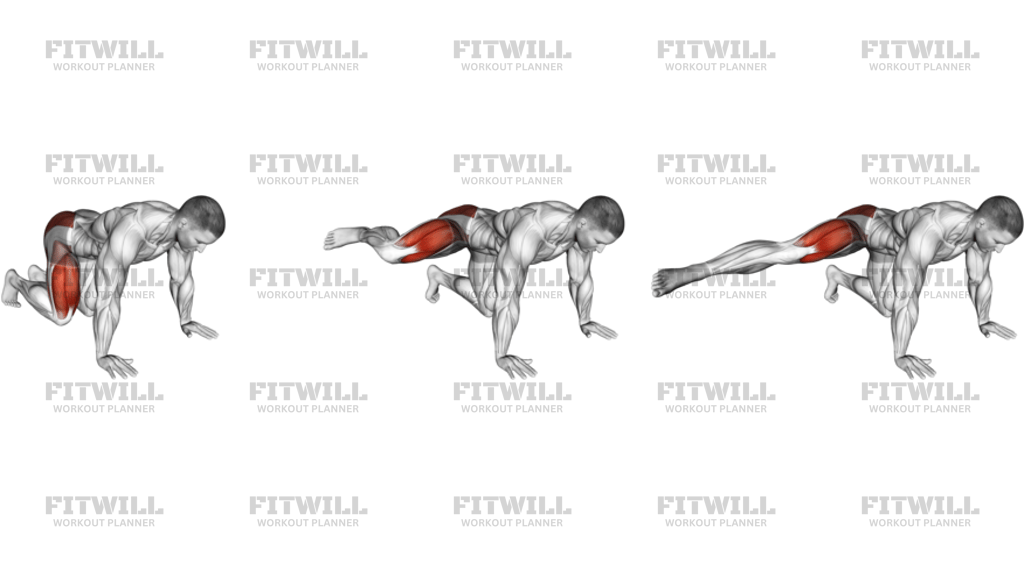
Kneeling Side Leg To Kick is a bodyweight glute drill performed from an all-fours position. One knee starts lifted out to the side, then the same leg extends back into a kick without letting the torso, ribs, or pelvis drift. The exercise blends hip abduction and hip extension, so it teaches the glutes to work through a controlled side-to-back arc instead of relying on momentum or low-back sway.
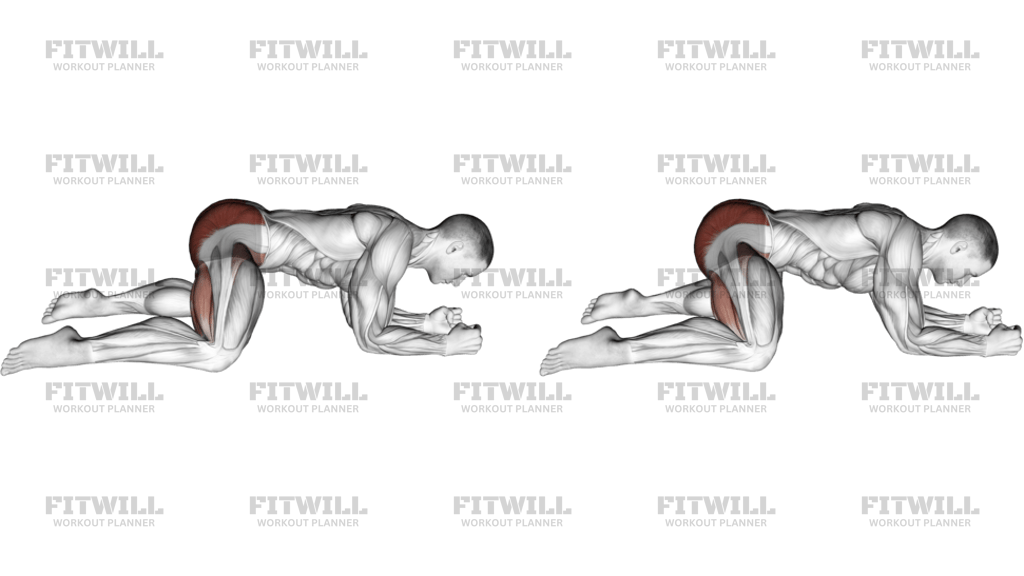
The setup matters because the starting position creates the line of pull. Place the hands under the shoulders and the supporting knee under the hip, then lift the working knee out to the side with the knee bent and the foot relaxed or lightly flexed. That side-loaded start puts the outer hip on tension before the kick begins, which helps you feel the glute contract through a cleaner range. If the shoulders shift or the trunk rotates, the movement stops being a glute drill and turns into a balance exercise.
On the kick phase, drive the heel back and slightly down rather than flinging the foot upward. The working thigh should travel behind the body while the pelvis stays square to the floor. At the top, the leg should look long and active, but the lower back should stay quiet. The return is just as important: bring the knee back to the side position under control, keep tension in the hip, and reset before the next repetition.
This exercise is useful in glute activation work, warm-ups, bodyweight lower-body circuits, and home sessions when you want direct hip work without equipment. It can also help lifters who need better pelvic control before progressing to standing cable kickbacks, banded glute work, or heavier hip extension patterns. Because the torso is supported, it is a good way to learn where the glutes should fire without needing to balance on one leg.
Quality matters more than range or speed. A good set feels smooth, quiet, and deliberate, with the support side staying stable and the working hip doing the work. If you feel the low back taking over, shorten the kick, slow the return, and keep the ribs tucked. If the hamstrings dominate, reduce the leg swing and focus on moving the heel from the side hold into a clean backward extension.
[ Workout Log & Planner ]
Put your next workout in Fitwill
Keep your plan and training log ready when you are.


Instructions
- Start on hands and knees with your wrists under your shoulders and your supporting knee under your hip.
- Lift the working knee out to the side so the thigh is open and the knee stays bent.
- Keep your ribs down, pelvis square, and neck long before you move the leg.
- From the side position, drive the heel back in a controlled kick until the leg reaches behind your body.
- Stop the kick before your lower back arches or your hips twist open.
- Squeeze the glute at the end of the kick, then return the knee to the side position slowly.
- Keep the motion smooth and pause only long enough to reset your balance.
- Breathe out on the kick and in as you bring the knee back out to the side.
- Finish the set by placing the knee back under the hip and lowering out of the position with control.
Tips & Tricks
- Keep the support hand pressure even so the torso does not shift when the leg leaves the floor.
- Think about sending the heel back, not lifting the foot higher, to keep the glute doing the work.
- If your low back tightens first, shorten the kick and keep the ribs heavier toward the floor.
- The bent-knee side position is there to load the hip before the kick, so do not rush through it.
- A small pause at the side position makes the glute set up better than swinging straight into the kick.
- Do not let the working hip roll open to chase more range; the pelvis should stay square.
- Use bodyweight first and add ankle resistance only if the trunk stays still rep after rep.
- A slow return usually teaches the glute better than a fast snap back to the side position.
- Stop the set when you can no longer keep the shoulders level and the pelvis quiet.
Frequently Asked Questions
What does Kneeling Side Leg To Kick train most?
It mainly trains the glutes, especially the gluteus maximus, with the side hip and core working to keep the pelvis stable.
Why does the working knee start out to the side?
That side position pre-loads the hip before the kick, so you feel the glute work through a side-to-back path instead of just swinging the leg.
Should my knee stay bent the whole time?
The knee starts bent, then the leg extends as you kick back. Keep the motion controlled so the hip moves cleanly instead of the foot just snapping behind you.
What is the most common mistake on this movement?
People usually twist the hips open or arch the low back to get more range. Keep the pelvis square and let the glute finish the kick.
Can beginners do this exercise?
Yes. It is beginner-friendly because the floor supports most of the body, but it still requires control through the hips and trunk.
Why do I feel it in my lower back instead of my glutes?
That usually means the kick is too high or too fast. Shorten the range, keep the ribs down, and finish the rep with the glute rather than the spine.
Can I add resistance to this movement?
Yes, but only after your torso stays quiet with bodyweight. A light ankle weight or cable can work if it does not change the hip position.
Where does this fit in a workout?
It works well in glute activation, warm-up, accessory lower-body work, or a home session when you want focused hip control.