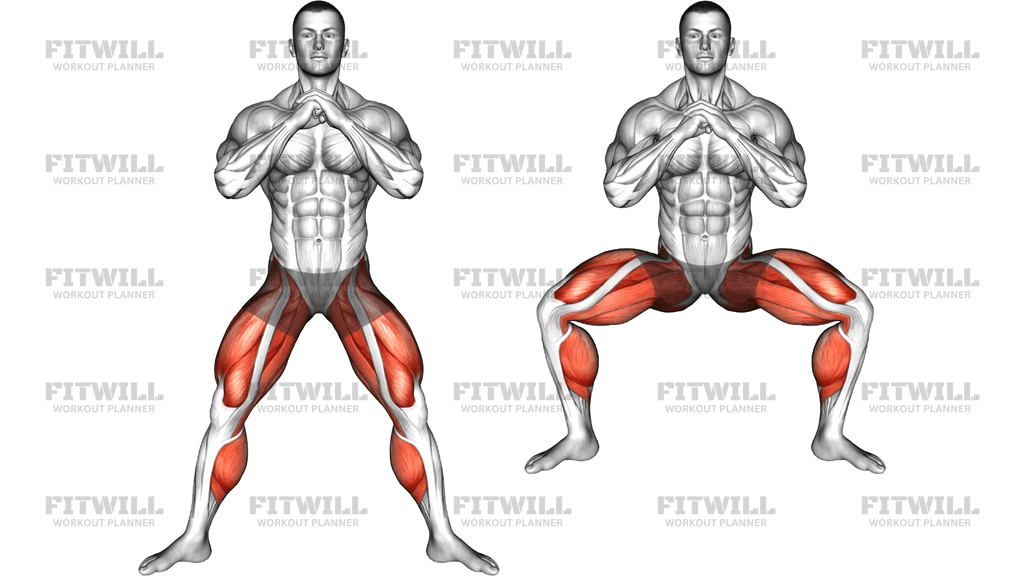
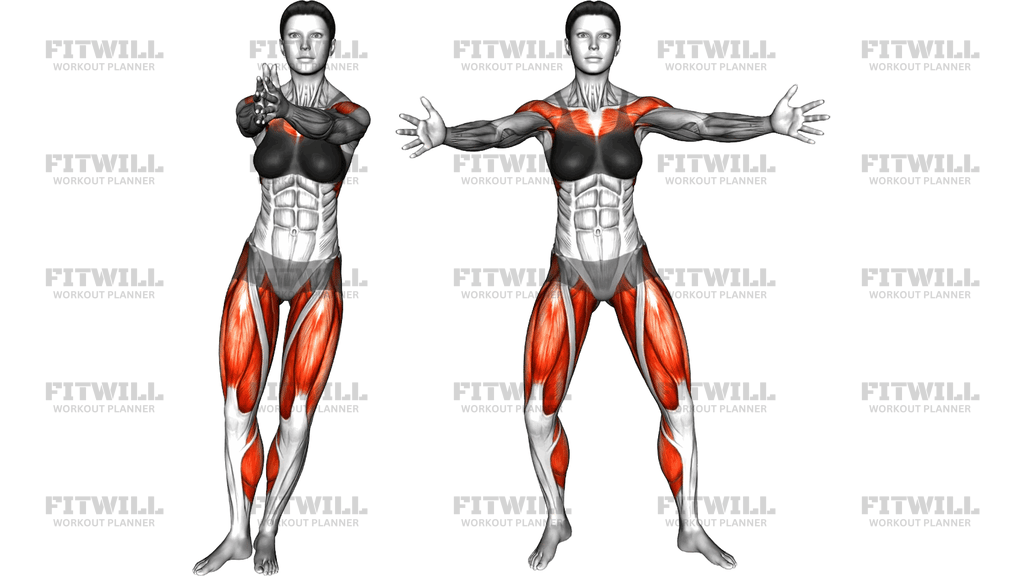
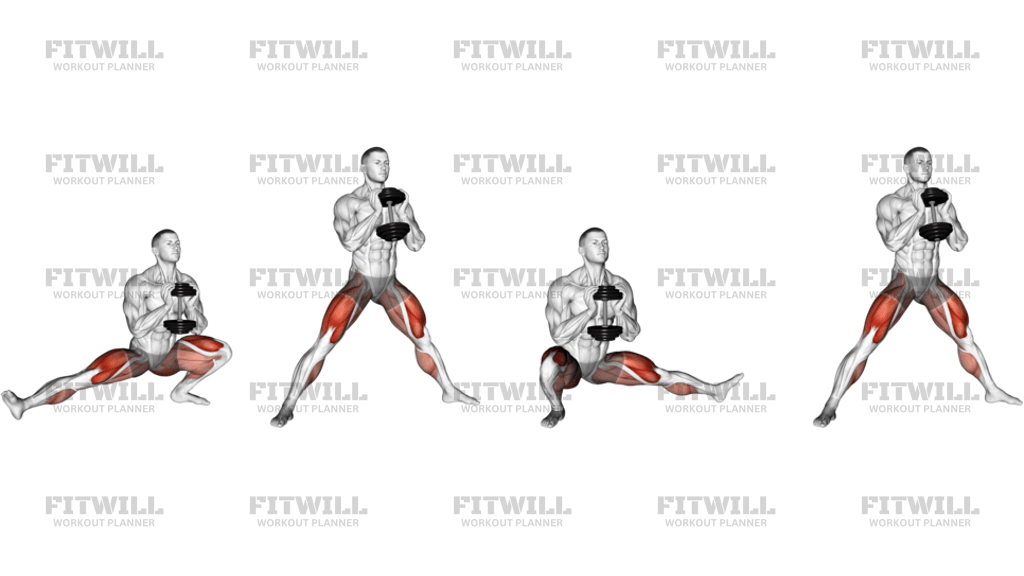
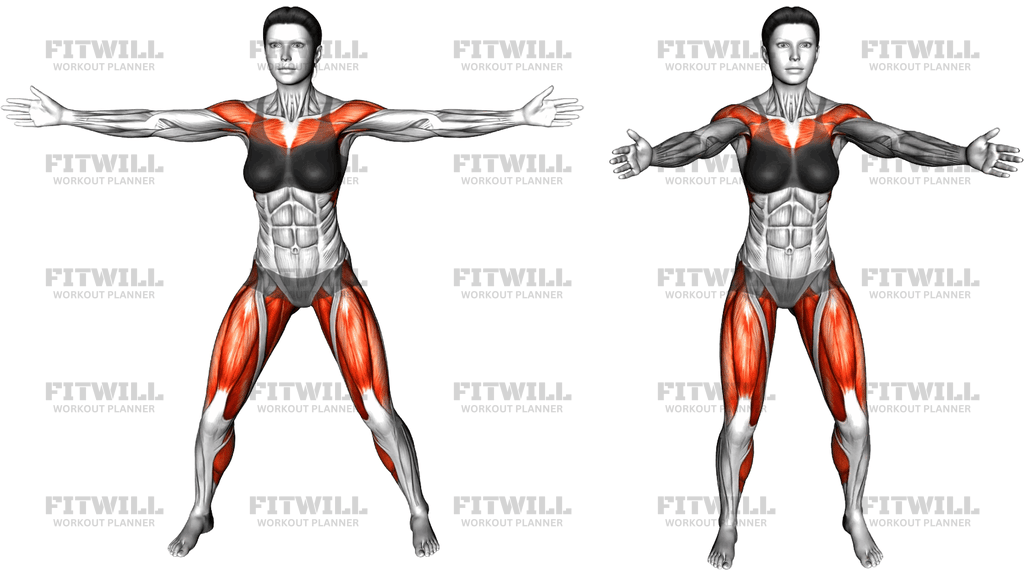
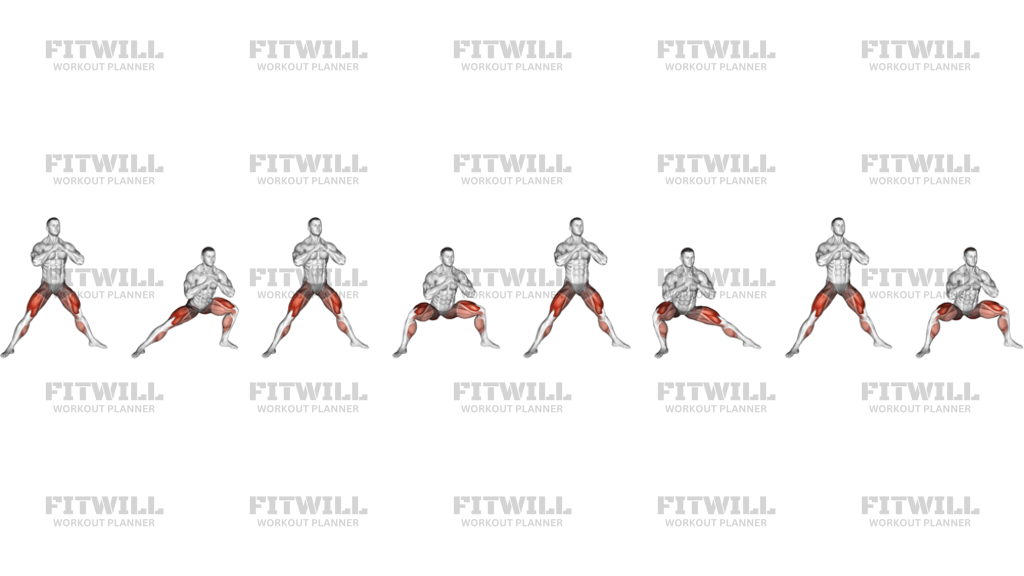
Side Squat
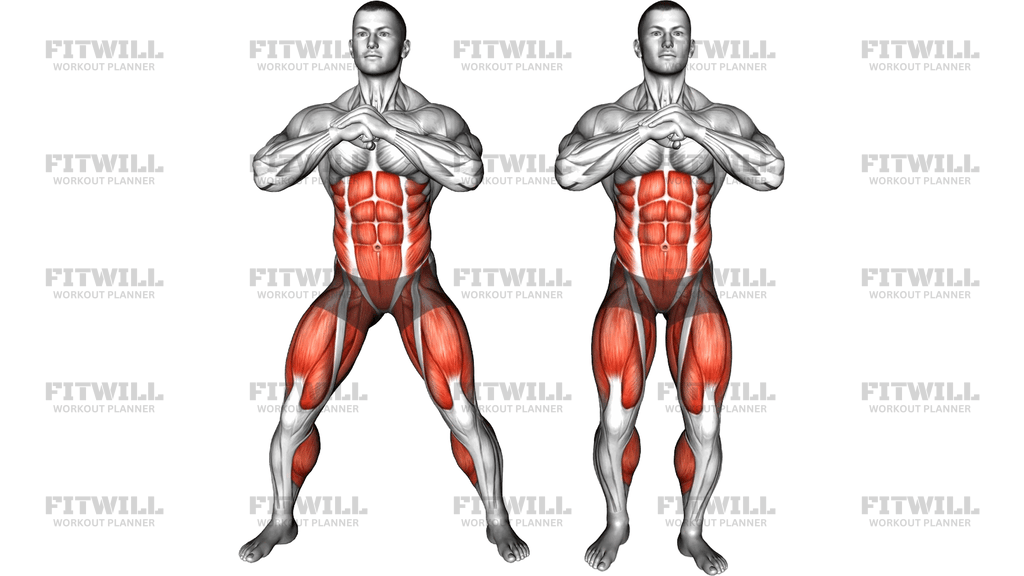
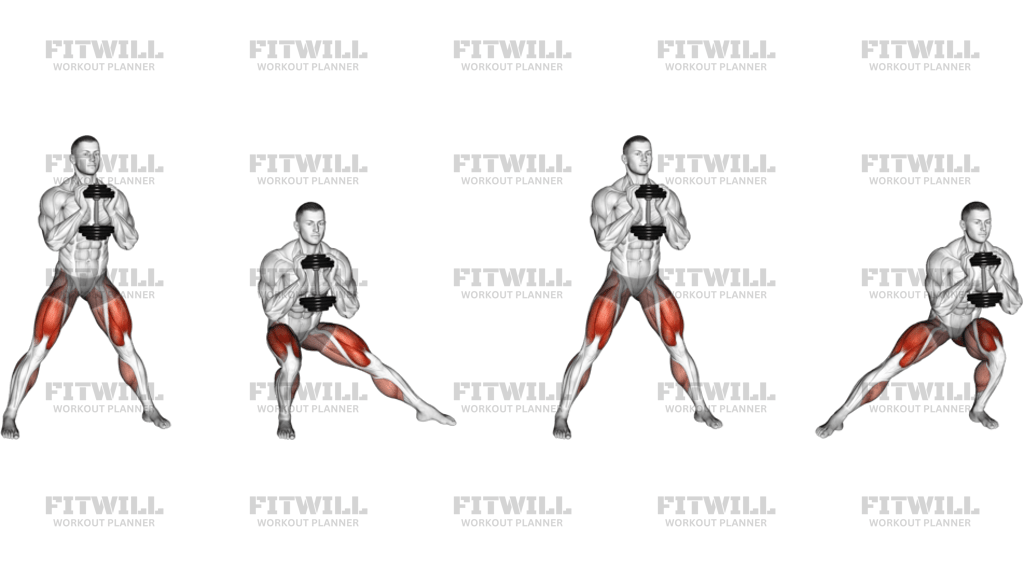
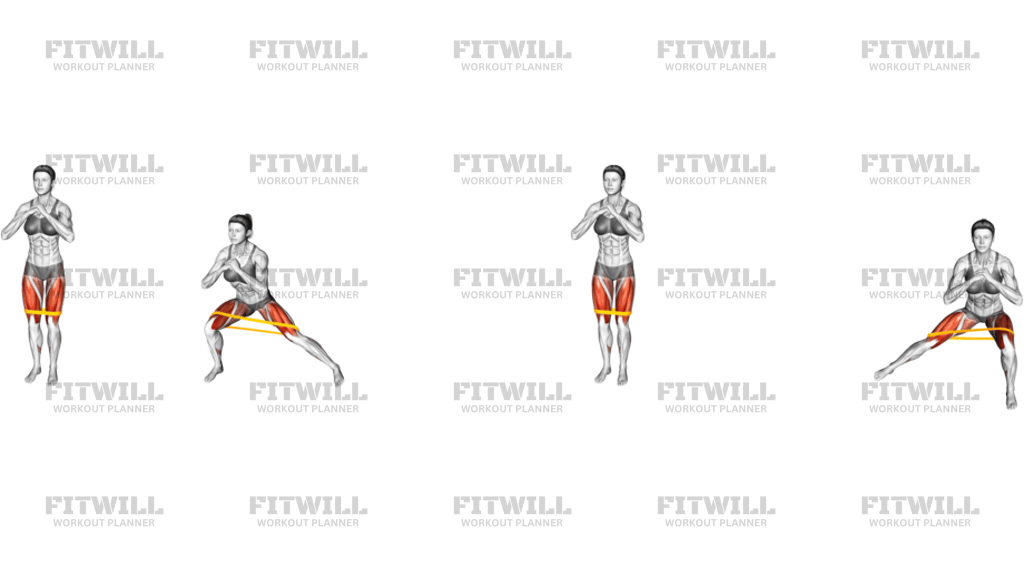
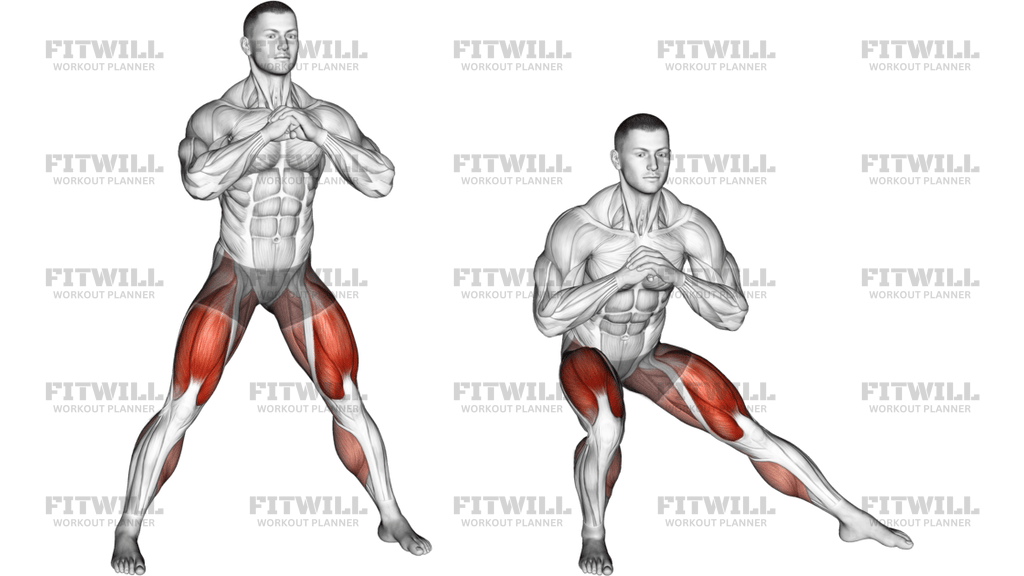
Side Squat is a bodyweight lateral squat that builds strength and control through side-to-side lowering and driving. The movement asks one leg to take most of the load while the other leg stays long, which makes it useful for training the thighs, hips, and trunk in a way that straight-ahead squats do not.
The main demand is on the quads of the bent leg, with help from the glutes, inner thigh, and core to keep the pelvis level and the knee tracking cleanly. In anatomy terms, the primary work centers on the quadriceps, while the adductors, gluteal muscles, and trunk stabilizers keep the rep organized as you shift from one side to the other.
A good side squat starts with a wide stance, feet planted, chest tall, and toes pointed mostly forward or only slightly out. From there, sit the hips back and down toward one side instead of folding the torso forward. The loaded knee should travel in line with the toes, the heel of the working foot should stay down, and the opposite leg should remain long enough to feel a stretch without locking hard at the knee.
The bottom position should feel controlled, not collapsed. Pause only if you can keep both feet grounded, the spine long, and the knee from caving inward. Drive through the whole foot of the working leg to return to center, then repeat to the other side if the set calls for alternating reps. Breathe in as you lower and exhale as you stand or shift across.
Side Squat fits well as a warm-up, accessory drill, or lower-body strength exercise when you want frontal-plane control, adductor strength, and better hip mobility under load. It is also a practical option for beginners because the bodyweight version makes it easy to learn the pattern before adding resistance. Keep the range of motion honest, move deliberately, and stop short of any depth that forces the pelvis to twist or the heel to lift.
[ Workout Log & Planner ]
Put your next workout in Fitwill
Keep your plan and training log ready when you are.


Instructions
- Stand tall with your feet wider than shoulder width, toes pointing mostly forward or only slightly out.
- Keep your chest lifted, ribs stacked over your pelvis, and your arms in front of you for balance if needed.
- Brace your midsection, then shift your hips toward one side while keeping both feet flat on the floor.
- Bend the knee on the loaded side and sit the hips back and down, as if reaching that hip toward the floor.
- Keep the opposite leg long and relaxed, but do not let the knee lock hard or the foot spin outward.
- Lower until you reach a controlled depth with the working knee tracking over the toes and the heel staying down.
- Drive through the whole foot of the bent leg to stand back up or return to the center.
- Repeat on the other side if your program calls for alternating reps, or finish the prescribed reps on one side before switching.
- Inhale on the descent and exhale as you press out of the bottom.
Tips & Tricks
- Keep the stance wide enough to sit into one hip, but not so wide that your inner thigh feels torn open at the bottom.
- Think of shifting your hips sideways and back, not just dropping straight down.
- Let the loaded knee travel in line with the second or third toe instead of collapsing inward.
- Keep the working heel heavy so the rep stays on the thigh and hip instead of drifting into the toes.
- If your torso tips forward, reduce the depth before adding more range.
- The straight leg should feel long and active, with the foot planted and the knee only softly bent if needed.
- Move at a controlled tempo so each side gets the same amount of work and you do not bounce out of the bottom.
- Use a smaller range on the first sets if your adductors or groin feel tight, then open the depth only when the pattern stays clean.
- Stop the set if your pelvis starts twisting or one heel lifts to escape the bottom position.
Frequently Asked Questions
What muscles does Side Squat train most?
The bent leg does most of the work, so the quads lead, with help from the glutes, adductors, and core.
Is Side Squat the same as a side lunge?
They are very similar, but this version keeps the feet planted and focuses on shifting the hips side to side from a wide stance.
How deep should I go on the side squat?
Go only as deep as you can while keeping the working heel down, the knee tracking over the toes, and the torso from folding forward.
Should my toes point straight ahead?
Mostly forward is best, with only a small amount of turnout if it helps your hips track smoothly without twisting the knees.
Can beginners do Side Squat without weight?
Yes. The bodyweight version is a good way to learn the lateral shift, stance width, and knee tracking before adding resistance.
Why does my inner thigh feel this exercise?
The adductors help control the side-to-side shift, so some inner-thigh tension is normal, especially on the straight leg.
How can I make Side Squat easier?
Shorten the stance, reduce the depth, and use a slower controlled shift so you can keep both feet planted and the pelvis steady.
How do I progress Side Squat?
Add a pause at the bottom, increase the depth gradually, or hold a front-loaded weight only after the bodyweight version stays clean.