Kneeling Side Leg To Kick
Kneeling Side Leg To Kick is a bodyweight quadruped glute exercise that combines a bent-knee side lift with a controlled kickback. It is designed to load the glutes through hip abduction and hip extension while the shoulders and trunk stay stacked over the supporting hand and knee. The movement looks simple, but the setup matters because the working leg only stays on target when the pelvis stays level and the torso does not twist.
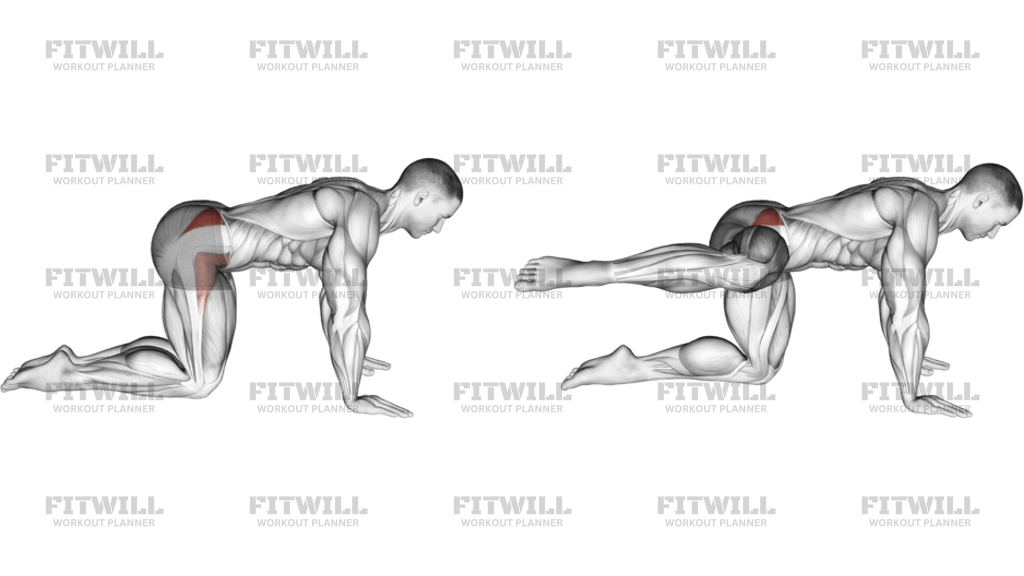
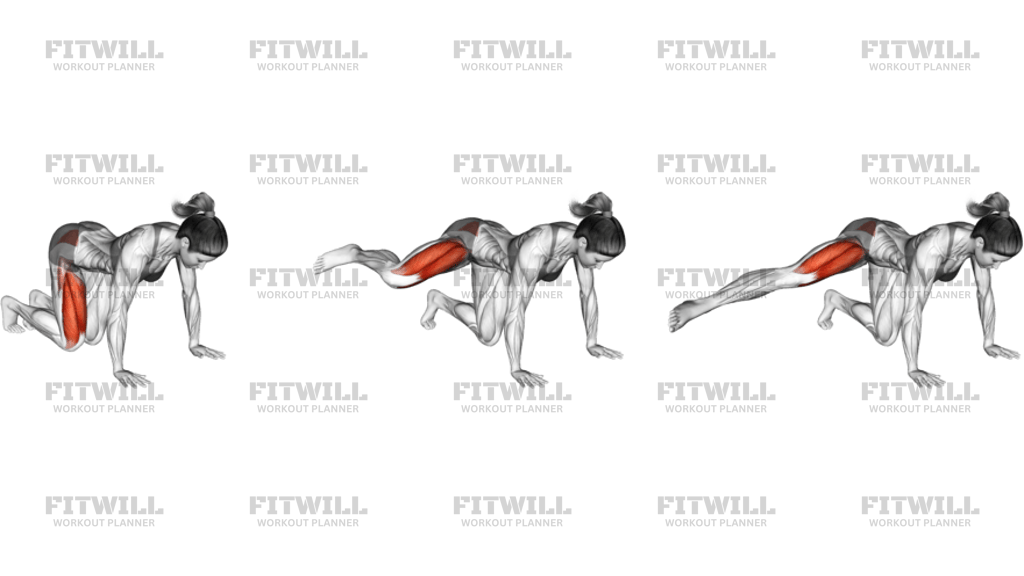
The exercise emphasizes the glutes most strongly, especially the gluteus maximus, with the hamstrings and core helping stabilize the pelvis and spine. In the image, the working leg starts bent and lifted to the side before extending back behind the body. That means the goal is not to swing the leg high for momentum. The goal is to keep the thigh controlled, open the hip without collapsing the low back, and finish each rep with the glute doing the work.
Start on all fours with the hands under the shoulders and the knees under the hips. From there, shift into a stable tabletop position, brace the torso, and lift one knee away from the floor to the side while keeping the foot relaxed. The side lift is the setup for the kick. If the pelvis rolls, the movement turns into a trunk twist instead of a clean hip action, so the supporting knee and both hands should stay grounded and quiet.
Once the leg is lifted, extend it back in a smooth kickback path until the working leg is long and the heel reaches behind the body. Keep the movement controlled so the hips stay square and the lower back does not over-arch to fake extra range. At the top, the glute should feel shortened and active, then the leg returns under control to the bent-knee side position before lowering back to the start.
Use this exercise as an accessory glute drill, a warm-up activation movement, or a low-load strength option when you want single-side control without standing balance demands. It works well in sessions focused on hip stability, glute engagement, or lower-body activation before bigger lifts. Beginners can use it as long as they can keep the ribs down, the pelvis steady, and the range smooth; if the body starts rocking or the low back takes over, shorten the kick and clean up the setup before adding more repetitions.
[ Workout Log & Planner ]
Put your next workout in Fitwill
Keep your plan and training log ready when you are.


Instructions
- Start on all fours with your hands under your shoulders and your knees under your hips.
- Keep the supporting knee planted, spread your fingers, and press the floor away so your shoulders stay stacked.
- Brace your ribs and pelvis so your lower back stays neutral before the leg moves.
- Lift one knee out to the side with the knee bent, keeping the pelvis as level as possible.
- From that lifted side position, extend the working leg back into a controlled kick until the leg is long behind you.
- Squeeze the glute at the end of the kick without arching your low back or turning the hips open.
- Return the leg to the bent-knee side position under control, then lower it back to the start if needed.
- Repeat on the same side for the target reps, then switch sides and match the same path and tempo.
Tips & Tricks
- Keep the supporting hand and knee heavy enough that the torso does not drift as the leg lifts.
- Think of the side lift as opening the hip first, then the kick as finishing the rep with glute extension.
- If your low back pinches, shorten the kick and keep the ribs pulled in instead of chasing more height.
- Do not let the lifted knee drift far behind the body before the kick, or the movement turns into a back swing.
- Use a slow return so the glute stays under tension instead of dropping the leg back to the floor.
- Keep the chin slightly tucked and the neck long so you do not crane upward while balancing.
- Exhale as the leg extends back and inhale as you return to the bent-knee side position.
- Stop the set when the pelvis starts rolling open or the working foot starts snapping through the rep.
Frequently Asked Questions
What muscle does Kneeling Side Leg To Kick target most?
The glutes are the main target, especially the gluteus maximus during the kickback portion of the rep.
Can beginners perform this exercise?
Yes. Beginners usually do well with body weight only, as long as they can keep the pelvis steady and avoid arching the low back.
Should my knee stay bent the whole time?
The knee starts bent as the leg lifts to the side, then the leg extends during the kick. That bent-to-straight transition is the core of the movement.
Why does my lower back take over during the kick?
Usually the kick is too high or the ribs are flaring. Shorten the range and keep the pelvis tucked enough to let the glute drive the motion.
How is this different from a straight-leg donkey kick?
This version begins with the leg lifted out to the side before extending back, so it asks for more hip control than a simple straight-back kick.
Where should I feel the movement in the working leg?
You should feel the outer and upper glute working to lift the leg, then the main glute to finish the kickback.
What is the best tempo for this exercise?
A controlled lift, a brief squeeze, and a slower return work best. Fast reps usually reduce glute tension and make the torso rock.
Can I make it harder without adding weight?
Yes. Slow the lowering phase, pause longer at the top, or add a small ankle weight only after you can keep the pelvis square.