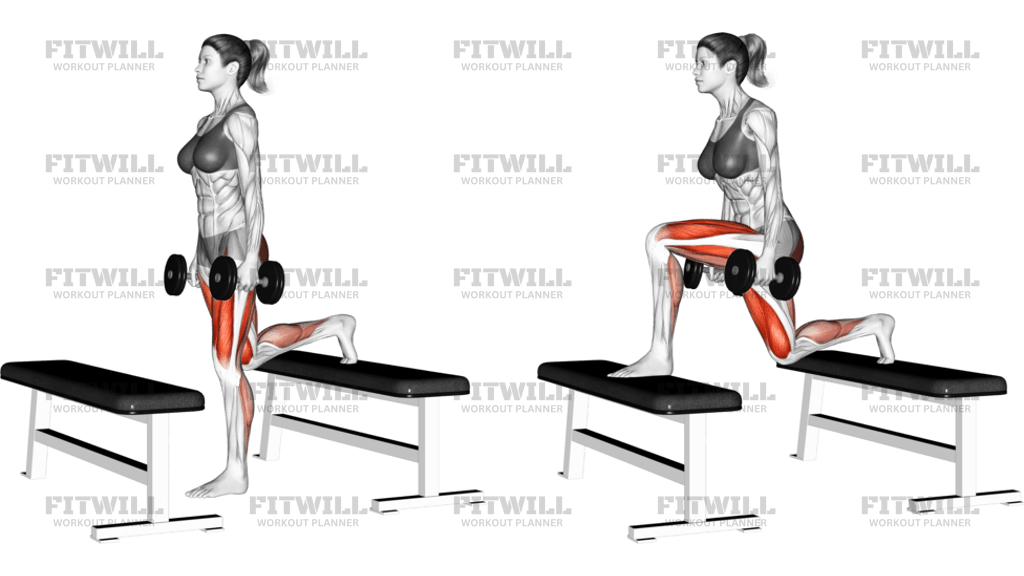
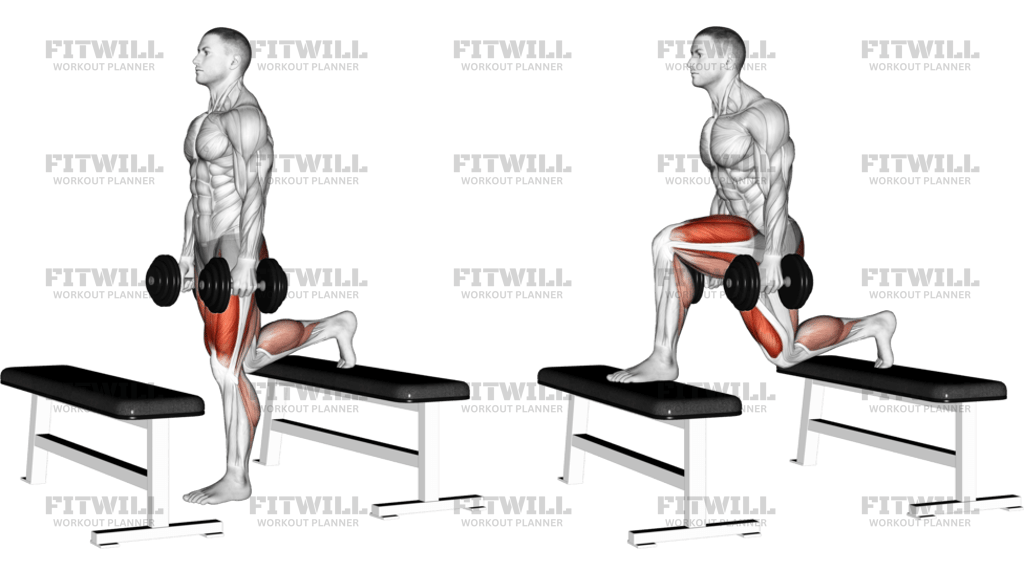
Dumbbell Single Leg Step-Up On Bench
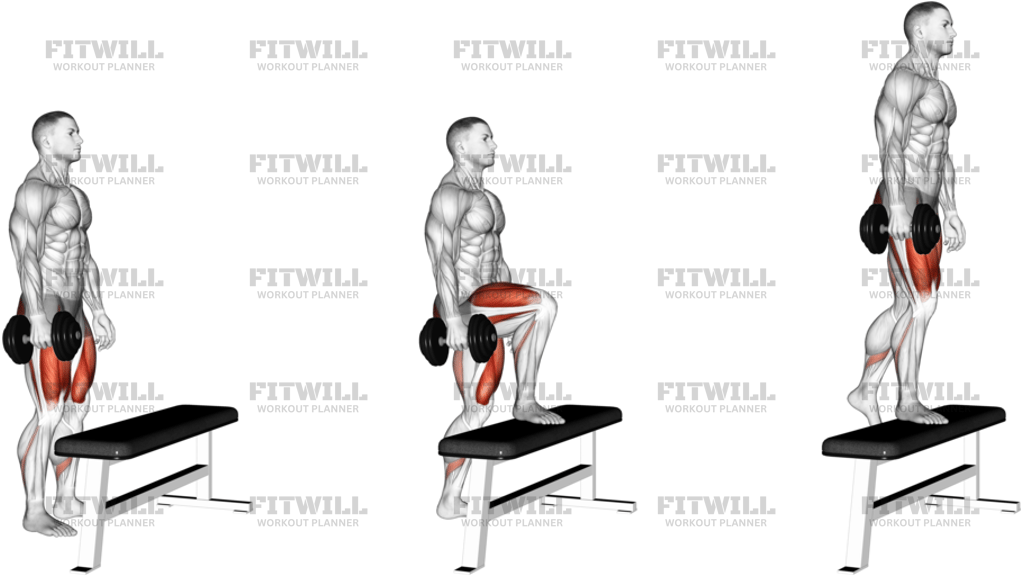
Dumbbell Single Leg Step-Up On Bench is a unilateral lower-body exercise that builds leg strength, balance, and coordination by having one working leg drive the body up to a bench while the other leg stays light. The dumbbells add enough external load to make the step-up more than a balance drill, but the exercise still depends on clean control, a steady torso, and a deliberate push through the lead foot. It is especially useful when you want to train one leg at a time without the spinal loading or technical complexity of a heavy squat.
This movement puts a big demand on the thigh muscles, especially the quads, while the glutes, adductors, calves, and trunk stabilize the body as you rise and lower. Because the rear leg should not be doing the work, the exercise is good for spotting side-to-side differences in leg strength and control. A well-executed rep should feel like the front leg is doing the lifting and the trunk is staying stacked over the hips rather than swaying or jumping.
The setup matters more here than in many two-legged lifts. Use a bench that lets the working thigh stay close to parallel or slightly above parallel when the foot is on the platform, hold a dumbbell in each hand, and place the whole working foot flat on the bench with the heel and big toe connected. Before you drive upward, brace your midsection, keep your chest tall, and make sure the knee tracks in line with the toes instead of collapsing inward. That small amount of organization at the bottom is what keeps the step-up strong and repeatable.
Each rep should start with a controlled push from the lead leg, not a jump from the floor leg. Drive through the middle of the foot and stand tall on the bench with the hips extended, then step back down slowly so the working leg keeps tension through the descent. If you need to swing the dumbbells, bounce off the floor, or throw your torso forward to get up, the box is too high or the load is too heavy. Keep the lowering phase smooth and use the same path on every rep.
Dumbbell Single Leg Step-Up On Bench fits well in strength sessions, leg day accessory work, athletic training, and conditioning circuits where you want single-leg control with practical loading. It can be a good option for beginners if the bench height is modest and the dumbbells are light enough to keep the torso quiet. Used with good alignment and a controlled tempo, it builds strong legs without needing a machine or a lot of setup.
[ Workout Log & Planner ]
Put your next workout in Fitwill
Keep your plan and training log ready when you are.


Instructions
- Stand facing a bench with a dumbbell in each hand and place the full foot of your working leg on top of the bench.
- Keep your chest tall, square your hips to the bench, and let the other foot stay lightly on the floor beside the bench.
- Brace your midsection and set the working knee so it points in the same direction as your toes.
- Lean slightly into the bench from the hips, then press through the whole working foot to stand up.
- Bring the trailing leg up without kicking off the floor or driving from the back leg.
- Finish tall on the bench with the hip and knee of the working leg fully extended.
- Hold the top position briefly while keeping the dumbbells still at your sides.
- Step back down with control, placing the trailing foot on the floor before resetting the next rep.
- Complete all repetitions on one side, then switch legs and repeat.
- Reset the dumbbells and bench position safely when the set is complete.
Tips & Tricks
- Choose a bench height that lets the working thigh stay near parallel; if you have to twist or rock to reach the top, the box is too high.
- Keep the whole working foot down on the bench instead of rising onto the toes, which shifts work away from the leg and into the ankle.
- Let the front heel stay heavy as you stand so the quads and glutes can drive the rep instead of the trailing leg pushing off.
- Lower under control until the non-working foot meets the floor softly; dropping off the bench removes tension and makes balance worse.
- Keep the dumbbells quiet at your sides. If they swing, the load is too heavy or you are rushing the rep.
- Drive the knee in line with the toes; if it caves inward, reduce load and slow the ascent.
- Use a slight forward torso lean from the hips, not a rounded back, to help the front leg load cleanly.
- Exhale as you stand and avoid holding your breath too long at the top, especially when the bench is high.
- Switch legs before fatigue turns the descent into a drop or forces you to push off the floor leg.
- If your grip limits the set before your legs do, use lighter dumbbells and keep the step-up focused on leg drive.
Frequently Asked Questions
What muscle does Dumbbell Single Leg Step-Up On Bench target most?
It mainly targets the thighs, especially the quads, while the glutes and trunk help keep you stable on the bench.
Can beginners perform this exercise?
Yes. Start with bodyweight or very light dumbbells and use a lower bench so you can step up without bouncing or twisting.
Should my whole foot be on the bench for Dumbbell Single Leg Step-Up On Bench?
Yes. Plant the full foot so the heel and forefoot stay connected; hanging the heel off the edge makes balance and force transfer worse.
How do I keep from pushing off the floor leg?
Keep the floor leg light and think about standing up only with the bench leg. If you feel a hard push from the trailing foot, lower the bench height or reduce the load.
Why do I feel Dumbbell Single Leg Step-Up On Bench more in one leg than the other?
That is common and usually points to a strength or control difference between sides. Match the reps and load to the weaker side rather than letting the stronger leg set the pace.
What is the biggest mistake with Dumbbell Single Leg Step-Up On Bench?
Using momentum to jump onto the bench instead of pressing through the working foot. The rep should look smooth, not explosive and bouncy.
How high should the bench be for this exercise?
Use a height that lets you stand up without leaning far forward or losing knee control. For most people, a lower bench gives better leg work than a very tall one.
Can I do Dumbbell Single Leg Step-Up On Bench without dumbbells?
Yes. Bodyweight step-ups are a good starting point and are often the best option if you are still learning balance or bench height control.
Should my torso stay perfectly upright during the step-up?
A small forward lean from the hips is normal, but your back should stay long and your chest should not collapse toward the bench.