Weighted Plate Standing High Front Raise
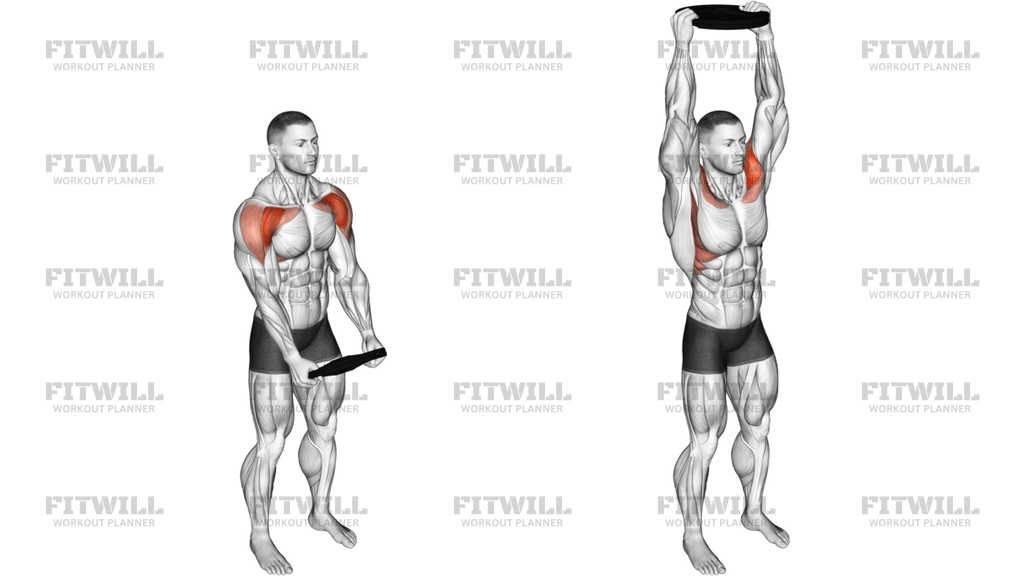
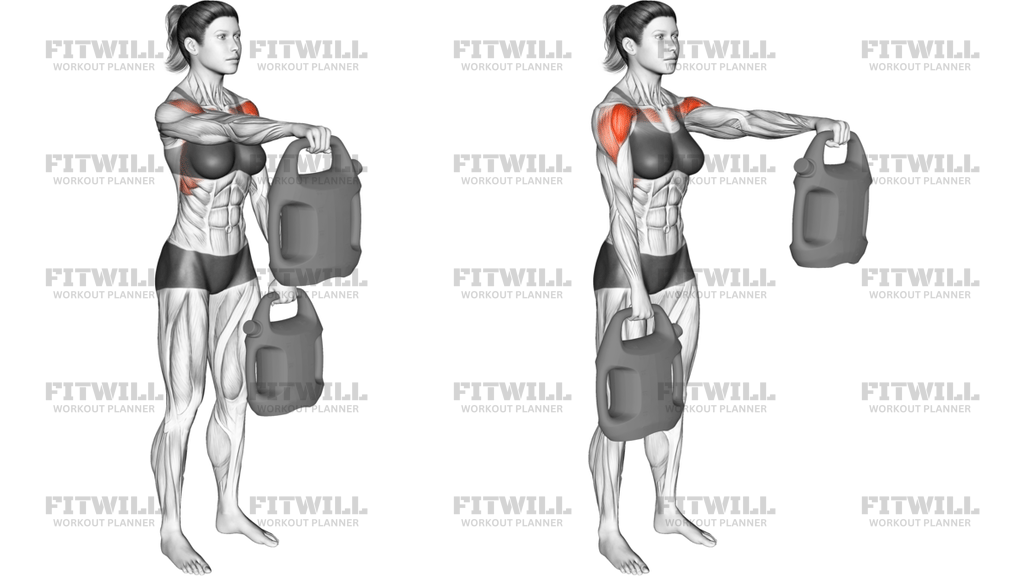
Weighted Plate Standing High Front Raise is a standing shoulder raise that takes a weight plate from the front of the thighs to an overhead finish. It is a direct front-delt and shoulder-girdle drill, with the upper chest, serratus, upper traps, and core helping you keep the plate moving in a clean arc. The exercise looks simple, but the setup matters because the plate gets much harder to control once the arms pass shoulder height.
The main purpose of the movement is to train shoulder flexion without turning the rep into a swing. When the plate stays close to the body on the way up, the shoulders do the work instead of the lower back, hips, or momentum. That makes it useful for accessory hypertrophy work, shoulder conditioning, warm-ups before pressing, or light technique work when you want the delts to stay active through the full range.
The standing position should feel stacked and quiet. Feet stay planted, ribs stay down, and the torso stays tall as the plate travels upward. If you have to lean back, shrug hard from the start, or bounce the plate off your thighs, the load is too heavy or the range is too aggressive. The best reps finish with the plate over the midfoot, arms near the ears, and the neck still long rather than jammed upward.
Lower the plate under control and keep the tension smooth from rep to rep. A short pause at the top can help reinforce control, but the rep should still be driven by the shoulders rather than a sudden pop or heave. Use this exercise when you want a strict overhead front raise that challenges the delts, teaches clean body position, and rewards precise control more than load.
Fitwill
Log Workouts, Track Progress & Build Strength.
Achieve more with Fitwill: explore over 9600 exercises with images and videos, access built-in and custom workouts, perfect for both gym and home sessions, and see real results.
Start your journey. Download today!




Instructions
- Stand tall with your feet about hip-width apart and hold the plate with both hands in front of your thighs, elbows slightly bent.
- Set your ribs over your pelvis, keep your neck long, and let the plate hang still for a moment before the first rep.
- Brace your midsection and keep your shoulders down as you begin the lift.
- Raise the plate in a smooth arc straight in front of you, keeping it close to your body as long as you can.
- Continue lifting until the plate reaches overhead or just in front of the top of your head, depending on your shoulder mobility.
- Pause briefly at the top without leaning back or shrugging the plate forward.
- Lower the plate along the same path until it returns to the front of your thighs under control.
- Exhale as you raise the plate and inhale as you lower it, then repeat for the planned reps.
Tips & Tricks
- Use a plate that you can lift without bending your lower back to get the last few inches overhead.
- Keep the plate close to your torso on the way up; letting it drift forward turns the rep into a swing.
- Stop the ascent when your shoulders start to shrug hard or your ribs flare, even if the plate has not reached the same height every time.
- A soft elbow bend protects the joints and keeps the effort on the shoulders instead of the wrists and elbows.
- If the top position feels cramped, lower the finish point to eye level instead of forcing the plate farther overhead.
- Move slowly on the way down so the shoulders stay loaded instead of dropping the plate back to the start.
- Keep your glutes lightly squeezed and your feet rooted so the torso does not rock backward as the plate rises.
- Choose a rep speed that lets you keep the plate path smooth; fast jerking usually means the load is too heavy.
Frequently Asked Questions
What does Weighted Plate Standing High Front Raise train most?
It mainly trains the front of the shoulders while the upper chest, upper traps, serratus, and core help stabilize the lift.
Can beginners perform this exercise?
Yes, beginners can use a light plate if they can keep the torso still and lift without leaning back.
How high should I raise the plate?
Raise it until your arms are overhead or just in front of the top of your head, but stop earlier if your ribs flare or your lower back arches.
What grip should I use on the plate?
Use both hands on opposite sides of the plate and keep the wrists neutral so the plate stays level throughout the raise.
What is the most common mistake on this lift?
Most people swing the plate or lean back to finish the rep, which shifts the work away from the shoulders.
Should my shoulders shrug at the top?
A small amount of shrugging can happen near the finish, but a hard shrug usually means the load is too heavy or the rep is being forced.
Where does this exercise fit in a workout?
It works well as accessory shoulder work, a light warm-up before pressing, or a controlled finisher after main lifts.
What if overhead range bothers my shoulders?
Stop the plate at eye or forehead level and work in a pain-free range instead of forcing the overhead finish.