Weighted Seated Triceps Extension
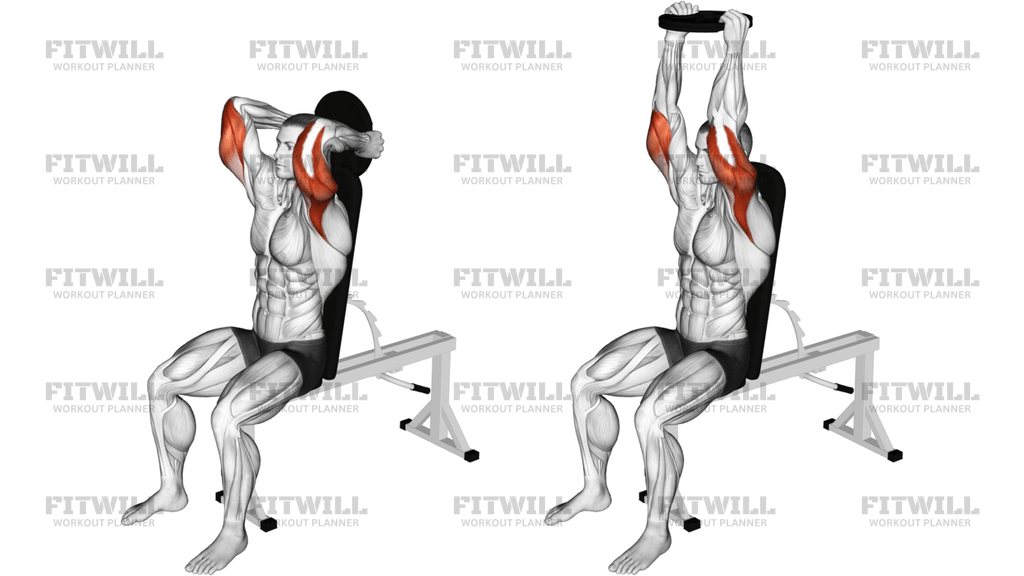
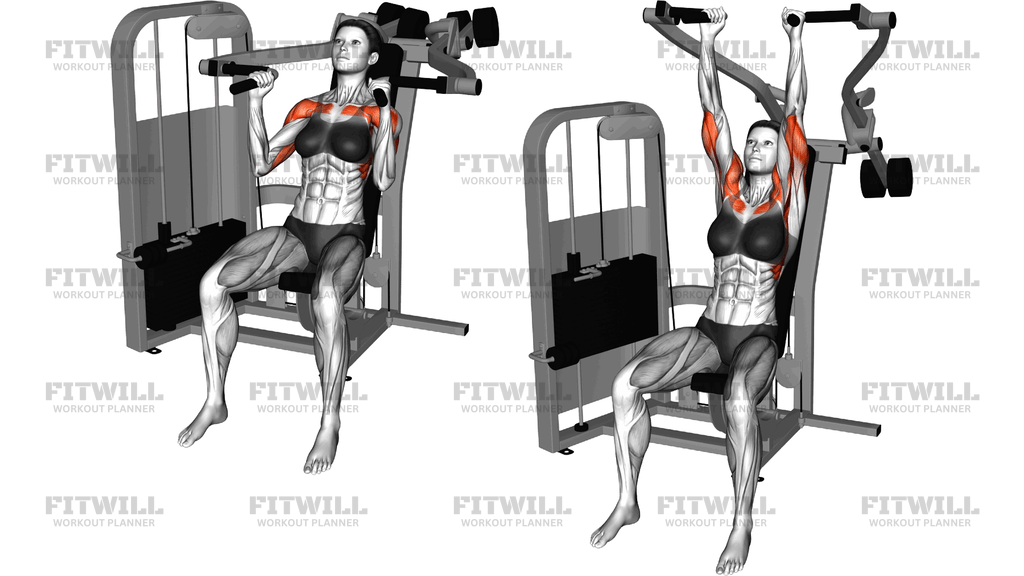
Weighted Seated Triceps Extension is a seated overhead triceps movement performed with a single weight held in both hands. In the image, the lifter sits upright on a bench with back support, keeps the elbows bent beside the head, and extends the arms overhead against the load. That long lever makes the triceps do most of the work while the shoulders and trunk stay quiet and organized.
The exercise is useful when you want direct triceps loading without standing balance demands or a large amount of whole-body momentum. Because the weight starts behind the head, the setup matters: if the ribs flare, the low back arches, or the elbows drift wide, the movement quickly turns into a shoulder press. A solid seated position keeps the upper arms in place and lets the elbows do the actual work.
The best reps begin with the elbows tucked in a consistent line and the wrists stacked over the hands so the weight stays centered. From there, extend the elbows until the arms are nearly straight, then lower the load slowly until the triceps are fully lengthened without collapsing the neck or torso. The goal is a smooth arc, not a forceful shove, and the return should be just as controlled as the lift.
Weighted Seated Triceps Extension fits well in arm-focused sessions, accessory work after pressing, or any program that needs a strict elbow-extension pattern. It can be scaled easily with a lighter plate or dumbbell, which makes it approachable for beginners as long as the range stays pain-free and the torso stays still. If the shoulders take over or the lower back starts compensating, the load is too heavy or the bench position needs adjustment.
Fitwill
Log Workouts, Track Progress & Build Strength.
Achieve more with Fitwill: explore over 9600 exercises with images and videos, access built-in and custom workouts, perfect for both gym and home sessions, and see real results.
Start your journey. Download today!




Instructions
- Sit on a bench with back support, plant both feet flat, and hold a weight plate with both hands above or just behind the crown of your head.
- Keep your elbows bent and pointed mostly forward, with your upper arms close to your ears and your wrists stacked over the plate.
- Brace your ribs down and keep your chest from flaring as you prepare to move.
- Press the plate upward by straightening only the elbows until your arms are nearly locked out overhead.
- Pause briefly at the top and squeeze the triceps without shrugging the shoulders up.
- Lower the plate slowly behind your head by bending the elbows and keeping the upper arms as still as possible.
- Stop the descent when you feel a strong triceps stretch without losing your back position or letting the elbows drift wide.
- Keep breathing steady, exhaling on the press and inhaling on the controlled return, for all planned reps.
Tips & Tricks
- Keep the plate centered over your midline; if it drifts forward, the shoulders start taking over.
- Let the elbows travel slightly forward of the head instead of flaring out to the sides.
- Use a bench with back support if you tend to arch your lower back during overhead work.
- Lower the plate under control for two to three seconds so the triceps stay under tension.
- Choose a load that lets your wrists stay neutral instead of bending back under the plate.
- If your neck tightens up, relax the jaw and keep the head stacked rather than pushing it forward.
- Stop the set when the elbows start opening unevenly or the upper arms begin swinging.
- A slightly smaller range of motion is better than forcing the plate too deep behind the head and losing position.
Frequently Asked Questions
What does Weighted Seated Triceps Extension train most?
It mainly trains the triceps, especially in the overhead stretched position where elbow extension has to do most of the work.
Why is the seated position important in Weighted Seated Triceps Extension?
The back support helps keep the torso from leaning or arching so the triceps, not momentum, move the weight.
Should my elbows stay close to my head?
Yes. Keep the upper arms fairly fixed and let the elbows bend and straighten instead of letting them flare wide.
Can I use a dumbbell instead of a plate?
Yes, a dumbbell or any similarly shaped weight works as long as you can keep the wrists stacked and the motion controlled.
Why do my shoulders feel this exercise more than my triceps?
Usually the elbows are drifting and the ribs are flaring, which shifts the work away from elbow extension and into the shoulders.
How low should I lower the weight behind my head?
Lower only until you get a strong triceps stretch and can still keep your torso, neck, and shoulder position stable.
Is this exercise appropriate after bench pressing?
Yes, it is a good accessory choice after pressing work when you want direct triceps volume without needing heavy whole-body effort.
What is the biggest mistake to avoid?
Do not turn the movement into a standing or leaning shoulder press; keep the upper arms quiet and let the elbows do the work.