Weighted Front Raise
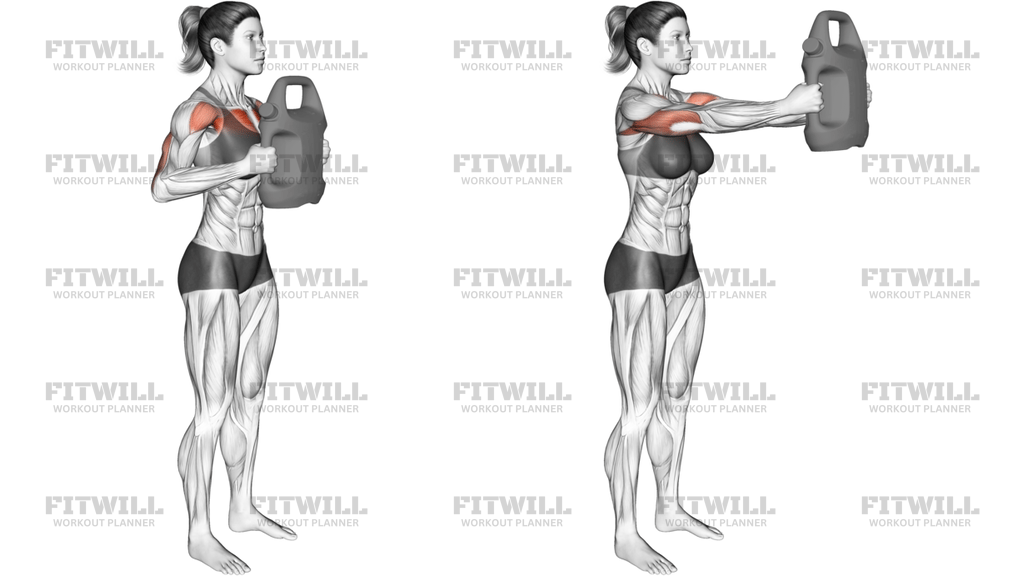
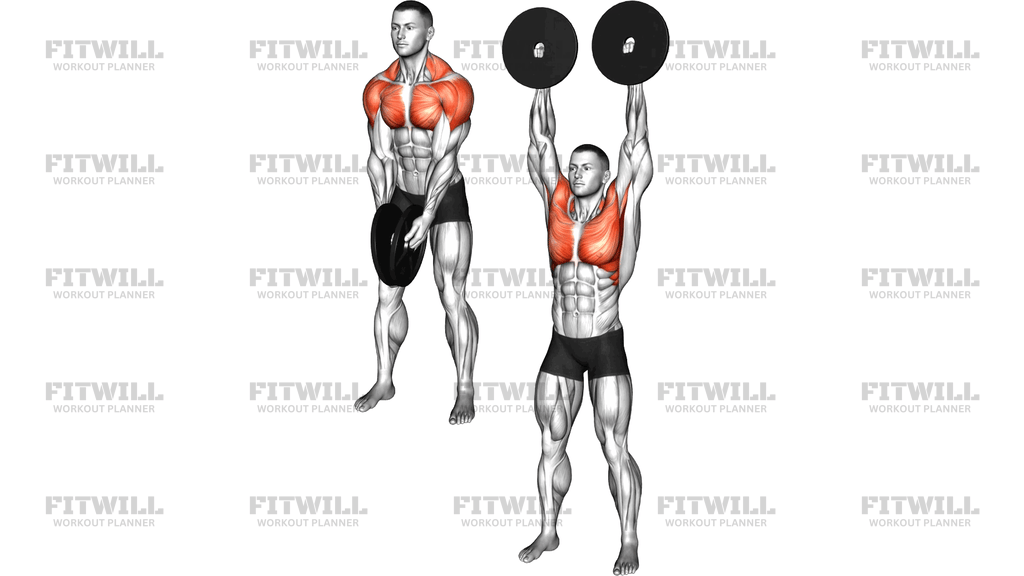
Weighted Front Raise is a standing shoulder isolation exercise that uses a single weight plate held with both hands to challenge the front delts through a strict forward raise. It is a simple-looking movement, but the setup matters because the plate path, torso position, and shoulder control all determine whether the set stays clean or turns into a swing.
This variation places most of the demand on the front of the shoulders while the upper chest, upper traps, and arm muscles help steady the plate. Because both hands share one implement, it is easier to keep the load centered in front of the body, which makes the exercise useful for lifters who want a very direct shoulder raise without the imbalance of a single-arm version.
Start with your feet about hip-width apart, ribs stacked over the pelvis, and the plate hanging in front of your thighs with a neutral or overhand grip on the sides. The elbows should stay softly bent but fixed, and the shoulders should not roll forward as the weight leaves the thighs. A small amount of body tension is helpful, but the lift should still come from the shoulders rather than a leg drive or lean-back.
Raise the plate in a smooth arc until it reaches about shoulder height, then pause briefly before lowering it with control. If the plate climbs above shoulder level, the front delts usually hand off too much work to momentum and the upper traps. The better rep is the one that stays quiet through the torso, keeps the neck relaxed, and uses the same path on every repetition.
Weighted Front Raise fits well as accessory work after your main pressing movements or as a focused shoulder finisher when you want extra front-delt volume without heavy joint loading. Choose a plate that allows strict reps, because this exercise is most useful when the range is honest and the lowering phase stays controlled. If the set starts to swing, shorten the range slightly and lighten the load before adding volume.
[ Workout Log & Planner ]
Put your next workout in Fitwill
Keep your plan and training log ready when you are.


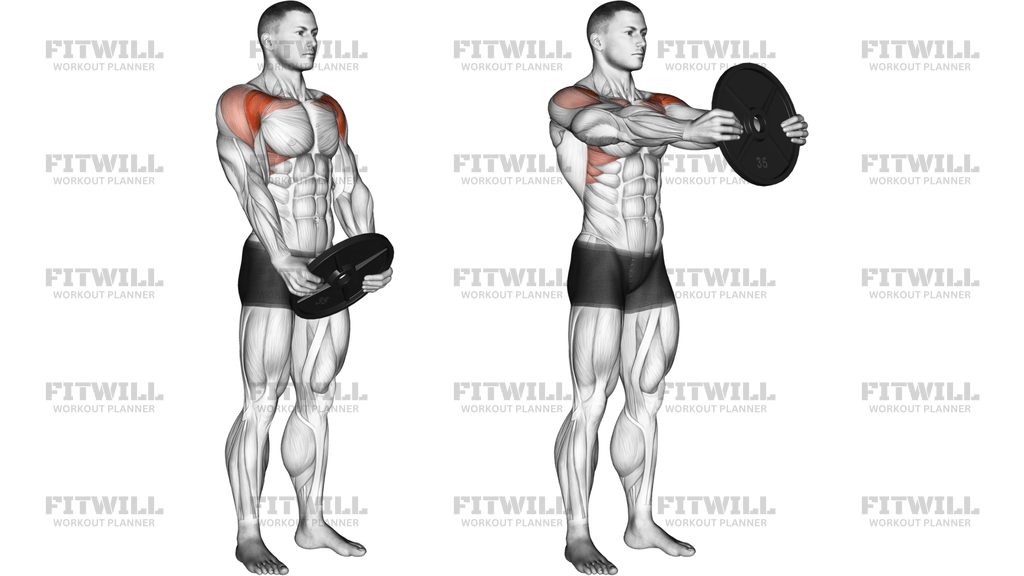
Instructions
- Stand tall with your feet about hip-width apart and hold a weight plate with both hands in front of your thighs.
- Use an overhand grip or pinch the sides of the plate so your wrists stay neutral and the plate hangs centered in front of your body.
- Set your shoulders down, stack your ribs over your pelvis, and keep a slight bend in your elbows before the first rep.
- Brace your torso and raise the plate forward in a smooth arc, keeping your arms almost straight and your body still.
- Lift until the plate reaches about shoulder height, stopping before your shoulders shrug or your lower back leans back.
- Pause for a beat at the top while keeping tension in the front of the shoulders.
- Lower the plate slowly along the same path until it returns to the front of your thighs.
- Inhale on the way down and exhale as you drive the plate upward, then reset your stance before the next rep.
Tips & Tricks
- Keep the plate close to your thighs at the start so the first inch of the lift does not turn into a swing.
- If the plate pulls your shoulders forward, lower the load and reset with your chest tall before the next rep.
- A soft elbow bend is enough; turning the movement into a bent-arm raise shortens the front-delt lever and changes the exercise.
- Stop around shoulder height unless you can stay perfectly still above that point, because extra height usually comes from traps and momentum.
- Think about lifting the plate forward, not upward, so the path stays smooth and the torso does not lean back.
- Keep your neck long and relaxed; shrugging at the top is a common sign that the set is too heavy.
- Use a slower lowering phase than the lifting phase to keep tension on the front delts and reduce swinging.
- If your grip fatigues before your shoulders, switch to a slightly smaller plate or use a lighter load with the same hand position.
Frequently Asked Questions
What muscle does Weighted Front Raise target most?
The front delts do most of the work. The upper chest, upper traps, and arm muscles help stabilize the plate, but they should not take over the lift.
Can beginners perform this exercise?
Yes. Beginners usually do best with a light plate and a shorter range until they can raise and lower the weight without swinging their torso.
Should I hold the plate with my palms flat or grip the edges?
Either is fine as long as the plate stays secure and your wrists stay neutral. Gripping the sides often feels more stable for most people.
How high should I raise the plate in Weighted Front Raise?
Stop at about shoulder height. Going much higher usually turns the rep into a shrug and shifts stress away from the front delts.
Why do I feel this more in my traps than my shoulders?
That usually means the plate is too heavy or you are shrugging at the top. Keep the shoulders down, shorten the range slightly, and lower the load if needed.
Is Weighted Front Raise better than dumbbell front raises?
It is not better or worse, just different. A plate keeps the load centered and can feel very stable, while dumbbells often allow a more natural hand position.
Can I use momentum to get the plate up?
A small amount of body English usually means the load is too heavy for this exercise. Front raises are most useful when the torso stays still and the shoulders control the arc.
Where does Weighted Front Raise fit in a workout?
It works well after pressing exercises or later in a shoulder session when you want extra front-delt volume without a heavy compound lift.