Dumbbell Overhead Walking Lunge
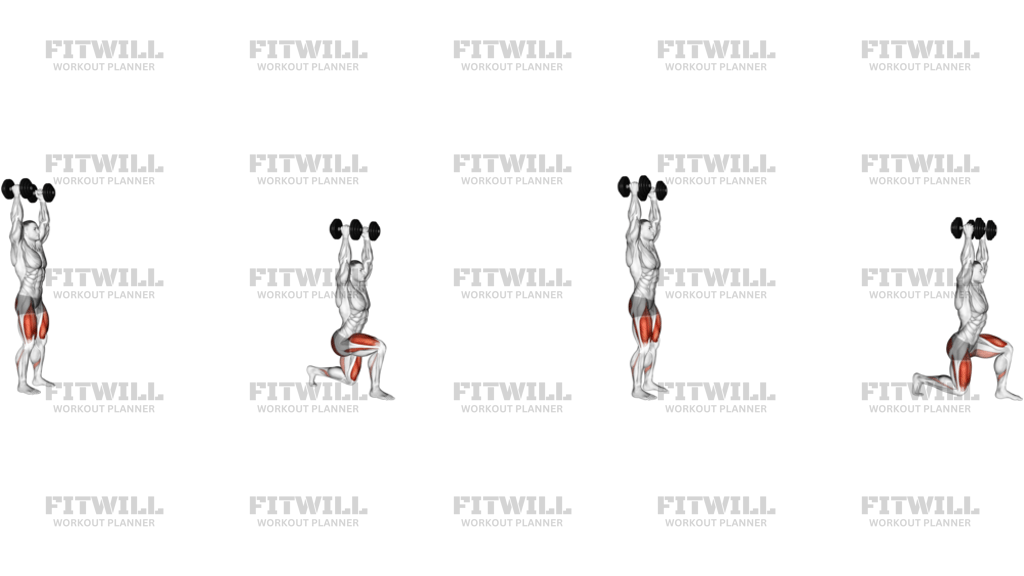
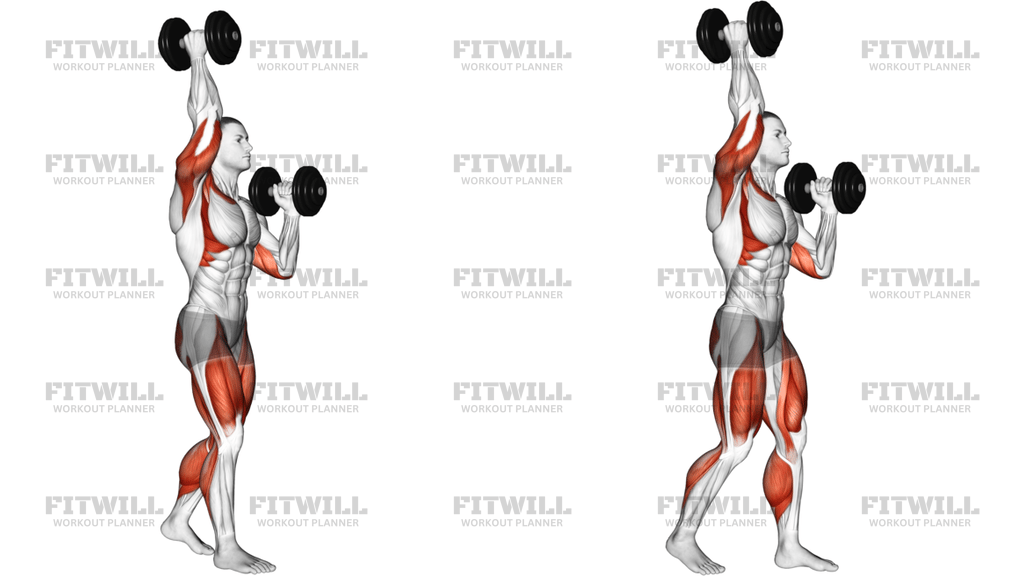
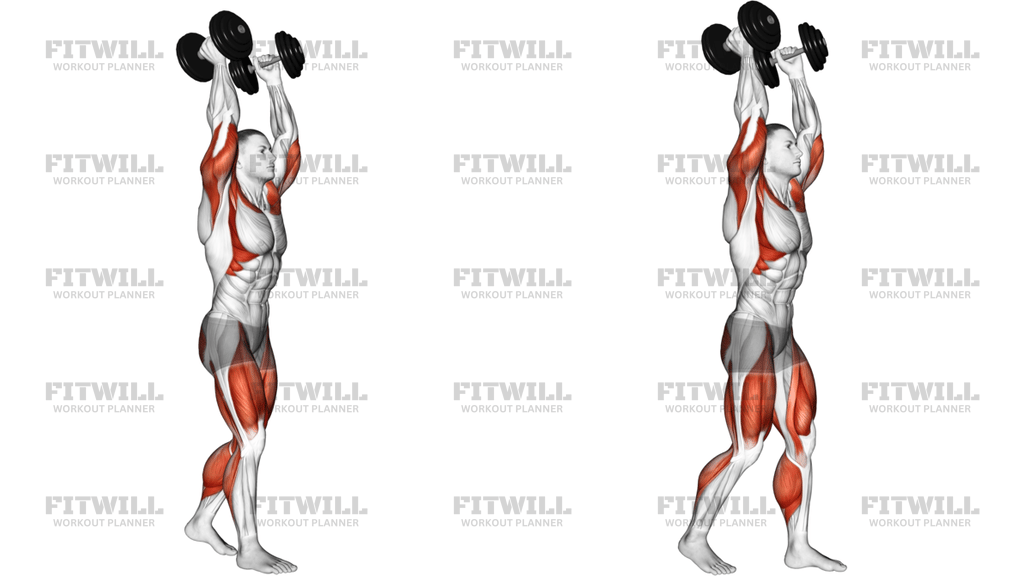
Dumbbell Overhead Walking Lunge is a walking lunge variation that asks you to keep both dumbbells fixed overhead while you step, lower, and stand in an alternating pattern. Because the load sits above your center of mass, the exercise places a lot of demand on your quads, glutes, core, and shoulder stabilizers at the same time. It is useful when you want a lower-body movement that also challenges balance, ribcage control, and overhead stability.
The overhead position changes the whole exercise. Instead of just driving through the legs, you have to keep the dumbbells stacked over the shoulders, the ribs from flaring, and the torso tall while each leg works through its own lunge. That makes Dumbbell Overhead Walking Lunge a strong option for athletes and lifters who want better body control, stronger single-leg mechanics, and more demanding trunk stability than a basic walking lunge.
Setup matters more here than on a standard lunge. Hold the dumbbells overhead with straight arms, wrists stacked over shoulders, and your biceps close to your ears. Before the first step, squeeze your glutes, brace your midsection, and find a stance that lets you stay tall without leaning back. If the weights drift behind your head or your lower back arches early, the set will feel unstable almost immediately.
Each rep should look smooth and deliberate. Step forward far enough that you can lower under control, keep the front heel planted, and let the back knee travel toward the floor without crashing into it. Stand by driving through the front foot and bringing the trailing leg through into the next walking step while the dumbbells stay quiet overhead. The goal is controlled travel, not speed, so every step should feel balanced before the next one begins.
Use Dumbbell Overhead Walking Lunge as a technique-driven strength or accessory movement, not as a place to chase load. It works well in lower-body sessions, athletic preparation, and core-focused training when you want to challenge posture under fatigue. The most important safety cue is simple: if the overhead position becomes unstable, reduce the weight, shorten the step, or switch to a less demanding lunge variation until you can keep the dumbbells stacked and the torso upright.
[ Workout Log & Planner ]
Put your next workout in Fitwill
Keep your plan and training log ready when you are.


Instructions
- Stand tall with your feet about hip-width apart and press two dumbbells overhead with straight arms, wrists stacked over shoulders, and your biceps close to your ears.
- Set your ribs down, squeeze your glutes, and keep your head neutral so the weights stay centered over your midfoot.
- Take a long step forward with one leg and plant the front foot flat so you have room to lower under control.
- Lower straight down until both knees are bent and the back knee hovers just above the floor, keeping your torso upright and the dumbbells steady overhead.
- Keep the front knee tracking over the middle toes and avoid letting your chest tip forward as you descend.
- Drive through the front heel and push the floor away to stand up, finishing tall without leaning back or shrugging the weights.
- Bring the back leg through into the next step and continue walking forward with the same overhead stack and controlled tempo.
- Exhale as you stand, inhale as you lower, and keep your shoulders active for every rep.
- After the final step, lower the dumbbells to your shoulders or sides with control and reset before ending the set.
Tips & Tricks
- Choose lighter dumbbells than you would use for a front-rack or suitcase walking lunge; the overhead position is usually the limiting factor.
- If your lower back arches, shorten the stride and keep the ribs stacked instead of trying to force a deeper lunge.
- Think about reaching the dumbbells toward the ceiling rather than shrugging them into your neck.
- Keep the wrists directly over the shoulders; letting the dumbbells drift behind your head usually turns the rep into a back-extension drill.
- Let the front heel stay down so the front leg does the work instead of bouncing off the toes.
- Move one step at a time and fully balance before the next foot leaves the floor.
- If the back knee taps hard, reduce depth slightly and control the landing instead of collapsing into the bottom.
- Use a smooth walking pace; rushing the steps makes the dumbbells wobble and steals tension from the legs.
- Stop the set when you can no longer keep the elbows straight and the dumbbells stacked over the shoulders.
Frequently Asked Questions
What muscles does Dumbbell Overhead Walking Lunge work?
It mainly trains the quads and glutes, with strong help from the core, upper back, shoulders, and hip stabilizers that keep the dumbbells steady overhead.
Is Dumbbell Overhead Walking Lunge good for beginners?
Yes, but only with very light dumbbells and a short walking path. Many beginners do better starting with bodyweight overhead holds or stationary overhead lunges first.
How heavy should the dumbbells be in Dumbbell Overhead Walking Lunge?
Use a load that lets you keep straight arms, quiet shoulders, and an upright torso for every step. If the weights sway or your ribs flare, the load is too heavy.
Should my arms stay locked out overhead the whole time?
Yes, the goal is to keep the dumbbells stacked over the shoulders with active arms. A tiny elbow softness is fine, but the weights should not drift forward or back.
Why do I feel Dumbbell Overhead Walking Lunge in my lower back?
That usually means the ribs are flaring and the weights are no longer stacked over the midfoot. Reduce the load, tighten the brace, and keep the torso tall instead of leaning back.
Can I alternate legs rep by rep or should I finish one side first?
Either works, but alternating steps is the classic walking version. If balance is shaky, do all reps on one leg at a time before switching.
What if my shoulders can’t hold the dumbbells overhead comfortably?
Use a front-rack walking lunge or a stationary split lunge instead. The leg pattern stays useful while you build overhead mobility and stability.
How deep should each lunge be in Dumbbell Overhead Walking Lunge?
Lower until the back knee is close to the floor and the front foot stays flat, but only as far as you can keep the dumbbells stable and the torso vertical.
What is the biggest form mistake in Dumbbell Overhead Walking Lunge?
The most common mistake is turning it into a forward lean with the weights drifting behind the head. Keep the stack over the shoulders and let the legs, not momentum, move you forward.