Inverted Wide To Narrow Row
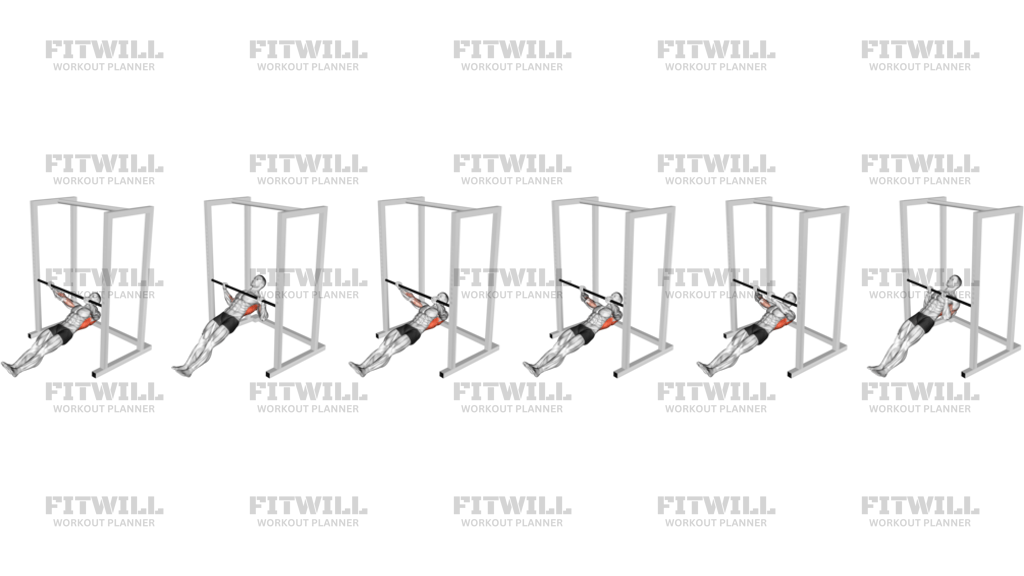
Inverted Wide To Narrow Row is a bodyweight horizontal pull performed under a fixed bar, usually on a rack or Smith machine, with your body held straight and your heels or feet planted on the floor. The wide-to-narrow variation changes how the pull feels across the upper back, lats, and arms, so the setup matters just as much as the row itself. When the bar is stable and your body line is locked in, the exercise becomes a clean way to train pulling strength without relying on momentum or machines.
The wide portion of Inverted Wide To Narrow Row tends to feel more open across the upper back and rear shoulders, while the narrower hand position usually lets the elbows travel closer to the ribs and brings the lats and biceps more into the finish. That makes the movement useful for building balanced rowing strength and for teaching the shoulder blades to move smoothly under load. The working muscles are supported by the core, glutes, and legs, which keep the torso from sagging as you pull.
A good setup starts with a bar that is high enough to let you hang with straight arms and low enough that you can still row your chest toward it without losing body tension. Lie underneath the bar, take a wide overhand grip, set your feet where your body angle feels challenging but controlled, and brace before the first rep. Keep the wrists straight, the neck long, and the ribs down so the row begins from a strong plank-like position instead of a loose arch.
From there, row your chest toward the bar by driving the elbows back and keeping the shoulders away from your ears. On the wide-grip phase, let the elbows travel a little farther out while you keep the torso rigid; on the narrow-grip phase, bring the hands in evenly and pull with the elbows closer to your sides. Lower under control every time, because the return is part of the exercise and is where a lot of the strength-building work happens.
This is a practical back exercise for home training, accessory pulling work, or bodyweight strength sessions when you want a horizontal row with more variation than a standard grip. It can be scaled by changing foot position, moving the bar height, or slowing the lowering phase, which makes it useful for beginners and advanced lifters alike. Keep the reps smooth, stop before your hips drop or your shoulders shrug, and treat each grip change as part of the drill rather than a rushed reset.
[ Workout Log & Planner ]
Put your next workout in Fitwill
Keep your plan and training log ready when you are.


Instructions
- Set a sturdy bar on a rack or Smith machine at about waist height and lie underneath it with your heels or feet planted on the floor.
- Take a wide overhand grip that is slightly wider than shoulder width and keep your wrists stacked under the bar.
- Straighten your legs, squeeze your glutes, and hold your body in one long line from head to heels before you pull.
- Draw your chest toward the bar by driving your elbows back and slightly out while keeping your shoulders away from your ears.
- Pause briefly when your chest reaches the bar and your shoulder blades are squeezed together.
- Lower yourself under control until your arms are straight again and your torso stays rigid.
- Walk your hands inward to a narrower overhand grip without letting your hips twist or drop.
- Repeat the row from the narrow grip with your elbows closer to your sides and your chest moving to the same point on the bar.
- Finish the set by lowering with control, setting your feet down, and stepping clear of the bar.
Tips & Tricks
- The wide grip usually feels more upper-back dominant, while the narrow grip puts more of the finish on the lats and biceps.
- Keep your heels heavy on the floor; if they slide, the body angle is probably too steep for a strict row.
- Squeeze your glutes and keep your ribs down so the pull does not turn into a low-back arch.
- Pull the shoulders down before you bend the elbows if the top of the rep turns into a shrug.
- Move the hands in evenly when you switch to the narrow grip so one side does not take over the set.
- A brief pause at the bar is useful only if your neck stays long and the bar path stays smooth.
- Use a slower lowering phase if you want more challenge without changing the bar height or foot position.
- Stop the set when your hips start to sag or your chest stops reaching the same point on the bar.
- Keep the bar in the base of the palm and the wrists straight if the grip starts to feel shaky.
Frequently Asked Questions
What muscles does Inverted Wide To Narrow Row work most?
It mainly trains the lats, upper back, rear shoulders, and biceps, with the core and glutes helping keep the body straight under the bar.
Is the wide grip or the narrow grip harder in Inverted Wide To Narrow Row?
The wide grip usually feels tougher across the upper back and rear shoulders, while the narrow grip often makes the elbows tuck more and shifts the finish toward the lats and arms.
Do I need a rack or Smith machine for Inverted Wide To Narrow Row?
You need a fixed bar that will not roll or shift under your hands, so a rack, Smith machine, or similarly stable bar is the safest setup.
How do I keep my hips from dropping during the row?
Set your feet so your body angle is manageable, squeeze your glutes, and stop the set as soon as the torso starts to lose its straight line.
Can beginners do Inverted Wide To Narrow Row?
Yes, as long as the bar is high enough to control and the body angle is shallow enough to keep the chest and hips moving together.
Should my chest touch the bar in Inverted Wide To Narrow Row?
Bring the chest to the bar only as far as you can without losing the plank line; a clean touch is good, but a shorter controlled range is better than shrugging or twisting.
How do I breathe during the wide and narrow rows?
Exhale as you pull your chest up and inhale as you lower back to straight arms, keeping the breath steady through the grip change.
What should I change if Inverted Wide To Narrow Row feels too hard?
Move your feet closer to the bar, make the body angle more upright, or stay with the wide-grip version until you can keep the narrow grip strict.