Long Lever Lying Back Extension
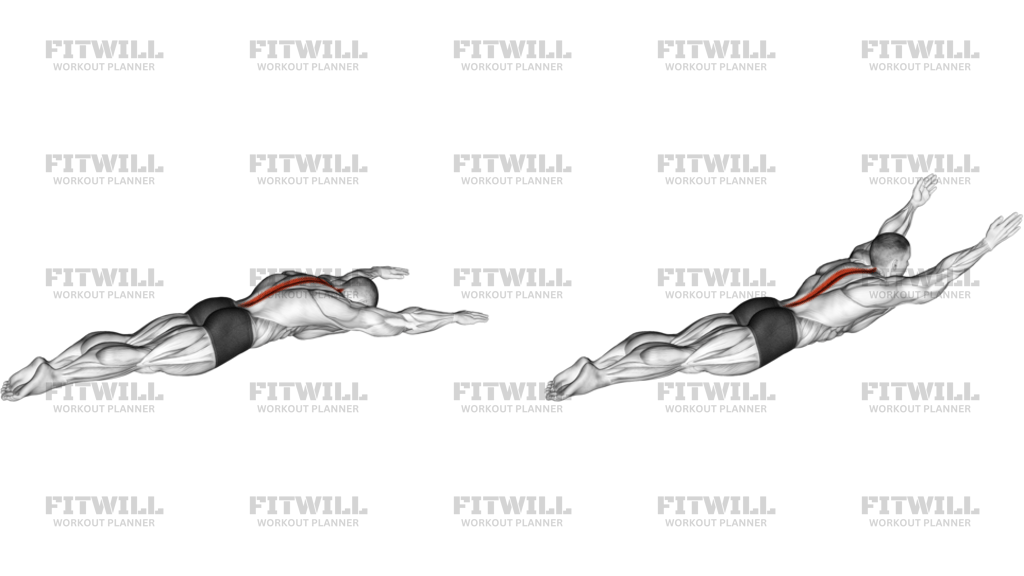
Long Lever Lying Back Extension is a prone posterior-chain drill where you lie face down with your arms reaching overhead and lift your chest, legs, and arms together in a long lever. The extended arm position makes the movement much harder than a basic floor back extension because it increases the torque on your trunk, glutes, and spinal erectors. It is a useful bodyweight exercise for building controlled extension strength without a lot of equipment.
The long lever changes the demand more than the range of motion. Instead of chasing a big arch, you are trying to keep the body long, organized, and tense while the shoulders, upper back, glutes, and lower back cooperate to raise the body a few inches. That makes the exercise a good fit for warm-ups, accessory work, core stability training, and athletes who need better control through the back of the body.
Setup matters because the position on the floor determines whether the lift comes from the target muscles or from jerking the neck and low back. Lie flat with your forehead facing down, arms straight overhead in line with your ears, and legs extended behind you. Keep the hips square to the floor, squeeze the glutes lightly, and create tension from fingertips to toes before you start the first rep.
Each repetition should feel smooth and deliberate. Lift the chest and thighs just enough to clear the floor, keep the neck long, and avoid throwing the arms upward to fake a bigger range. The top position is a brief controlled hold, not a hard backbend. Lower under control until the ribs, thighs, and hands return to the floor together, then reset your breath before the next rep.
Because this is a long-lever prone extension, small errors become noticeable quickly. If you lift too high, the lower back can take over and the front of the hips may pop off the floor. If you shrug the shoulders or crane the neck, the work shifts away from the intended posterior chain. Keep the rep clean, stop before the position breaks down, and use the exercise to train tension and position rather than maximal height.
Fitwill
Log Workouts, Track Progress & Build Strength.
Achieve more with Fitwill: explore over 9600 exercises with images and videos, access built-in and custom workouts, perfect for both gym and home sessions, and see real results.
Start your journey. Download today!




Instructions
- Lie face down on the floor or mat with your forehead down, arms fully extended overhead, and legs straight behind you.
- Set your hands in line with your ears and keep your palms facing the floor or slightly inward so the shoulders stay long.
- Press the tops of your feet and thighs lightly into the floor, then square your hips and ribs before you move.
- Tighten your glutes and lower abs as if you are bracing for a small lift off the floor.
- Lift your chest, arms, and thighs together a few inches until they are just clear of the floor.
- Keep your neck neutral and your gaze down so the lift comes from the back of the body, not from looking forward.
- Hold the top briefly without shrugging or kicking, then lower with control until the body returns to the mat.
- Exhale as you lift, inhale as you lower, and reset completely before starting the next rep.
Tips & Tricks
- Think about lengthening from fingertips to toes before you think about height; this exercise is about tension, not a huge arch.
- Keep the lift small if your low back starts to pinch; the rep is still effective when the chest and thighs only clear the floor slightly.
- Squeeze the glutes before the chest rises so the lower back does not try to do all the work.
- Let the arms stay in line with your ears instead of flaring wide, which makes the long lever less stable and usually shifts tension into the neck.
- Avoid kicking the legs or swinging the arms; any bounce usually means the torso is not controlling the rep.
- If the shoulders fatigue before the trunk, lower the arms a touch and keep the reach active rather than bending the elbows.
- Lower slowly enough that the ribs and thighs touch down at the same time instead of dropping the chest first.
- Stop the set when you can no longer keep the neck long and the hips square to the floor.
Frequently Asked Questions
What muscles does Long Lever Lying Back Extension work?
It emphasizes the glutes, spinal erectors, upper back, and deep core stabilizers. The overhead arm position also asks the shoulders to stay active the whole time.
Is Long Lever Lying Back Extension the same as a superman?
It is very close, but the long-lever version is usually harder because the arms stay fully overhead and lengthen the lever. That increases the demand on the trunk and posterior chain.
How high should I lift in Long Lever Lying Back Extension?
Only lift high enough for the chest, arms, and thighs to clear the floor with control. A small, clean lift is better than forcing a big arch.
Should I feel Long Lever Lying Back Extension in my lower back?
Some lower-back work is normal, but the effort should feel shared with the glutes and upper back. If it feels sharp or pinchy in the spine, reduce the height of the lift.
Can beginners do Long Lever Lying Back Extension?
Yes, as long as they keep the lift small and controlled. Beginners should focus on the floor setup first and avoid trying to hold the top for too long.
What is the most common mistake with this movement?
Lifting too high and turning it into a low-back arch is the most common problem. The second biggest mistake is cranking the head up and losing the long neck position.
How can I make Long Lever Lying Back Extension easier?
Shorten the range, keep the lift lower, or reduce the top hold. If needed, start with a regular prone back extension before progressing back to the long-lever version.
What should I do if my shoulders get tired first?
Keep the arms reaching long but lower them slightly from the ears if you can no longer hold the position cleanly. The exercise should still feel like a trunk and posterior-chain drill, not an overhead shoulder hold.