Stationary Arms Throw
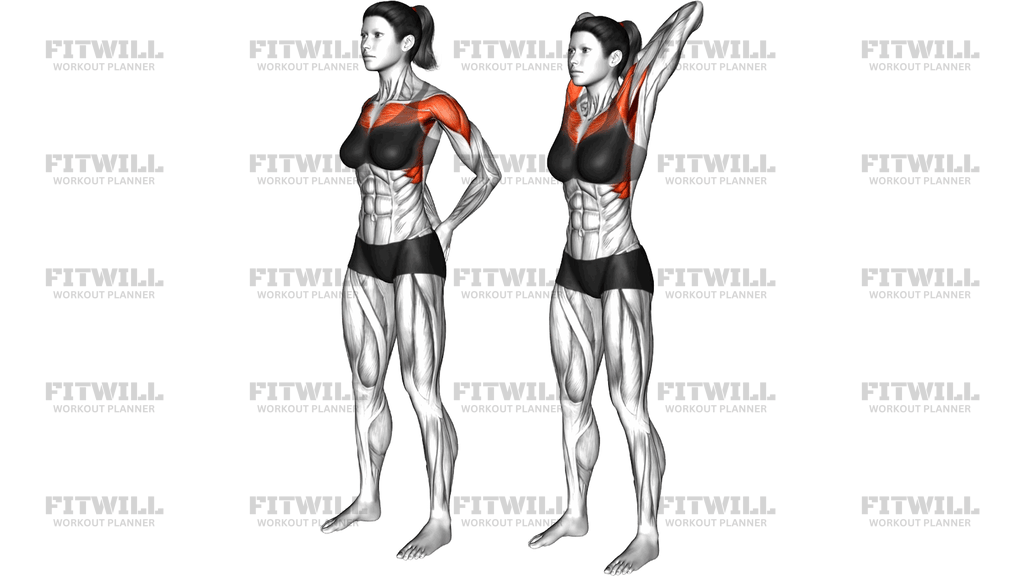
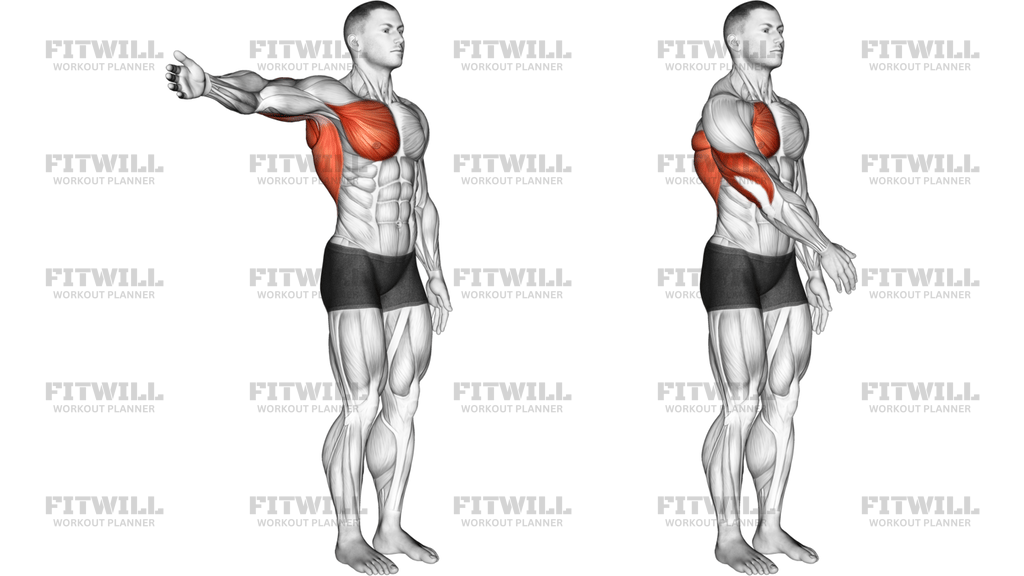
Stationary Arms Throw is a bodyweight back-and-shoulder drill built around a fixed hip hinge and a fast but controlled arm swing. The torso stays set while the shoulders and lats guide the arms through the throwing arc, which makes the exercise useful for learning how to produce force without losing position. It is not a weight-room press or pull; it is a coordination and control pattern that teaches the upper body to move cleanly from a braced setup.
The main training stress falls on the lats, upper back, and arms, with the forearms helping you keep the hands organized through the reach and return. In practical terms, that means the latissimus dorsi works with the rhomboids, biceps brachii, and forearm flexors to control the sweep. Because the movement is performed with the chest hinged forward and the spine held quiet, the back has to work harder to resist unwanted swinging and rounding.
The setup matters more than the speed of the arm action. Hinge at the hips, keep a soft bend in the knees, and let the torso sit long and stable instead of collapsing toward the floor. From there, the arms travel through a repeated throw-like path while the rib cage and pelvis stay stacked enough to keep the rep honest. If the lower back starts taking over, the hinge is usually too deep or the trunk is no longer locked in place.
Done well, Stationary Arms Throw feels crisp, athletic, and repeatable. The rep should look like the arms are moving aggressively while the body stays deliberately still. That makes it a good accessory drill for warmups, activation work, or technique-focused conditioning when you want back engagement without loading the spine. It also works as a light movement pattern for beginners who need to learn how to keep their shoulders and trunk coordinated.
The biggest mistake is turning the drill into a loose body swing. Keep the neck relaxed, keep the feet rooted, and let the shoulders move the arms instead of shrugging or jerking through the torso. Use the exercise to rehearse clean positions and sharp control, not to chase fatigue by speeding up until the hinge breaks down.
Fitwill
Log Workouts, Track Progress & Build Strength.
Achieve more with Fitwill: explore over 9600 exercises with images and videos, access built-in and custom workouts, perfect for both gym and home sessions, and see real results.
Start your journey. Download today!




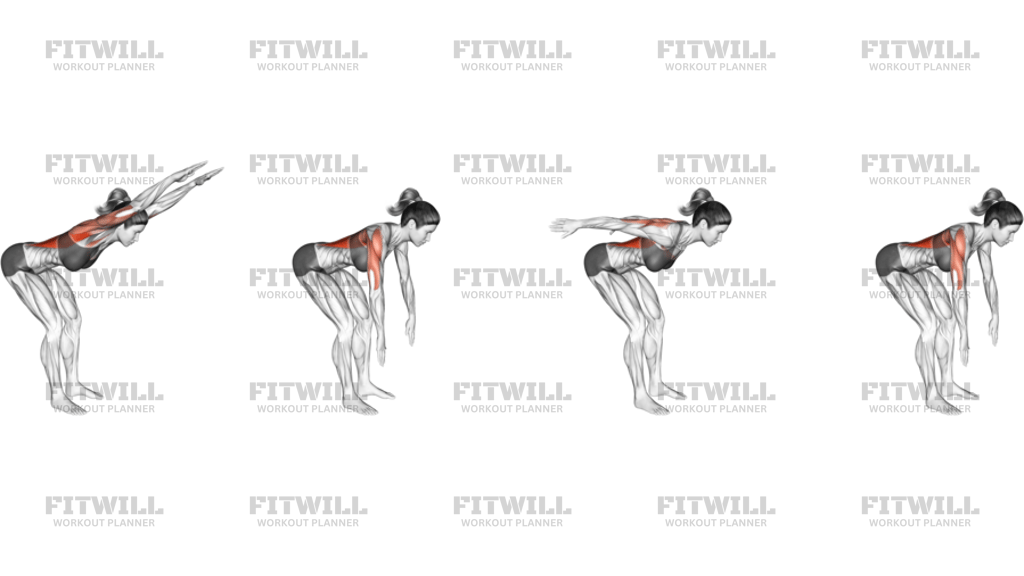
Instructions
- Stand with your feet about hip-width apart, then hinge forward at the hips until your torso is angled toward the floor with a long, flat back.
- Keep a soft bend in both knees, let your arms hang down from the shoulders, and set your neck in line with the rest of your spine.
- Brace your midsection before each rep so your rib cage does not flare or twist as the arms move.
- Sweep the arms through the throwing path shown for the drill, letting the shoulders drive the motion while the torso stays fixed.
- Reach to the end of the arm path without shrugging up into the neck or losing the hip hinge.
- Reverse the motion smoothly and bring the arms back under control to the start position.
- Keep the lower body quiet and avoid bouncing through the knees or rocking the hips to fake extra range.
- Exhale through the working part of the rep and reset your hinge before starting the next throw.
- Stop the set if your back rounds, your shoulders lose the hinge position, or the movement turns into a swing.
- Finish by standing up with control and relaxing the arms before the next set.
Tips & Tricks
- Think of the hips as frozen in place; if the torso keeps rising and falling, the hinge is too loose.
- A shallow hinge usually works better than an extreme bend, because it lets the lats move the arms without the lower back taking over.
- Keep the shoulders away from the ears so the throw stays in the lats and upper back instead of becoming a shrug.
- The rep should feel quick through the arms but not sloppy through the trunk; speed belongs in the swing, not in the setup.
- If your hands drift wide and the shoulders feel jammed, shorten the arc and keep the elbows slightly softer.
- Do not chase a bigger throw by arching the low back; end the rep when the hinge and rib position would start to change.
- Breathe out as the arms move through the effort, then reset your brace before the next rep instead of holding tension blindly.
- Use this drill with low fatigue first, because once the back starts to burn, momentum can mask poor positioning very quickly.
Frequently Asked Questions
What muscles does Stationary Arms Throw work most?
The lats do most of the work, with the upper back and arms helping control the arm path.
Do I need equipment for Stationary Arms Throw?
No external load is required for the bodyweight version. The challenge comes from holding the hinge and keeping the shoulders organized while the arms move.
How bent over should I be for Stationary Arms Throw?
Hinge far enough that the torso is clearly forward, but not so low that your low back rounds or the chest collapses toward the floor.
Why do my shoulders feel like they take over?
Usually the shoulders are shrugging because the neck and rib cage are not staying set. Keep the shoulders down and let the lats guide the swing instead.
Can beginners do Stationary Arms Throw safely?
Yes, if they keep the motion small and slow enough to hold the hinge. It is a good drill for learning torso control before harder pulling work.
What is the most common mistake with Stationary Arms Throw?
The biggest mistake is turning the drill into a full-body swing. The hips and trunk should stay quiet while the arms do the visible work.
Where should I feel the exercise?
You should feel the back of the torso working to keep the arm path controlled, especially through the lats and upper back.
How can I make Stationary Arms Throw easier?
Reduce the range of the arm swing and slow the pace down. Keeping the hinge shallower also makes it easier to stay organized.