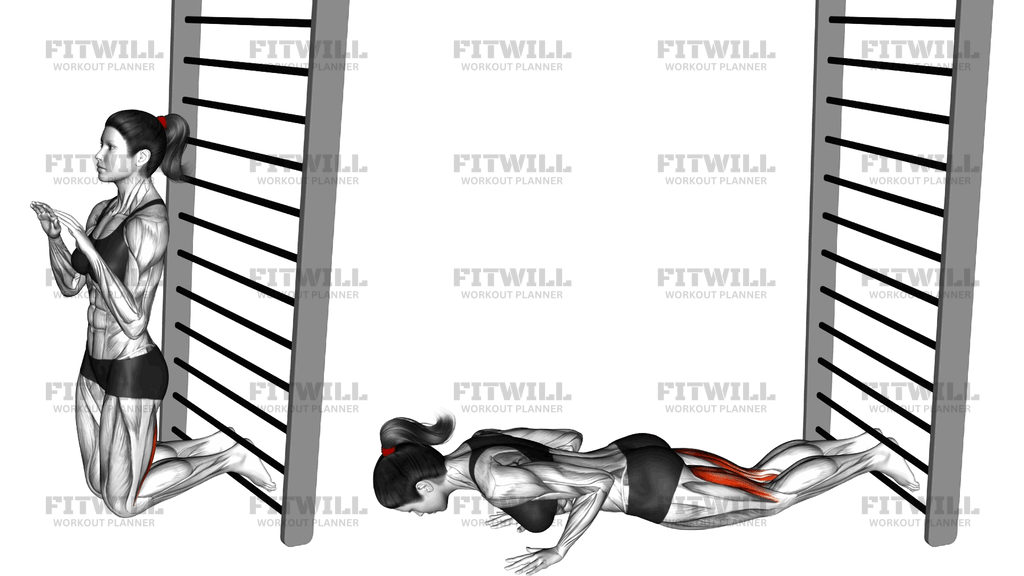
Inverted Row Slide On Floor
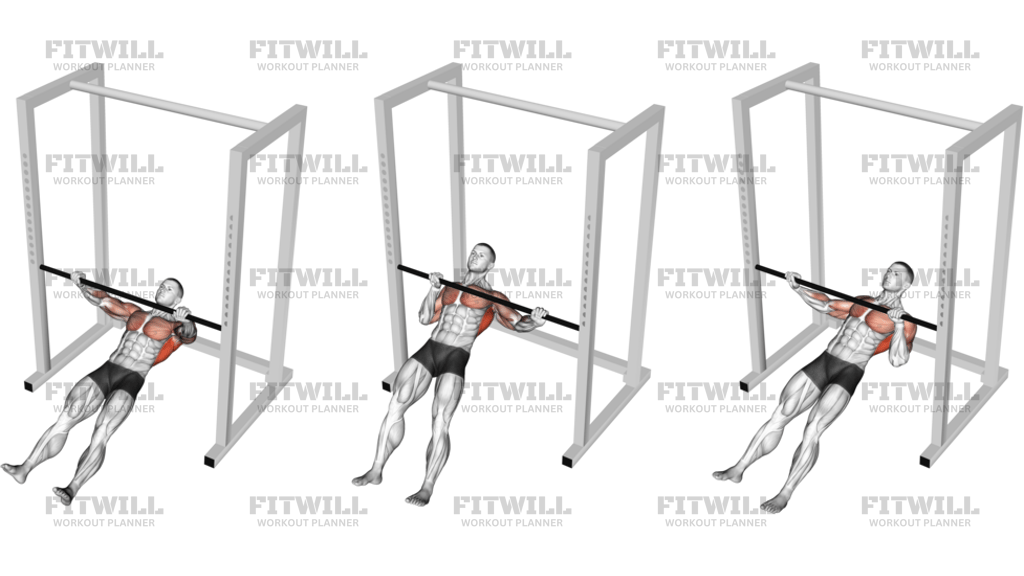
Inverted Row Slide On Floor is a bodyweight pulling exercise built around a low bar and a rigid body line. It trains the back through a horizontal pull, with the shoulders, arms, and trunk working together to keep the torso from sagging or twisting. The bar position and your body angle matter a lot, because a small change in height or foot placement can turn the rep from manageable to sloppy.
Set up under a bar fixed in a rack so your chest is roughly below the bar and your heels can stay planted on the floor. From that position, the exercise asks you to row your body toward the bar instead of pulling a handle to you. That makes the movement useful for learning how the shoulder blades, elbows, and trunk should coordinate during a clean rowing pattern.
The best repetitions start with a tight setup: legs long, glutes squeezed, ribs controlled, and neck neutral. When the body stays in one straight line, the upper back can do its job without the hips dropping or the lower back taking over. If the bar is too high or your feet are too far away, the row becomes short and unstable; if the bar is lower, the exercise gets much harder because your body is more horizontal.
Pull by driving the elbows back and slightly down, then finish with the chest close to the bar and the shoulder blades under control. Do not yank the body upward or chase height by craning the neck. The rep should look smooth from the bottom position to the top, with a controlled return that preserves tension instead of collapsing onto the floor.
Inverted Row Slide On Floor fits well in back-focused strength work, upper-body accessory sessions, or beginner programs that need a scalable pulling option. It also works well for people who want a row variation that reinforces body tension at the same time as back strength. Keep the range pain-free, use a grip width that lets the elbows travel naturally, and stop the set when the hips start to sag or the shoulders start shrugging.
Fitwill
Log Workouts, Track Progress & Build Strength.
Achieve more with Fitwill: explore over 9600 exercises with images and videos, access built-in and custom workouts, perfect for both gym and home sessions, and see real results.
Start your journey. Download today!




Instructions
- Set a bar in a rack at about lower-chest height and lie underneath it with your chest below the bar, heels on the floor, and an overhand grip just wider than shoulder width.
- Straighten your legs, squeeze your glutes, and keep your body in one line from heels to head before you start the first rep.
- Pull your shoulders down away from your ears so your chest is tall and your neck stays long.
- Take a breath, then row your chest toward the bar by driving your elbows back and slightly down.
- Keep your torso rigid as you pull; let the shoulder blades move, but do not let the hips sag or twist.
- Touch or nearly touch the bar with your upper chest while keeping your wrists straight and your chin neutral.
- Lower yourself under control until your arms are straight again and your shoulder blades open without losing body tension.
- Exhale on the pull, inhale on the return, and reset your line before the next rep.
- When the set is done, bend your knees, sit up carefully, and step out from under the bar.
Tips & Tricks
- A lower bar makes the row harder because your body sits closer to horizontal.
- If your hips drop, bend your knees slightly or move your feet closer so you can keep a straight line.
- Keep your elbows from flaring straight out to the sides; aim them back toward your ribs.
- Think about bringing your chest to the bar instead of trying to yank your hands to your shoulders.
- Pause for a beat at the top so the upper back does the work instead of momentum.
- Keep your heels planted so you do not slide forward as you row.
- Do not crank your chin forward to reach the bar; keep the neck in line with the torso.
- Use a slow lowering phase if you want more control and better lat and mid-back tension.
- Stop the set when the body starts to wobble or the bar touch turns into a hip thrust.
Frequently Asked Questions
What muscles does Inverted Row Slide On Floor train?
It targets the back first, especially the lats, rhomboids, and mid traps, with the rear delts, biceps, and core helping to keep the body rigid.
Is Inverted Row Slide On Floor good for beginners?
Yes. It is easier to scale than a free-weight row because you can change the bar height, bend the knees, or shorten the lever if needed.
How do I set the bar for Inverted Row Slide On Floor?
Start with the bar around lower-chest height. Lowering it makes the rep harder, while raising it makes the row more upright and easier to control.
Should my heels stay on the floor during this row?
Yes, heels planted helps keep the body long and stable. If you cannot keep that line, bend the knees a little instead of letting the hips sag.
Why do my shoulders feel like they take over?
Usually the shoulders are shrugging or the elbows are flaring too wide. Keep the chest tall, pull the shoulders down, and row the elbows back rather than lifting them up.
How can I make Inverted Row Slide On Floor harder?
Lower the bar, straighten the legs more, or add a one-second pause with the chest near the bar. A slower lowering phase also increases the challenge.
What is the most common mistake in this exercise?
Losing the straight body line is the big one. If the hips sag or the lower back arches hard, the row stops training the back cleanly.
Can I use a different grip on this movement?
You can, but the overhand grip in this version keeps the emphasis more on the upper back. A supinated grip usually shifts more work toward the biceps.