V Sit Cross Punch
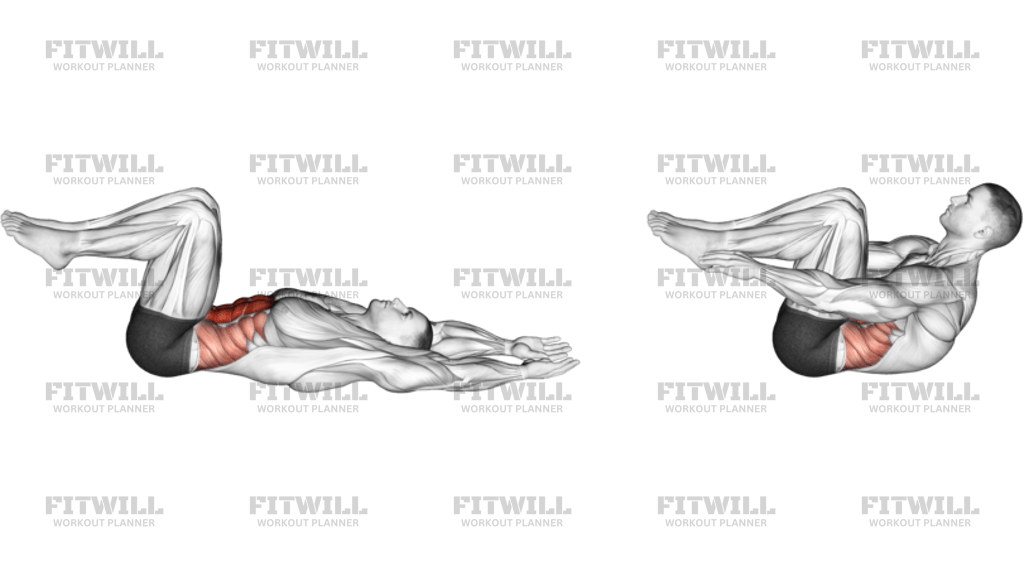
V Sit Cross Punch is a bodyweight core exercise performed from a reclined V-sit. One hand stays near the chest while the other reaches across the body in a punch, asking the abdominals and obliques to keep the torso lifted and the pelvis steady while the shoulders move through a controlled cross-body pattern.
The movement is mainly a trunk-control drill, not a power punch. You are training the rectus abdominis, external obliques, hip flexors, and the smaller stabilizers that keep the rib cage from flaring and the lower back from collapsing as the legs hover off the floor. That makes it useful when you want abdominal tension, torso coordination, and a little shoulder endurance in the same exercise.
The setup matters because the exercise gets harder fast once the legs lift. Sit on the floor, lean back into the V position, and find a height where you can keep the chest open without over-arching the low back. From there, the punch should travel diagonally across the midline while the opposite side of the trunk resists twisting out of control. If the torso starts rolling side to side, the repetition is too fast or the lever is too long.
Good reps look compact and deliberate. Keep the chin slightly tucked, reach only as far as you can without losing balance, and bring the punching hand back to guard before switching sides. The legs can stay bent or more extended depending on your control, but the lower back should stay long rather than rounded hard into the floor. Exhale on each punch so the abs help drive the movement instead of the hip flexors taking over.
This exercise fits well in a warm-up, core circuit, conditioning block, or accessory session where you want controlled trunk work without equipment. Beginners can use a bent-knee version with a smaller lean, while stronger athletes can extend the legs farther or slow the tempo. Keep the motion smooth and stop the set when the punch becomes a swing or the torso starts rocking instead of staying centered.
[ Workout Log & Planner ]
Put your next workout in Fitwill
Keep your plan and training log ready when you are.


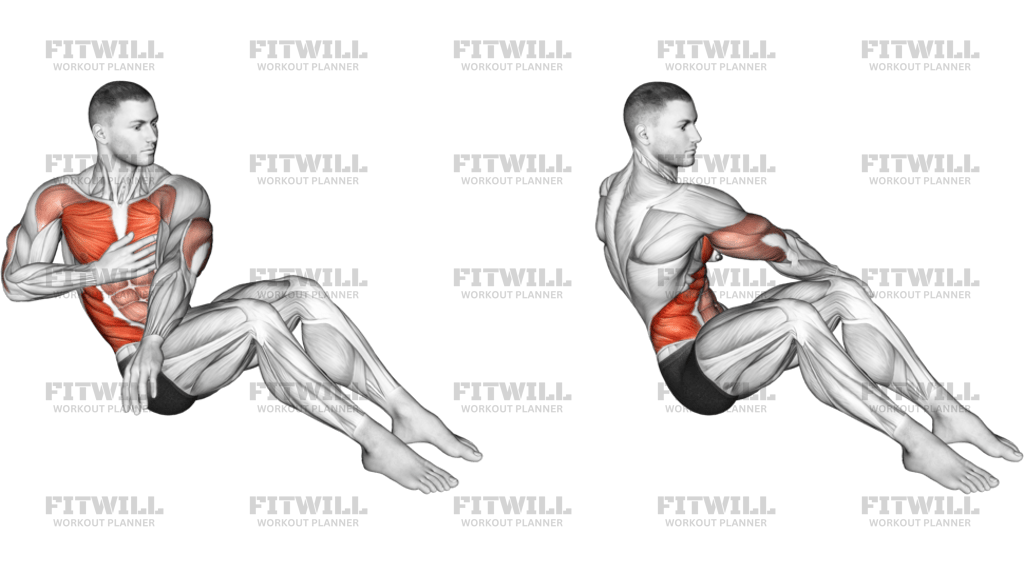
Instructions
- Sit on the floor and lean back into a V-sit, balancing on your sitting bones with your chest lifted and your torso held long.
- Raise your feet off the floor and bend your knees enough to keep control; keep the low back from collapsing as you find your balance.
- Bring one hand to guard near your chest and extend the other arm forward at shoulder height.
- Brace your abs, then keep your ribs stacked over your pelvis before you start the first punch.
- Punch the working hand across your body toward the opposite side while keeping the torso mostly centered.
- Return the punching hand back to guard with control instead of letting the shoulder drop or the torso swing.
- Switch sides and repeat the cross-body punch while the legs stay lifted and the trunk stays steady.
- Exhale on each punch and keep the motion smooth for the planned number of repetitions or time.
Tips & Tricks
- Keep the punch short and sharp; reaching farther usually turns the rep into a torso swing.
- If your hip flexors dominate, bend the knees more and bring the shins closer to parallel with the floor.
- Stay tall through the chest instead of curling into a C-shape, or the abs will lose leverage quickly.
- Let the ribs rotate only a little on each punch; the goal is controlled anti-rotation, not a full twist.
- Keep the non-punching hand near the chest so the shoulders do not drift forward and change the balance point.
- Point the toes or keep them lightly flexed, but do not kick the legs to create momentum.
- Exhale as the fist travels across the body to help the lower abs lock the pelvis in place.
- Stop the set when your feet start dropping, your low back rounds hard, or the punches turn into jerky reaches.
Frequently Asked Questions
What does V Sit Cross Punch work most?
It mainly trains the rectus abdominis and obliques, with the hip flexors and shoulders helping to hold the V-sit and punch position.
Can beginners do this without losing balance?
Yes, but they should start with bent knees and a smaller lean so the torso stays steady while the legs are lifted.
How high should my feet be during the V-sit?
Lift them only as high as you can while keeping the rib cage stacked and the low back long; if the torso shakes, lower the legs slightly.
Should I rotate my whole body on each punch?
No. A small amount of trunk rotation is fine, but the exercise is better when the torso stays mostly centered and resists twisting.
Why does my neck get tired first?
Usually the head is drifting forward. Keep the chin slightly tucked and the chest lifted so the abs, not the neck, support the position.
Can I keep my knees bent the whole time?
Yes. Bent knees shorten the lever and make it easier to keep the pelvis stable, which is useful for beginners or longer sets.
Is this more of a strength exercise or a conditioning drill?
It can be both, but most people use it as controlled core conditioning or accessory work rather than heavy strength training.
How do I make V Sit Cross Punch harder?
Extend the legs more, slow the tempo, hold the V-sit longer, or add a tighter pause at full reach without letting the torso rock.