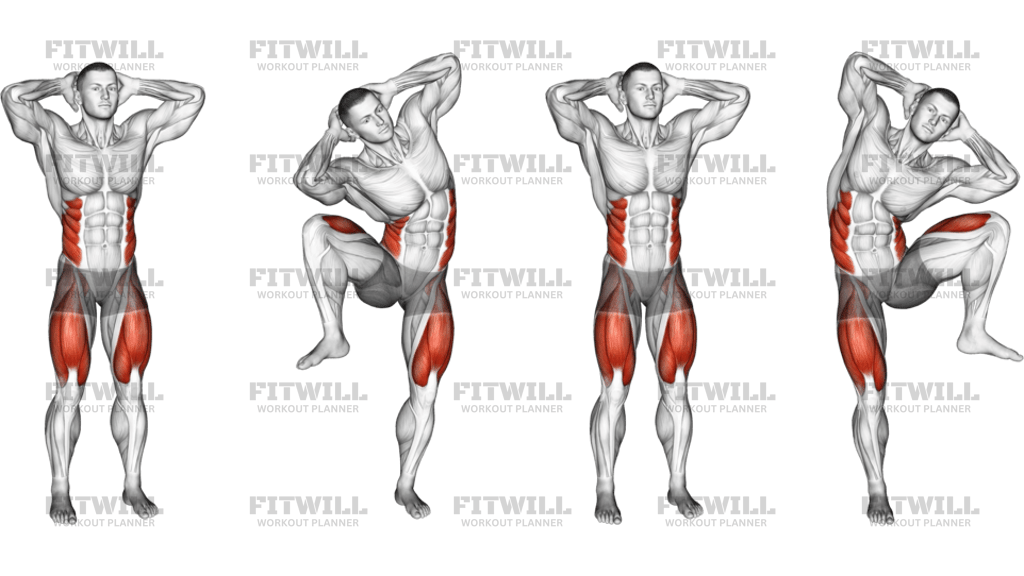
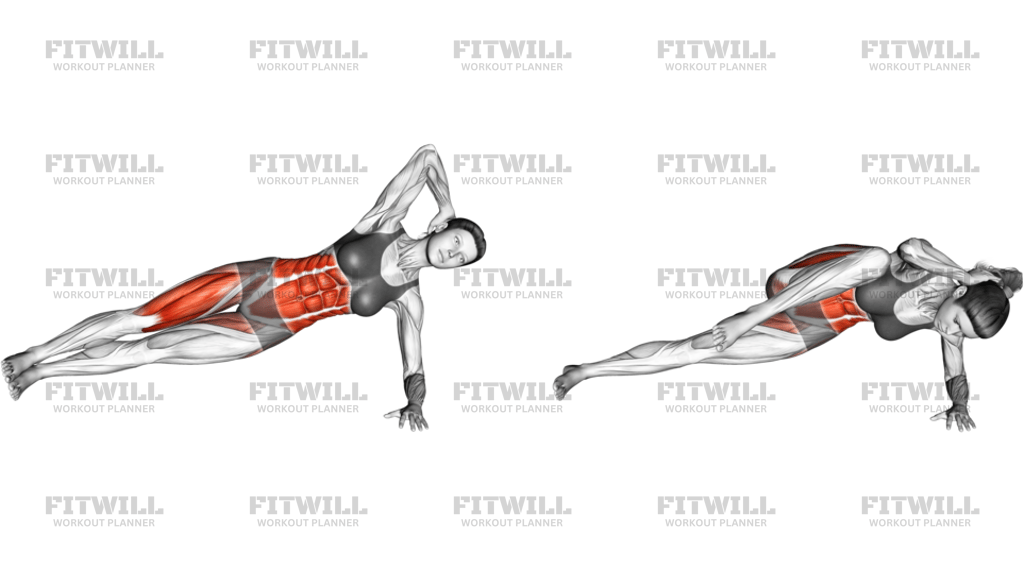
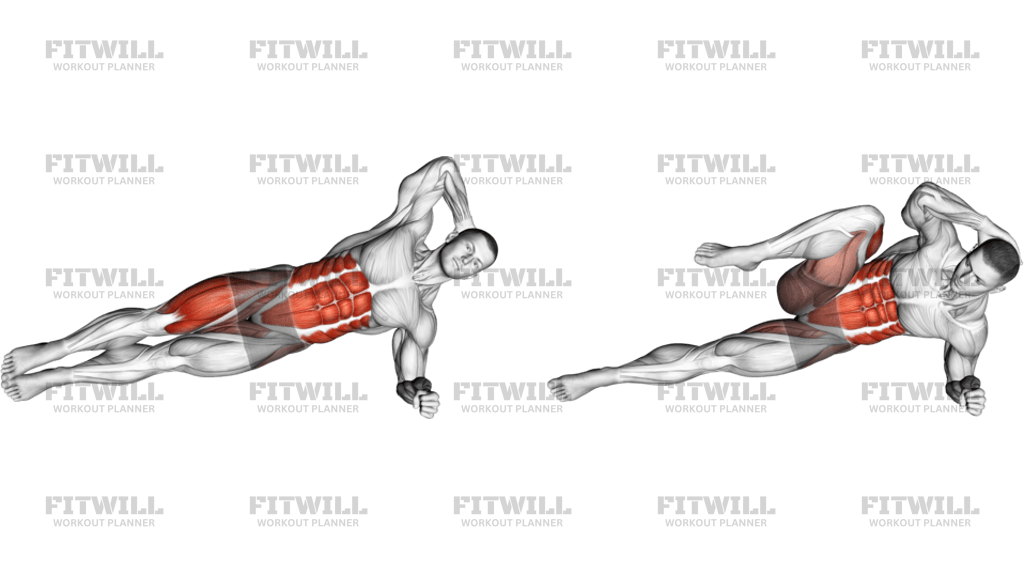
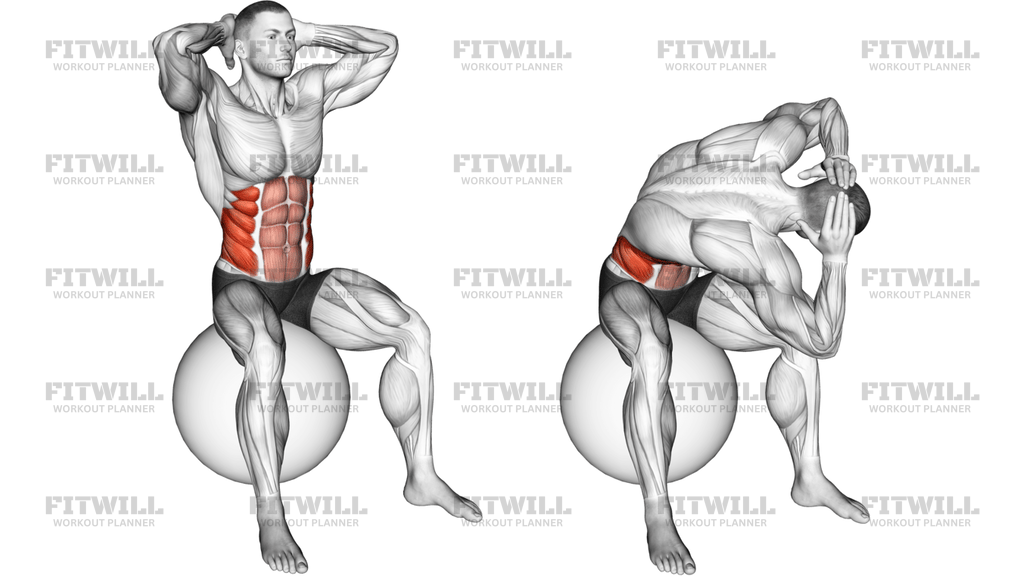
Opposite Crunch
Opposite Crunch is a floor-based core exercise that trains trunk flexion with a light cross-body reach. The legs stay lifted while the torso curls toward the opposite side, so the movement is driven by the abs and obliques instead of by swinging the hips. It is a useful bodyweight drill for improving control through the midline, especially when you want a core exercise that keeps the lower back pressed down and the rib cage organized.
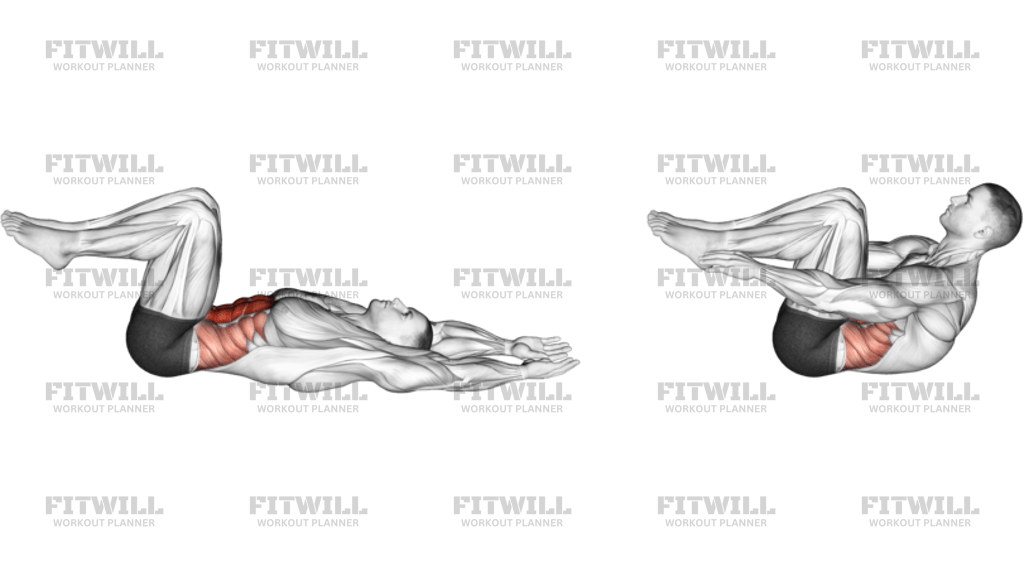
The best setup is simple but specific. Lie on your back on a mat with both legs raised and stacked over the hips, then reach your arms toward the ceiling so the shoulders can move without tension through the neck. Keeping the lower back gently in contact with the floor shortens the lever and makes the abs do the work. If your hamstrings are tight, a slight bend in the knees is better than letting the pelvis tip and the low back arch.
Each rep should feel like a small, deliberate curl rather than a violent twist. Lift the shoulder blades, reach one hand toward the opposite foot, and keep the other arm long for balance while the ribs close toward the pelvis. The goal is to move the torso under control while the legs stay quiet, not to chase a huge range by pulling on the head or rocking side to side. Exhale as you crunch and inhale as you lower back to the mat.
Opposite Crunch fits well in warm-ups, core circuits, accessory work, or as a low-load finisher after heavier lifting. Because the setup removes most external load, the exercise is easy to scale by changing leverage, tempo, or range of motion. That makes it useful for beginners learning how to brace and curl without overusing the hip flexors, and for experienced lifters who want a cleaner abdominal contraction with less momentum.
Keep the movement honest: if the neck tenses, the low back arches, or the legs start drifting, shorten the range and slow the pace. A smooth rep with the shoulders lifting and lowering under control is more valuable than a long set of fast, sloppy reps. Done well, Opposite Crunch gives you direct abdominal work with enough rotation to challenge the obliques, but not so much twist that the motion turns into a swing.
[ Workout Log & Planner ]
Put your next workout in Fitwill
Keep your plan and training log ready when you are.


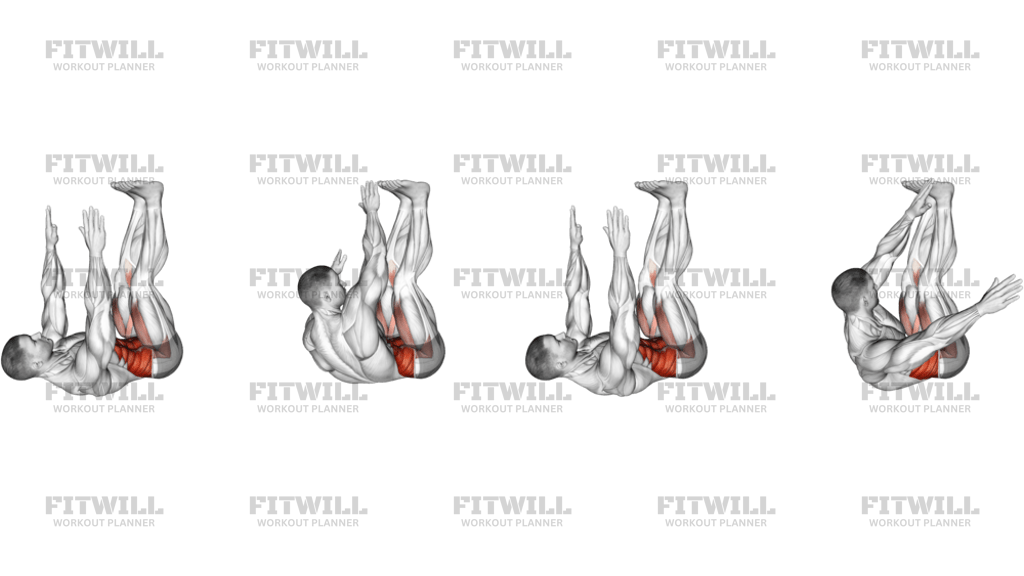
Instructions
- Lie on your back on a mat with both legs raised straight up over your hips and your arms reaching toward the ceiling.
- Press your lower back gently into the floor and keep your feet stacked above your pelvis instead of letting the legs drift forward.
- Tuck your chin slightly so the back of your neck stays long before you start the first rep.
- Brace your abs and lift your shoulder blades off the floor to begin the crunch.
- Reach one hand toward the opposite foot while the other arm stays long for balance.
- Keep the movement small and controlled so the ribs curl toward the pelvis instead of the hips swinging.
- Lower your shoulder blades back to the mat under control while keeping the legs quiet.
- Alternate sides on each rep, or complete the planned side before switching if your program calls for it.
- Exhale as you curl up, inhale as you lower, and reset if your neck or low back starts taking over.
Tips & Tricks
- Keep the legs stacked over the hips; if they drift toward the floor, the low back usually starts arching.
- Reach the chest toward the opposite foot, not the elbow toward the knee, so the curl stays clean.
- Do not pull on your head with the reaching hand; the neck should stay relaxed while the torso does the work.
- A small shoulder-blade lift is enough for this movement, and usually works the abs better than a huge swing.
- If your hip flexors dominate, bend the knees a little and shorten the lever before chasing more reps.
- Slow the lowering phase so the shoulders do not drop back to the mat between reps.
- Keep the rib cage tucked down as you twist so the motion comes from the trunk, not from rocking the hips.
- If one side feels much stronger, pause at the top for a second on the weaker side to even out the control.
Frequently Asked Questions
What muscles does Opposite Crunch work?
It mainly trains the rectus abdominis and obliques, with the hip flexors helping to hold the legs up. If the hips start doing most of the work, shorten the range and keep the curl smaller.
Is Opposite Crunch good for beginners?
Yes. Beginners can keep the knees slightly bent and focus on lifting the shoulders without pulling on the neck. That makes it easier to learn the curl before adding more range or tempo.
Should my legs stay straight in Opposite Crunch?
Straight legs match the full version, but a soft bend is fine if your hamstrings or hip flexors limit the position. The important part is keeping the legs quiet while the torso curls.
How high should I lift my shoulders?
Lift just enough for the shoulder blades to leave the floor and the ribs to fold toward the pelvis. If you are trying to sit all the way up, the hip flexors usually take over.
Why does my neck get tired during this crunch?
Usually because the head is being pulled or because the curl is too large. Keep the chin slightly tucked, look upward, and let the abs start the lift instead of yanking with the arms.
What if my lower back arches off the floor?
Bend the knees a little, raise the legs less aggressively, or reduce the range of the twist. The goal is to keep the lower back heavy against the mat throughout the rep.
How can I make Opposite Crunch harder?
Slow the lowering phase, pause at the top, or keep the legs straighter so the lever is longer. You can also alternate sides more deliberately instead of rushing through the set.
Is Opposite Crunch the same as a bicycle crunch?
No. A bicycle crunch usually involves alternating elbow-to-knee motion with the legs pedaling, while Opposite Crunch keeps the legs more fixed and focuses on a cleaner cross-body curl.