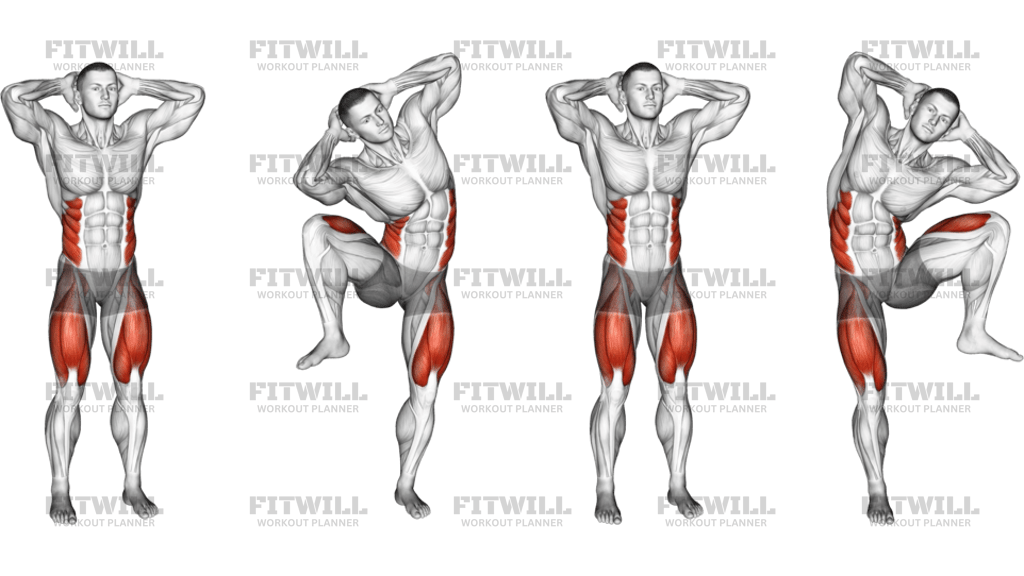
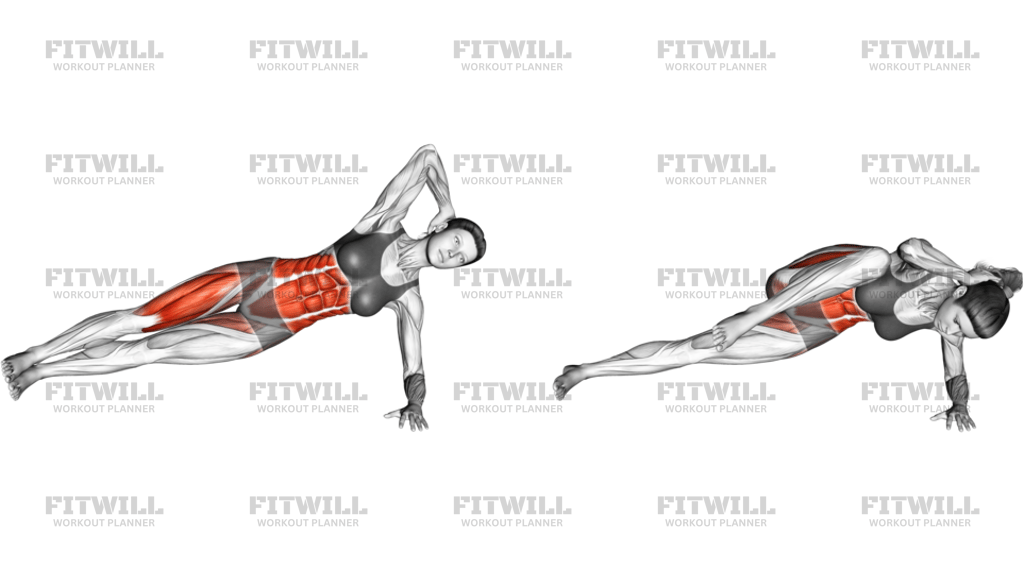
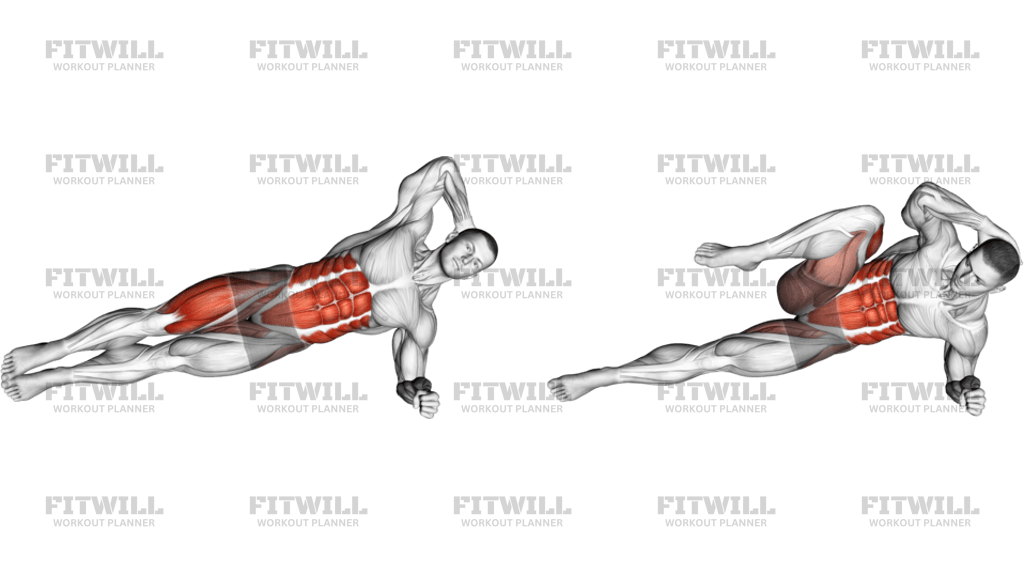
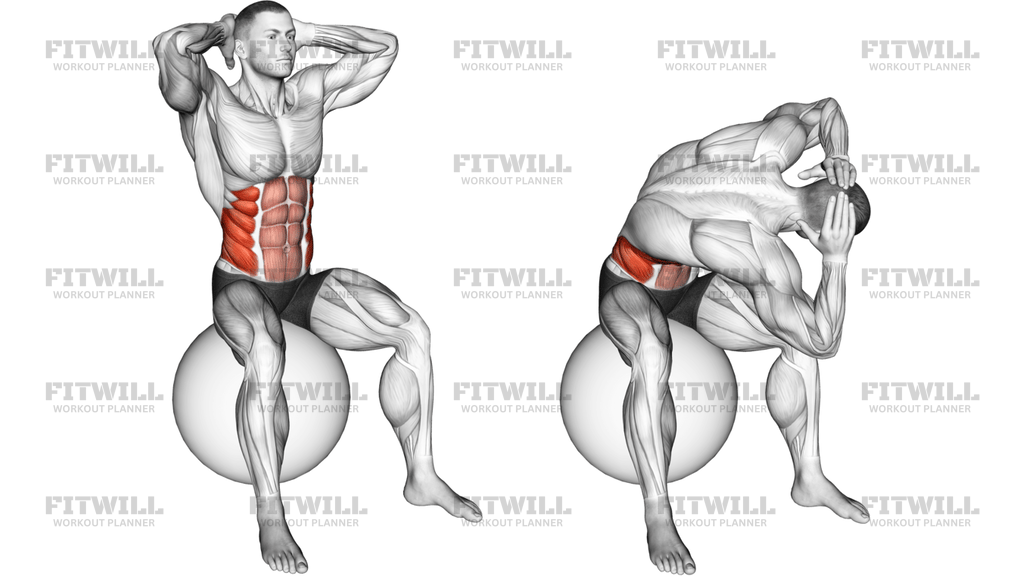
Lying Leg Cross
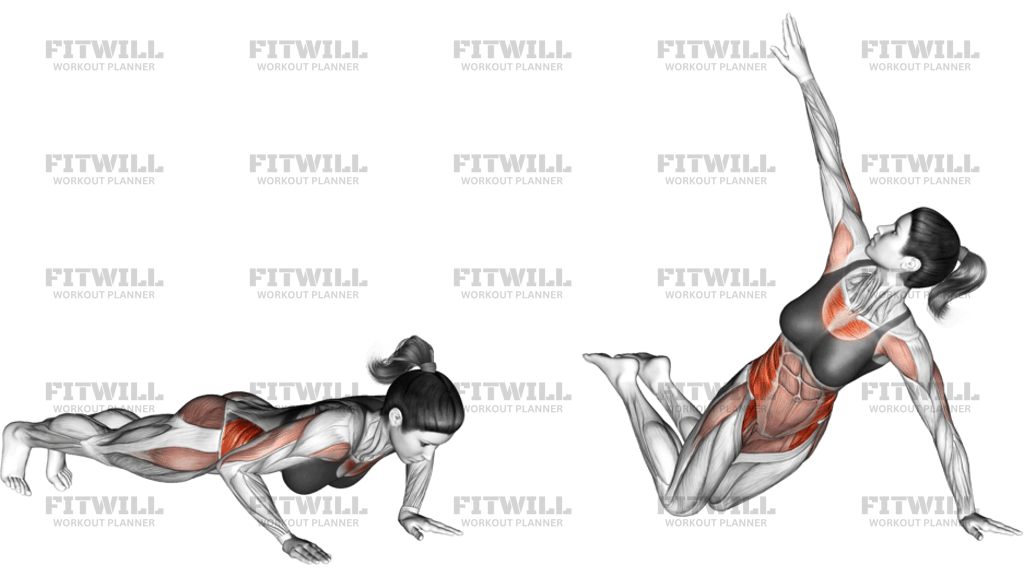
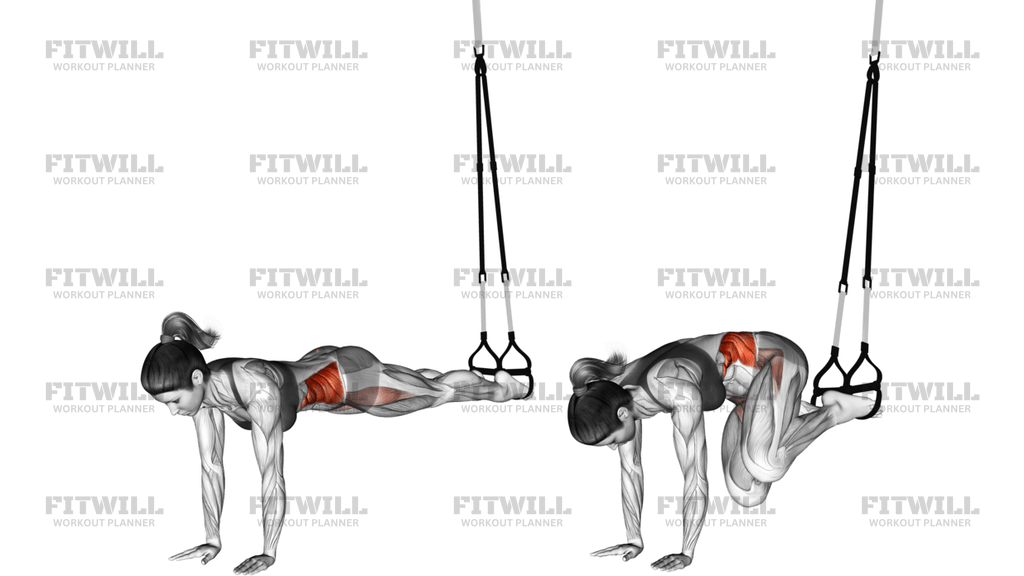
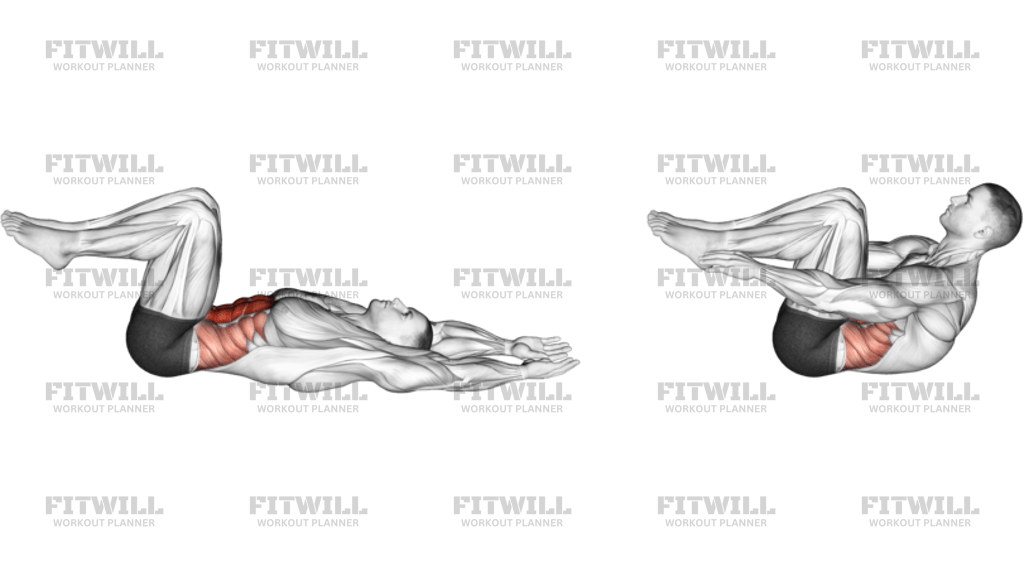
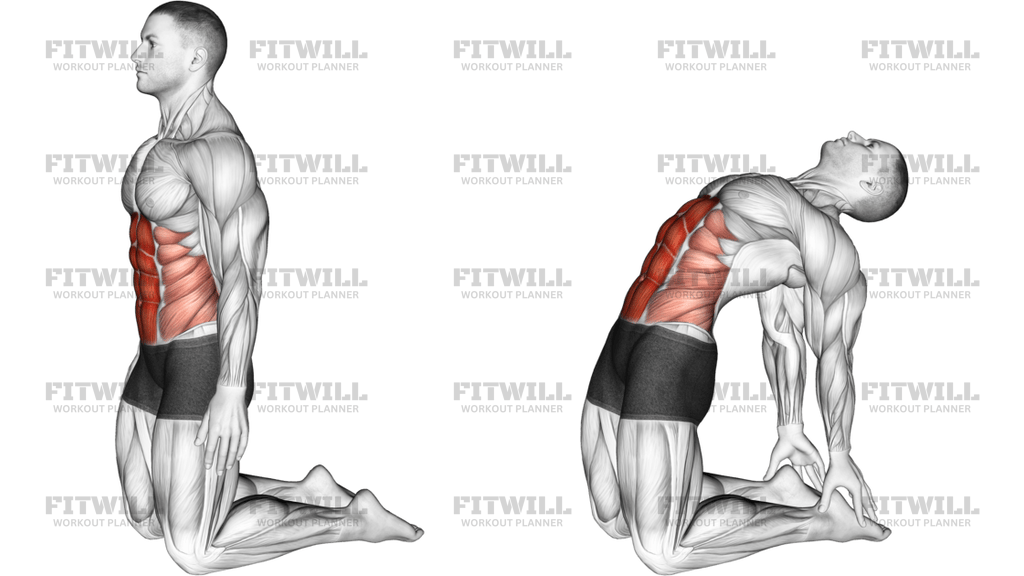
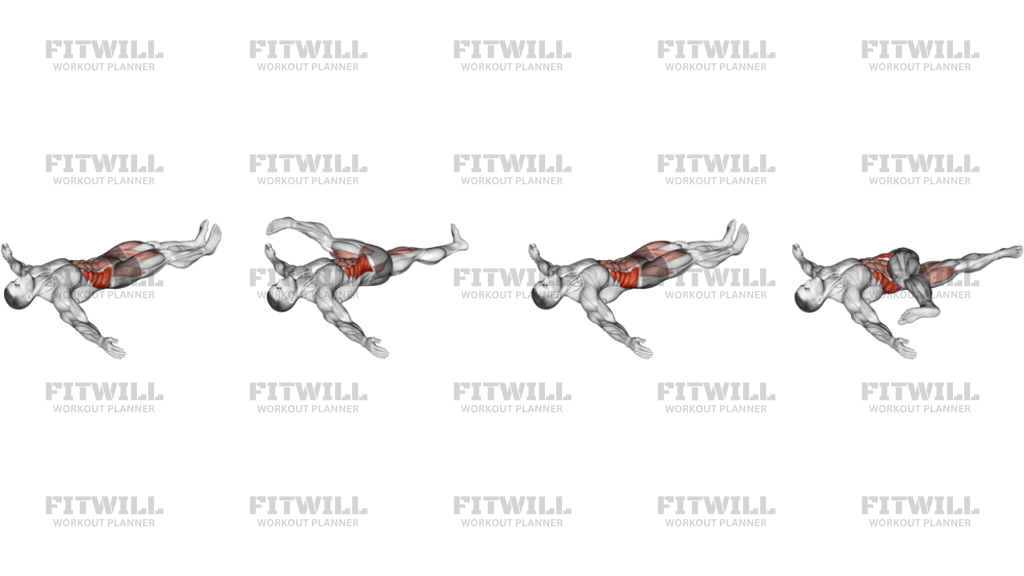
Lying Leg Cross is a floor-based core exercise built around controlled leg crossings while the upper body stays anchored to the mat. The image shows a supine position with the arms out wide for stability and the legs moving in a narrow, cross-body path. That setup shifts the challenge to the abs and obliques, because the trunk has to resist twisting while the legs travel.
This movement is useful when you want core work that feels more about control than brute force. The Rectus abdominis does the main stabilizing work, while the External obliques and Transversus abdominis help keep the ribcage and pelvis organized. The hip flexors also contribute as the legs lift and cross, so the exercise can expose weakness quickly if the lower back starts to arch or the range gets too large.
The setup matters more than it first appears. Lie flat with the shoulders relaxed on the floor, press the arms into a wide T for balance, and keep the hips grounded before the first rep. A smaller crossing range is usually better than forcing the legs to sweep far across the body, because the real goal is to keep the pelvis steady while the legs move. If the low back starts to lift, the set has become too aggressive.
Lying Leg Cross works well as a warm-up for ab training, a low-load core accessory, or a finisher when you want clean tension without equipment. It also pairs well with other floor drills that teach pelvic control, such as reverse crunches or dead bugs. Because the exercise is easy to rush, the quality standard should stay high: smooth crossings, steady breathing, and no jerking from the hips or shoulders.
For most people, the best version is the one that stays quiet through the trunk and controlled through the return. Keep the neck relaxed, let the floor support the shoulders, and treat each rep as a stability drill rather than a momentum drill. A mat helps you stay relaxed through the torso and keep the setup consistent. When done well, Lying Leg Cross gives you a clear abs-and-obliques stimulus without needing heavy load or complicated setup.
Fitwill
Log Workouts, Track Progress & Build Strength.
Achieve more with Fitwill: explore over 9600 exercises with images and videos, access built-in and custom workouts, perfect for both gym and home sessions, and see real results.
Start your journey. Download today!




Instructions
- Lie on your back on a mat with your arms extended out to the sides for balance.
- Press your shoulders, upper back, and palms into the floor before the first rep.
- Lift both legs to the working position shown in the image, keeping the knees long and the ankles together.
- Cross one leg over the other in a controlled path while keeping your torso quiet.
- Bring the legs back through center without letting the lower back pop off the floor.
- Cross the legs to the opposite side with the same small, deliberate range of motion.
- Exhale as the legs cross and inhale as they return to center.
- Keep the motion smooth and repeat for the planned number of repetitions before lowering the legs to finish.
Tips & Tricks
- Keep the crossing range small if your ribs flare or your low back arches when the legs move farther out.
- Let the floor hold the shoulders down; the arms are there for balance, not for pushing the rep.
- Straight knees make the lever longer, so bend them slightly if you need to reduce strain on the hip flexors.
- Move the legs with a steady rhythm instead of snapping them side to side, which usually turns the drill into momentum work.
- If the neck starts to tense, relax the chin and keep your gaze fixed on the ceiling rather than following the legs.
- The exercise should feel like the abs are preventing the pelvis from twisting, not like the hips are swinging freely.
- A slow return to center is usually harder and more effective than a fast cross and drop.
- Stop the set when the thighs start to drift higher and the lower back stops staying heavy on the mat.
Frequently Asked Questions
What Does Lying Leg Cross Train?
It mainly trains the abs and obliques, with the hip flexors helping to hold the legs up. The floor position also asks the deep core to keep the pelvis steady while the legs cross.
Why Are My Hip Flexors Feeling Lying Leg Cross More Than My Abs?
That usually means the legs are too straight, too high, or crossing too far across the body. Shorten the range and keep the low back heavy on the mat so the abs can take over more of the work.
Should My Lower Back Lift During Lying Leg Cross?
No. If your lower back lifts, the crossing range is too big or the legs are too low for your current control level.
Is Lying Leg Cross Good For Beginners?
Yes, if you start with a small range and slow tempo. Beginners often do better with bent knees or a lower leg angle until they can keep the torso quiet.
Do I Need Any Equipment For Lying Leg Cross?
No, the exercise is typically done on the floor or a mat. The arms in a T position help with balance, so you do not need a machine or weight to make it work.
How Can I Make Lying Leg Cross Harder?
Straighten the legs more, slow the return to center, or keep the feet a little lower while still holding the low back down. The challenge should come from control, not from swinging the legs farther.
What Is The Most Common Mistake In Lying Leg Cross?
The biggest mistake is letting the legs sweep so far that the pelvis rolls and the lower back arches. Keep the movement compact and deliberate instead.
Where Does Lying Leg Cross Fit In A Workout?
It works well as a core accessory, a warm-up drill before heavier ab work, or a finisher after compound lifts. It is best placed where you can focus on control rather than chasing fatigue.