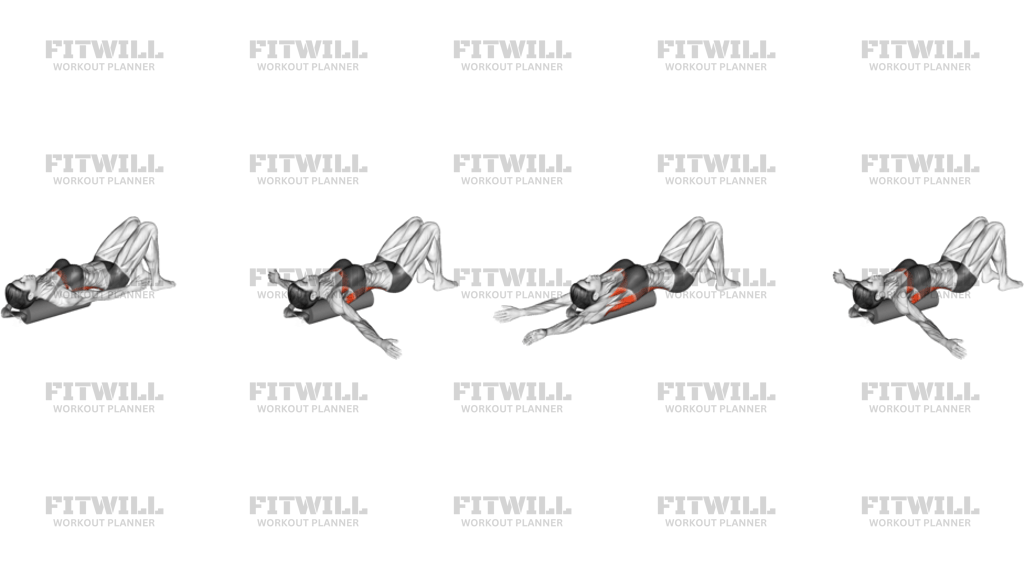
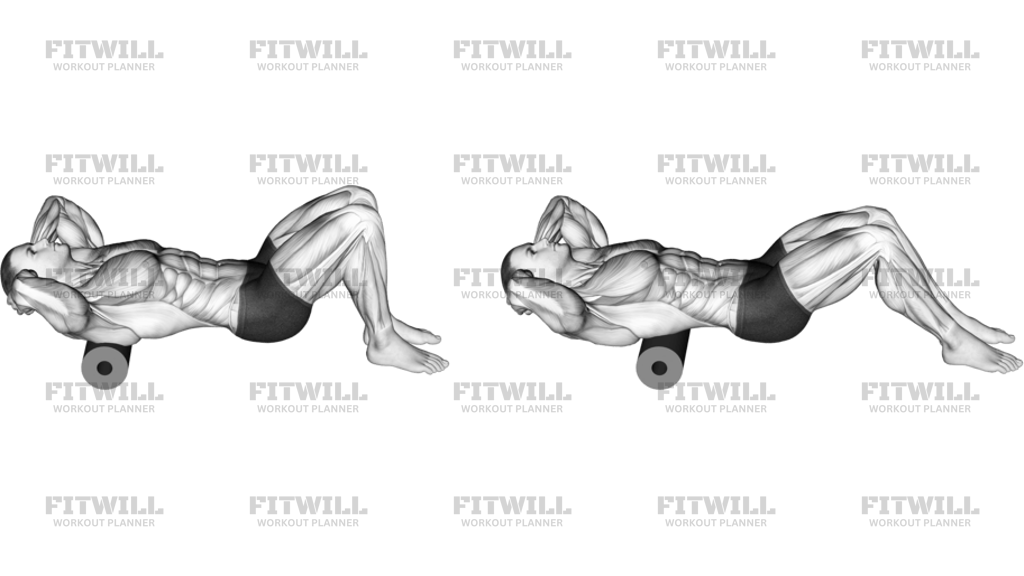
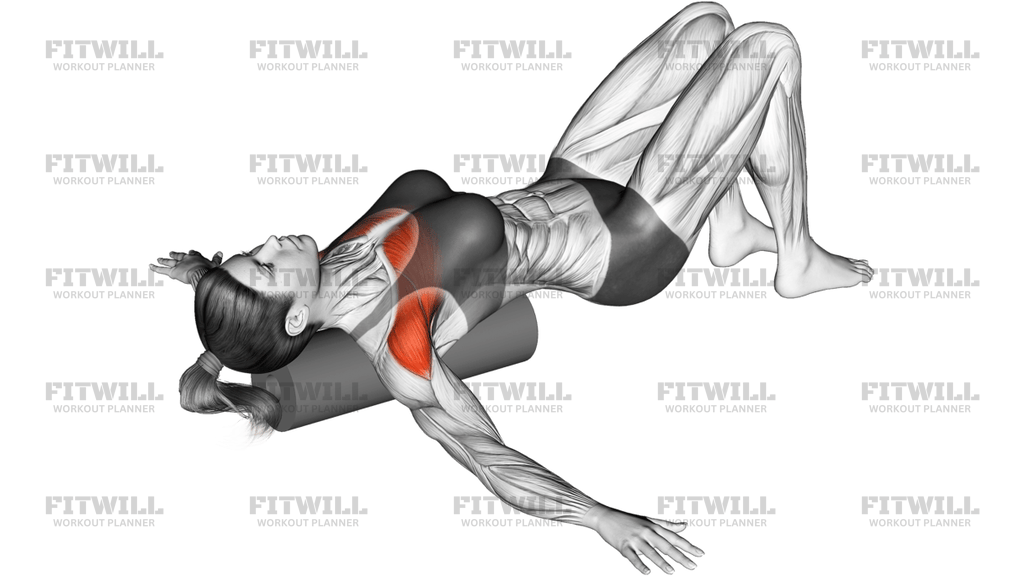
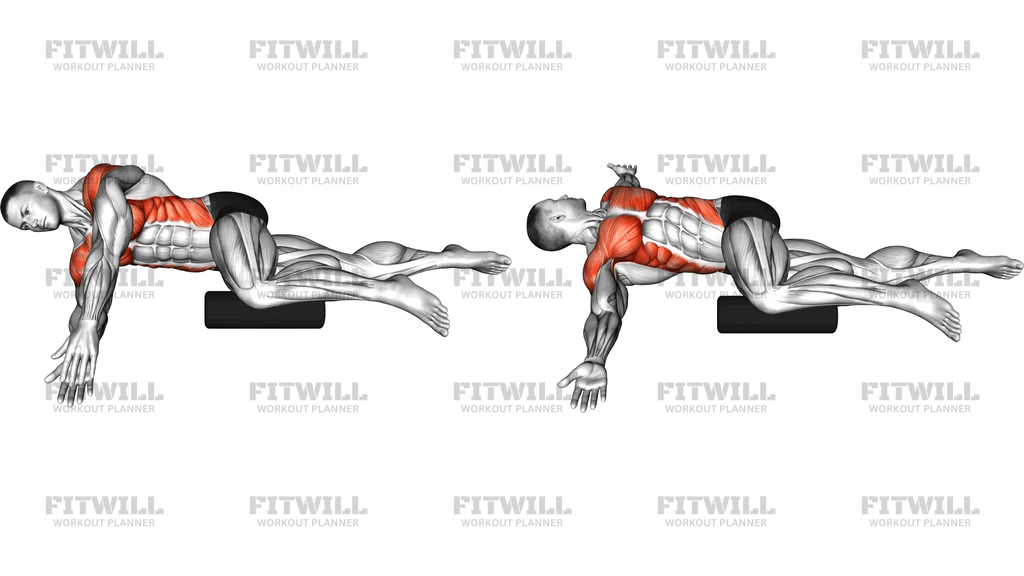
Foam Roll Serratus Wall Slide
Foam Roll Serratus Wall Slide is a standing wall drill that combines shoulder flexion with serratus-focused scapular control. The foam roller gives you a stable surface to press into while you slide the arms upward, which makes it a useful way to train shoulder blade upward rotation, posterior pelvic tilt, and ribcage control at the same time. It is commonly used as a warm-up, shoulder-prep drill, or low-load accessory movement before pressing, overhead work, or any session where the shoulders need to move well.
The exercise is most useful when the setup is precise. If the feet are too far from the wall, the low back will usually arch and the ribs will flare; if the forearms are not pressing evenly into the roller, the shoulders tend to shrug instead of moving smoothly. Foam Roll Serratus Wall Slide works best when the torso stays stacked, the elbows and forearms stay in contact with the roller, and the reach comes from the shoulder blades moving around the ribcage rather than from leaning into the wall.
During each rep, think about gently pushing the roller upward and away as you slide the arms overhead. The shoulders should rotate upward without the neck tightening, the chin should stay level, and the ribs should stay down as the hands travel higher. At the top, the upper back should feel long and active, not jammed into extension. The lowering phase matters just as much as the lift, because a slow return keeps tension on the serratus anterior and helps you own the path instead of dropping out of position.
Foam Roll Serratus Wall Slide is not about moving the heaviest load or forcing a huge range. It is a control drill for people who want cleaner overhead mechanics, better scapular motion, and a stronger connection between the ribcage and shoulder blades. That makes it useful for lifters who press overhead, athletes who throw or reach repeatedly, and anyone who tends to shrug or arch when their arms go up. If the movement causes pinching, neck tension, or low-back compensation, shorten the range and reset the body before continuing.
Because the movement is light and precise, it fits well early in a workout or between heavier upper-body sets when the goal is better positioning, not fatigue. Beginners can learn it quickly if they keep the roller pressure even and the slide controlled. More experienced lifters can use it as a test of shoulder mobility and scapular control, especially on days when the overhead pattern feels stiff or disorganized.
[ Workout Log & Planner ]
Put your next workout in Fitwill
Keep your plan and training log ready when you are.


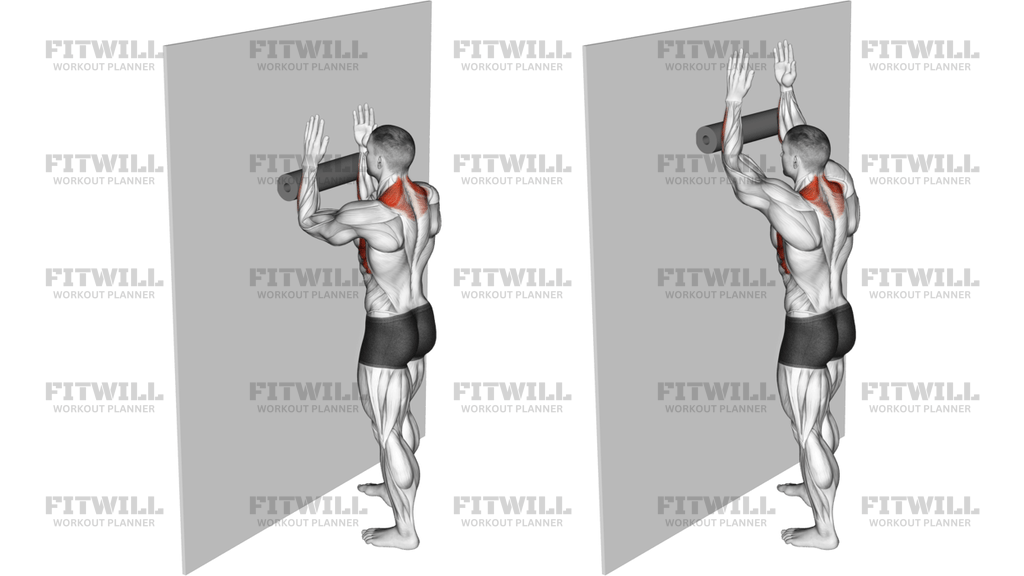
Instructions
- Stand facing a wall with a foam roller pressed horizontally against it at about upper-chest height, and place both forearms on the roller with your elbows bent roughly 90 degrees.
- Set your feet about hip-width apart and step far enough back that you can lean slightly into the wall without arching your lower back.
- Stack your ribs over your pelvis, keep your neck long, and let your hands stay relaxed while your forearms apply steady pressure into the roller.
- Exhale and gently push the roller upward as you slide your forearms up the wall, letting the shoulder blades rotate upward around the ribcage.
- Keep the elbows tracking forward and slightly outward instead of flaring behind you, and avoid shrugging the shoulders toward your ears.
- Reach only as high as you can without losing the ribcage position or forcing the low back into extension.
- Pause briefly at the top, then lower the roller under control while keeping the forearms in contact with it.
- Reset your breath and posture at the bottom before starting the next repetition.
- Repeat for the planned number of reps, then step away from the wall and relax the arms.
Tips & Tricks
- Press both forearms into the roller with even pressure; if one arm takes over, the shoulders usually twist and the slide gets sloppy.
- Keep the roller at a height that lets you start with elbows under the shoulders, not already jammed into the top position.
- If your lower back arches as you slide up, move your feet closer to the wall and shorten the range before adding more reach.
- Think about reaching the roller upward and slightly away from you, not just lifting the hands higher.
- Keep the neck quiet and avoid craning the chin forward when the arms approach overhead.
- The top position should feel like a long reach through the upper back, not a hard shrug through the traps.
- Slow down the lowering phase; that is where you keep the serratus and lower traps working instead of dropping out of position.
- Stop the set if you feel a pinch at the front of the shoulder and use a smaller range on the next rep.
Frequently Asked Questions
What muscles does Foam Roll Serratus Wall Slide train?
It emphasizes the serratus anterior and the muscles that control upward rotation of the shoulder blades, with the lower traps, rotator cuff, and core all helping keep the position clean.
How should the foam roller sit on the wall for Foam Roll Serratus Wall Slide?
Place the roller horizontally against the wall at about upper-chest height so your forearms can press into it while your elbows stay slightly bent.
Should I feel Foam Roll Serratus Wall Slide in my shoulders or upper traps?
You should feel the work around the sides of the ribs, shoulder blades, and upper back, not a hard neck shrug. If the upper traps take over, reduce the range and press the forearms more evenly into the roller.
Is Foam Roll Serratus Wall Slide good before pressing or overhead work?
Yes. It is a solid warm-up drill before bench pressing, overhead pressing, throwing, or any session where you want cleaner shoulder blade motion.
What is the most common mistake on the wall and roller setup?
The biggest mistake is letting the ribs flare and the low back arch while the arms go higher. Keep the torso stacked and let the shoulder blades move, not the spine.
Can beginners do Foam Roll Serratus Wall Slide?
Yes. Beginners usually do best with a smaller range and a slower tempo so they can keep the forearms on the roller and avoid shrugging.
How high should my hands go in Foam Roll Serratus Wall Slide?
Only as high as you can reach while keeping the forearms on the roller, the ribs down, and the neck relaxed. Higher is not better if the torso starts to compensate.
What can I use instead of a foam roller for this wall slide?
A towel, dowel, or even a plain wall slide can work, but the roller makes it easier to feel forearm pressure and keep the shoulder blades moving together.
Why do I lose balance when doing the wall slide standing?
Usually the feet are too far back or the torso is leaning too much into the wall. Step closer, keep your weight centered over midfoot, and shorten the slide until the position feels stable.