Lying Prone W To Y
Lying Prone W To Y is a body-weight prone shoulder and upper-back drill built around a very specific path: start with the arms bent in a W shape, then reach and rotate into a Y overhead. The exercise is less about load and more about precision. Each repetition asks the shoulder blades, rear delts, and rotator cuff to coordinate while the rib cage stays quiet and the neck stays long.
The W position matters because it sets the shoulders into external rotation and gives you a clean starting point for the reach. From there, the Y position should feel like a controlled opening through the upper back rather than a shrug or a low-back arch. When the movement is done well, you can feel the lower traps and rear shoulder area working to guide the arms without letting the torso twist or the elbows flare into an uncontrolled position.
Use a floor or mat, lie face down, and keep the forehead close to the ground so the neck stays neutral. Lightly brace the abs and glutes before each rep so the chest does not heave upward as the arms move. The goal is to create just enough lift to clear the hands and forearms, then trace the W-to-Y path with steady control. That small, deliberate range is usually more productive than trying to force a bigger reach.
This movement fits well in a warm-up, accessory block, rehab-style session, or any workout where you want better shoulder positioning and scapular control. It is also useful for beginners because it teaches the reaching pattern without external resistance. The safest version is the one you can repeat cleanly: smooth tempo, quiet ribs, relaxed neck, and a consistent return back through the W before each new rep.
If you want to improve the exercise over time, start by making the same body-weight pattern cleaner before adding anything else. Hold the Y for a second, slow the return, or pause in the W with the shoulders set before the next reach. Those progressions make the drill more demanding without turning it into a sloppy back extension. If the neck tightens, the hands start drifting behind the shoulders, or the torso begins swinging side to side, shorten the range and reset the tempo. The value of this movement comes from the quality of the shoulder path, not from how high you can lift your chest.
[ Workout Log & Planner ]
Put your next workout in Fitwill
Keep your plan and training log ready when you are.


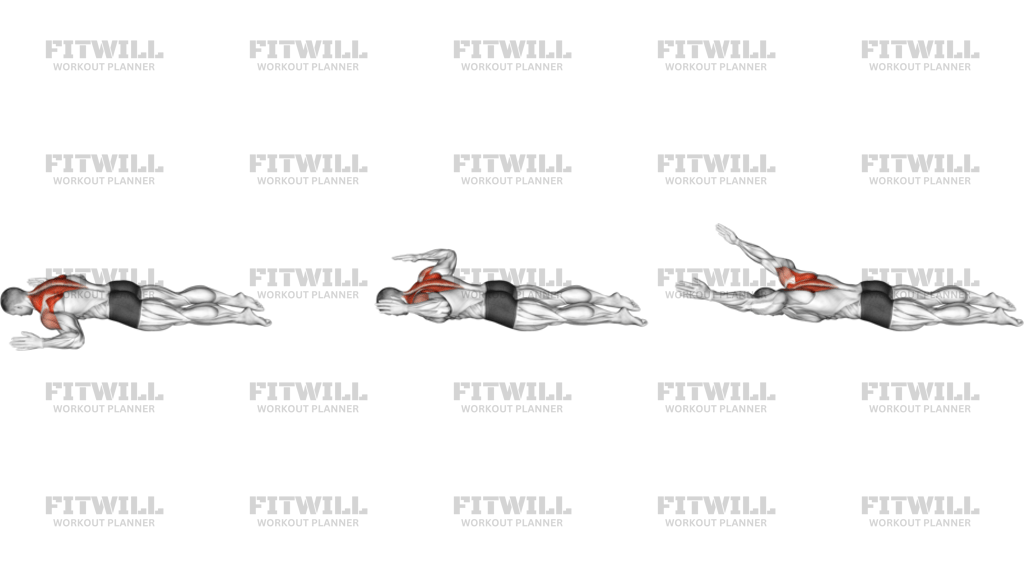
Instructions
- Lie face down on a mat or floor with your legs long, forehead near the ground, and arms bent out to the sides in a W shape.
- Set your shoulders away from your ears and lightly brace your abs and glutes so your low back stays quiet.
- Keep the elbows slightly below shoulder height and the hands relaxed as you prepare to lift.
- Lift the chest and hands just enough to clear the floor without cranking the neck upward.
- Rotate the shoulders and reach the arms forward and overhead into a Y shape with the thumbs pointing up if possible.
- Pause briefly in the Y position while keeping the ribs down and the neck long.
- Lower with control back through the W shape, maintaining tension in the upper back and shoulders.
- Reset fully before the next repetition and keep the same slow tempo for the whole set.
Tips & Tricks
- Keep the forehead close to the floor so the neck does not extend when you reach into the Y.
- The lift should be small; if your chest rises a lot, the low back is probably doing too much work.
- Think of the shoulder blades sliding down as you leave the W and then rotating as you reach the Y.
- A thumbs-up hand position usually keeps the shoulder in a cleaner line than turning the palms down.
- Keep the elbows softly bent if locking them straight makes the shoulders shrug.
- Exhale as you reach into the Y and inhale as you return to the W.
- Move slowly enough that each rep looks the same on the way out and on the way back.
- Stop the set when you can no longer keep the ribs down and the reach controlled.
Frequently Asked Questions
What muscles does Lying Prone W To Y train?
It emphasizes the rear delts, lower traps, rotator cuff, and the upper-back muscles that control shoulder blade movement.
Do I need any equipment for the W-to-Y movement?
No. A mat or floor space is enough for the body-weight version shown here.
Should my arms stay bent the whole time?
Start in the bent W shape, then open and reach into the Y while keeping a soft bend if that helps you avoid shrugging.
Why does the exercise start in a W instead of going straight to a Y?
The W position sets the shoulders into external rotation first, which makes the reach into the Y more controlled and deliberate.
Can beginners do Lying Prone W To Y?
Yes. It is often a good beginner drill because the body-weight setup makes it easier to learn clean shoulder control.
What should I feel during the rep?
You should feel the upper back and rear shoulders working, with the neck and low back staying quiet.
What is the most common form mistake?
The most common mistake is lifting the chest too high and turning the movement into a back arch instead of a shoulder drill.
How can I make the rep harder without adding weight?
Slow the tempo, hold the Y position for a beat, or reduce the amount of chest lift so the shoulders have to do more of the work.