Dead Hang Stretch
Dead Hang Stretch is an overhead hanging drill that uses a pull-up bar to lengthen the lats, open the shoulders, and give the grip a simple isometric challenge. It is not a dynamic pull-up; the job is to support your body at the top and let the torso lengthen under control while the shoulders stay organized.
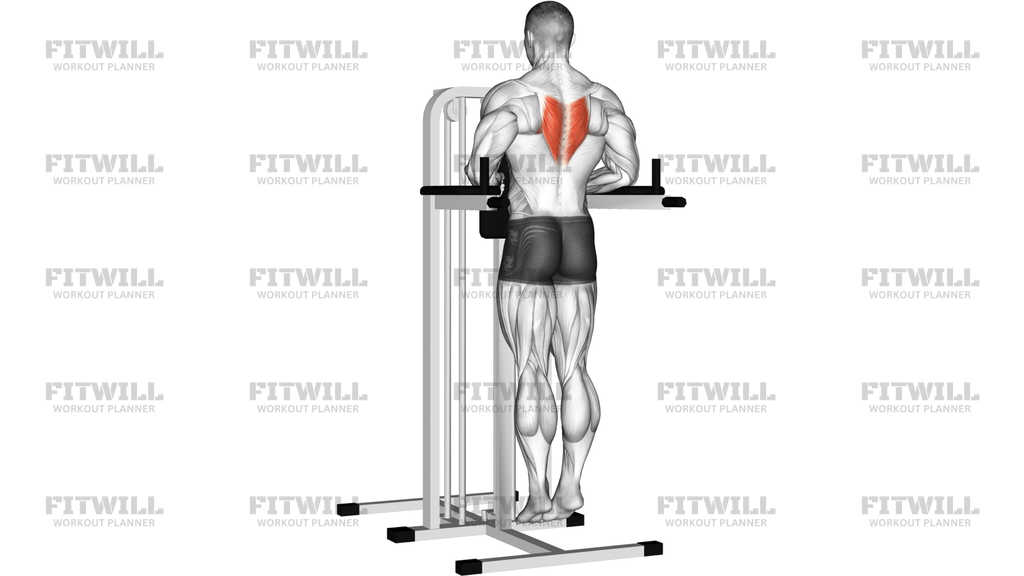
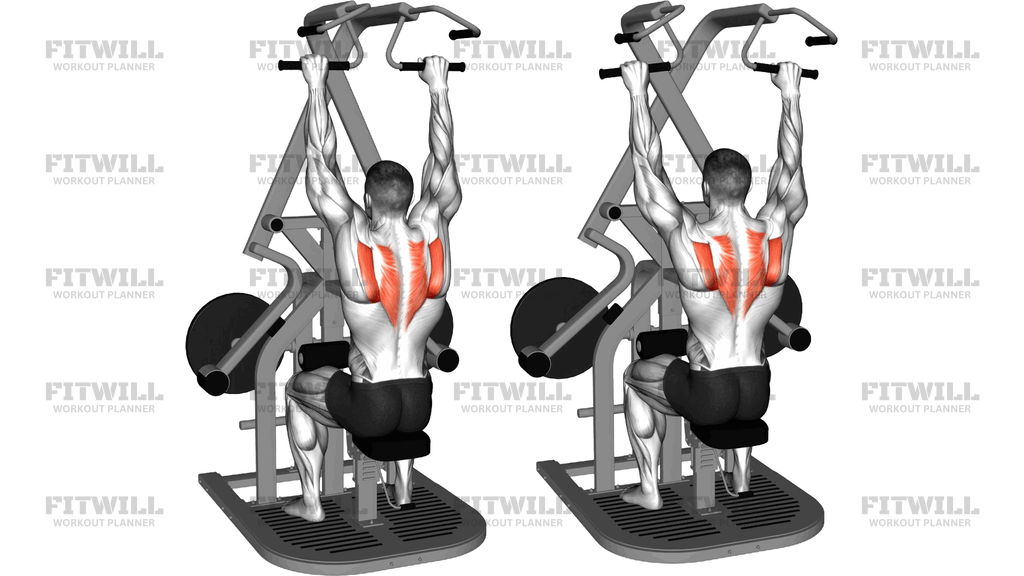
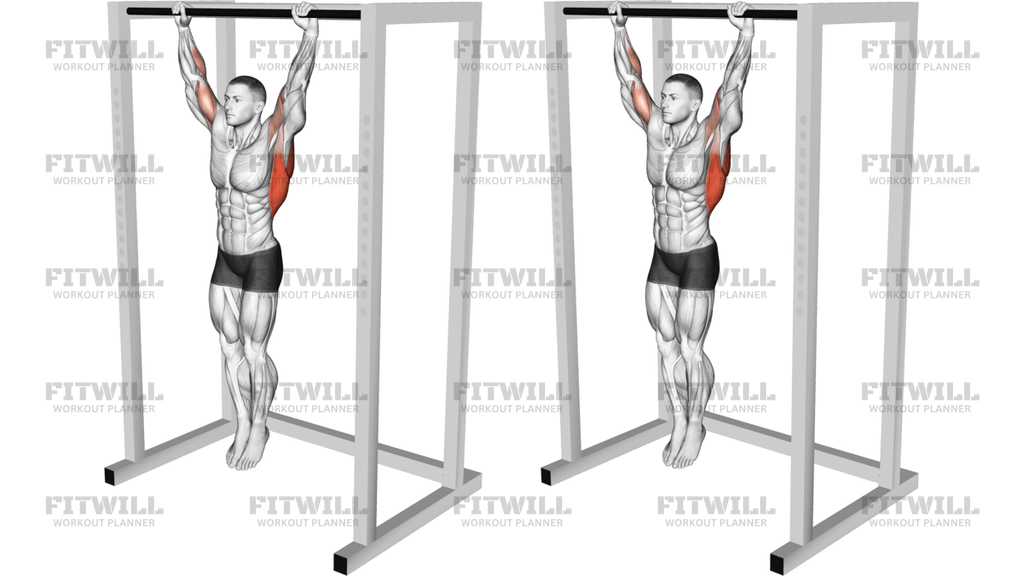
Because the entire exercise hangs from the hands, the setup matters more than it does in many stretches. A clean grip, a quiet body, and a stable start position decide whether the hang feels decompressive and useful or just slippery and uncomfortable. The image shows a straight-arm hang with the feet together and the body long, which is the position to copy.
Dead Hang Stretch is especially useful after pressing, pulling, climbing, or any workout that leaves the upper back and shoulders feeling compressed. It trains the lats, forearms, biceps, and upper back to support the shoulder girdle while the spine and ribs stay stacked. A controlled hang can also help you notice side-to-side differences in grip strength or shoulder comfort.
The best version is calm and deliberate. Step or jump to the bar, settle the shoulders without shrugging, and let the bodyweight create a long line from hands to hips. Keep the hang smooth instead of swinging, because extra motion turns the stretch into a pendulum. If your shoulders are sensitive, shorten the hold, use a box for light toe support, or keep the hold active rather than fully passive.
Use Dead Hang Stretch when you want an efficient way to decompress the upper body without complicated setup. It works well in a warm-up, between heavier upper-body sets, or at the end of a session when the grip and shoulders need a reset. Respect any sharp shoulder pain, and come out of the bar the moment the hang stops feeling clean.
[ Workout Log & Planner ]
Put your next workout in Fitwill
Keep your plan and training log ready when you are.


Instructions
- Stand under a secure pull-up bar and grip it with both hands, palms facing away, slightly wider than shoulder width.
- Step or jump up so your arms are straight overhead and your body hangs freely beneath the bar.
- Cross your ankles or keep your legs together so the lower body stays quiet instead of swinging.
- Let your shoulders settle down from your ears while keeping the neck long and relaxed.
- Brace lightly through the ribs and let the lats lengthen as you breathe out slowly.
- Hold the hang for the planned time without kicking, twisting, or bouncing.
- If the shoulders pinch or the grip fails, place one foot on the floor or a box and reset.
- Step down under control, release the bar, and shake out the arms before repeating.
Tips & Tricks
- A slightly wider-than-shoulder grip usually leaves more space for the shoulders than a very narrow grip.
- Keep the ribs from flaring forward; a stacked torso makes the hang feel more controlled.
- Crossing the ankles helps stop the legs from drifting and turning the hold into a swing.
- If the bar is too high to reach cleanly, use a box or bench to get into position instead of jumping and yanking.
- Keep the shoulders away from the ears, but do not force a hard depression if that causes pinching.
- Shorter holds are better than ugly holds when the hands start to slip or the shoulders lose position.
- If your grip gives out first, use the same setup for several shorter sets before increasing duration.
- A small amount of toe contact on a box can turn a full dead hang into a lighter assisted stretch.
Frequently Asked Questions
What muscles does Dead Hang Stretch work most?
The lats are the main target, with the forearms, biceps, and upper back helping hold the hang.
Is Dead Hang Stretch a stretch or a strength exercise?
It is mainly an overhead stretch, but the grip and shoulder stabilizers still work isometrically to hold your body up.
Should my shoulders be completely relaxed in Dead Hang Stretch?
No. Let them settle down from the ears, but keep enough control that the hang feels stable and not sloppy.
How long should I hold Dead Hang Stretch?
Start with short holds of 10-20 seconds and build up only if the shoulders, elbows, and grip stay comfortable.
Can beginners do Dead Hang Stretch?
Yes. Beginners can keep one foot on a box or use shorter holds until they can support their body without shrugging or swinging.
Why do my hands fail before my back feels stretched?
The grip usually limits the hold first. Use shorter sets, chalk if appropriate, or a light foot assist if you want more time under tension.
What if my feet touch the floor during Dead Hang Stretch?
That is fine if you are using a box or light toe support to reduce bodyweight and keep the shoulders comfortable.
What is the difference between a dead hang and an active hang?
A dead hang lets the bodyweight settle more passively, while an active hang keeps the shoulder blades slightly engaged and the torso a bit more controlled.