Cable Standing Row
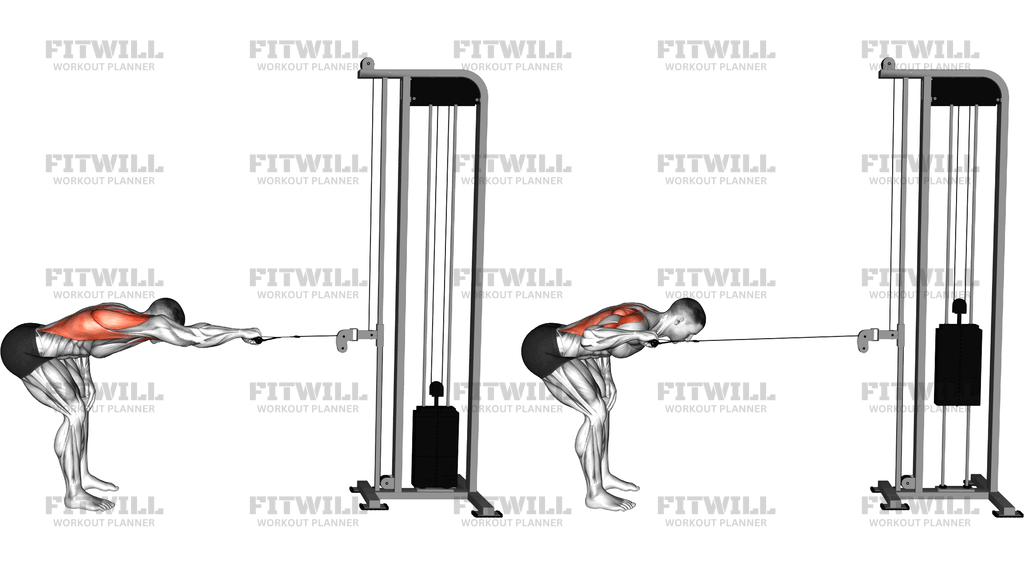
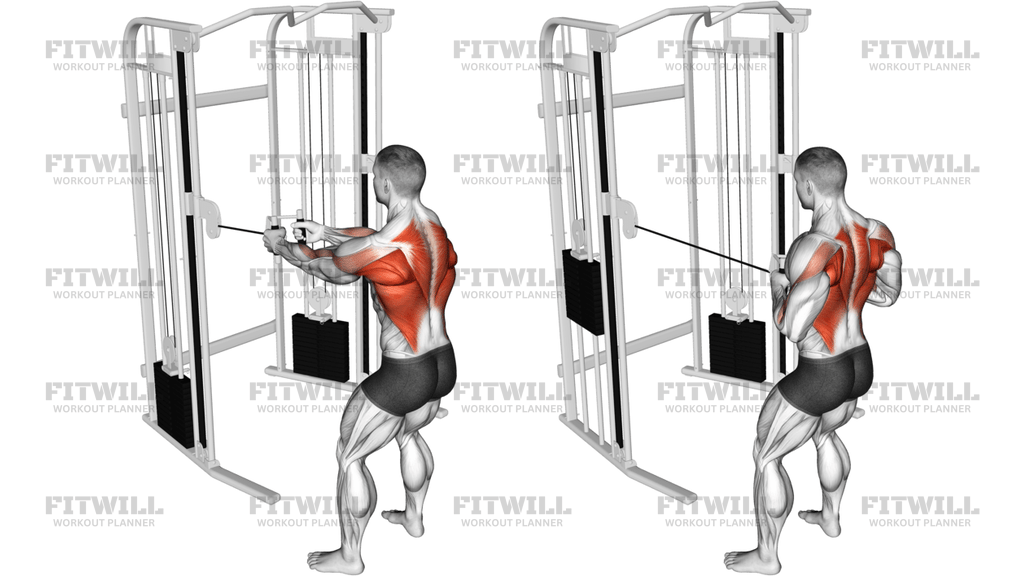
Cable Standing Row is a standing horizontal pull that uses a cable machine and handle attachment to train the back without pinning you to a bench. It is a practical choice when you want to build stronger lats, upper back, and arm drive while also practicing posture under load. Because the cable keeps constant tension through the whole rep, the exercise rewards smooth control more than brute force.
The main work goes to the lats, with the rhomboids, biceps, and forearms helping to finish the pull and steady the handle. The standing position also asks the trunk, glutes, and legs to keep you organized so the row comes from the upper body instead of a lean, a shrug, or a heave off the hips. That makes Cable Standing Row useful for back days, accessory work after pressing, or any program that needs more rowing volume without a chest pad.
The setup matters because the line of pull changes everything. Step back until the cable is taut, soften the knees, and hinge slightly from the hips so your torso stays tall and braced rather than rounded. Keep your ribs stacked over your pelvis, let the shoulders settle down, and start with the handle at full reach so the row begins from a stable base instead of a collapsed position.
Each rep should travel toward the lower ribs or upper waist, with the elbows driving back close to the sides. Squeeze the shoulder blades together only as much as you can do without leaning back or letting the shoulders creep up toward the ears. On the way down, let the arms extend fully under control and keep the cable moving smoothly so the stack does not slam. That controlled return is part of the exercise, not a reset between reps.
Cable Standing Row works well for lifters who want a simple, repeatable pulling pattern that is easy to load but still strict enough to expose sloppy mechanics. Beginners can use it with light resistance to learn how to row without swinging, while experienced lifters can use it to accumulate back volume with cleaner joint positions than they might get from heavier free-weight rows. If the lower back starts doing the work, reduce the load, shorten the stance, and bring the pull back to the ribs before the form changes.
[ Workout Log & Planner ]
Put your next workout in Fitwill
Keep your plan and training log ready when you are.


Instructions
- Attach a handle to the low pulley and step back until the cable is taut at arm's length.
- Stand facing the machine with feet about hip-width apart and one foot slightly behind the other for balance.
- Soften your knees and hinge slightly at the hips so your chest stays tall and your lower back stays neutral.
- Set your shoulders down, keep your ribs stacked over your pelvis, and let the handle start with your arms fully extended.
- Take a breath and brace your midsection before the first pull.
- Drive your elbows back along your sides and pull the handle toward your lower ribs or upper waist.
- Squeeze your shoulder blades together briefly without leaning back, shrugging, or letting the torso rock.
- Lower the handle slowly until your arms are straight again and the cable stays under control.
- Reset your stance between reps if needed, then repeat for the planned set.
Tips & Tricks
- If the stack lifts the weight early, step farther back so the cable is already under tension at the start.
- Keep the pull low and close to the torso; if the handle reaches chest height, the elbows are drifting too high.
- Think elbows back, not hands back, so the lats and upper back do the work instead of the forearms.
- A small split stance usually makes the row steadier than feet side by side when the load gets heavier.
- Do not turn the finish into a lean-back; stop when the handle reaches the lower ribs and the torso is still mostly fixed.
- Let the shoulder blades reach forward on the return, but do not round the lower back to get extra range.
- Use a slower lowering phase than pulling phase if the weight stack bangs or your shoulders rush up.
- Choose a load that still lets you pause for a second at the torso without losing posture.
Frequently Asked Questions
What muscles does Cable Standing Row train most?
The main emphasis is on the lats, with the rhomboids, biceps, and forearms assisting.
How should I hold the handle on Cable Standing Row?
Use the handle attachment with a neutral grip if possible, keeping both hands level and wrists straight.
How far should I stand from the cable machine?
Stand far enough back that the cable is taut at the start, but close enough that you can still pull the handle to your lower ribs without losing balance.
Should I lean back during Cable Standing Row?
No. Keep only a slight hip hinge and let the arms and back move the handle while your torso stays mostly fixed.
Where should I pull the handle on each rep?
Pull it toward the lower ribs or upper waist so the elbows stay close to your sides.
Why do I feel Cable Standing Row in my biceps?
Some biceps work is normal, but if they dominate, lighten the load and focus on driving the elbows back instead of curling the handle.
Is Cable Standing Row beginner friendly?
Yes. It is a good way to learn rowing mechanics with a lighter load and a stable stance.
What should I do if the weight stack slams on the way down?
Slow the return, use less weight, and keep tension through the full extension instead of letting the handle drop.