Cable Twist Version 2
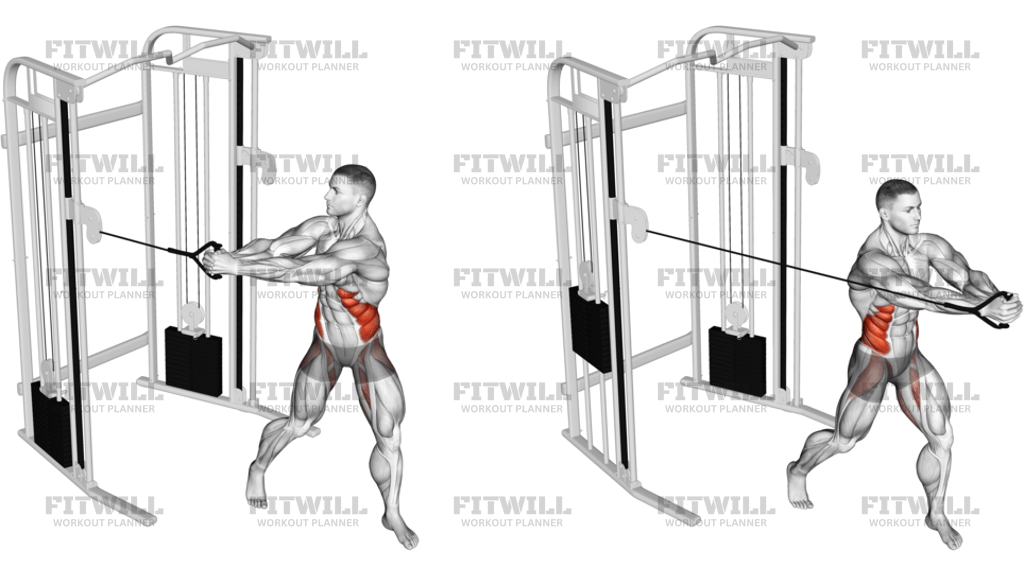
Cable Twist Version 2 is a standing cable rotation exercise that keeps constant tension on the trunk while you turn against the pull of the stack. With the handle set around chest height, the movement trains the obliques, deep abdominal wall, hips, and shoulder girdle to work together without letting the cable drag your torso off line. It is a useful accessory when you want rotational control, waist strength, or a controlled core drill that feels more loaded than a floor twist.
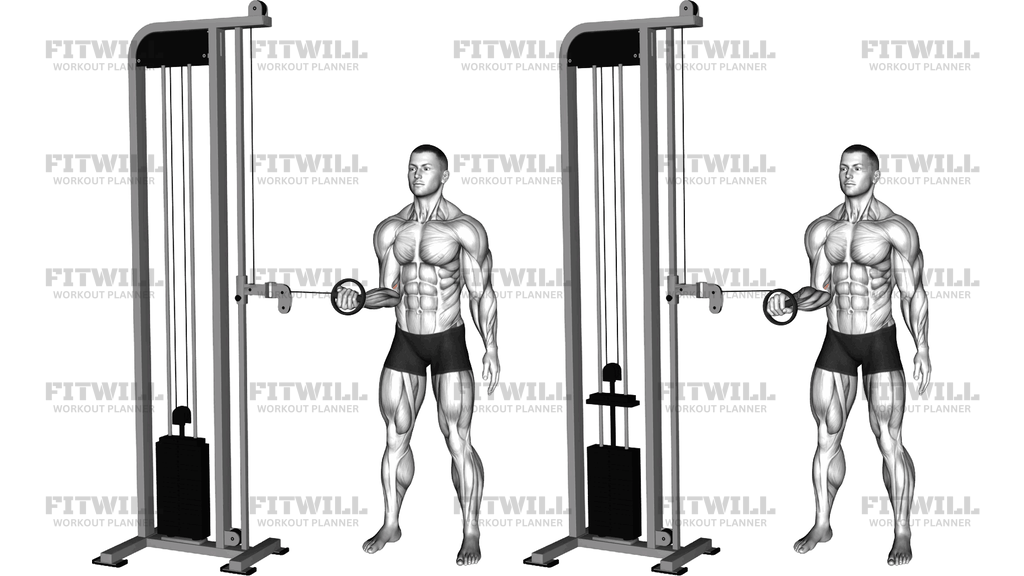
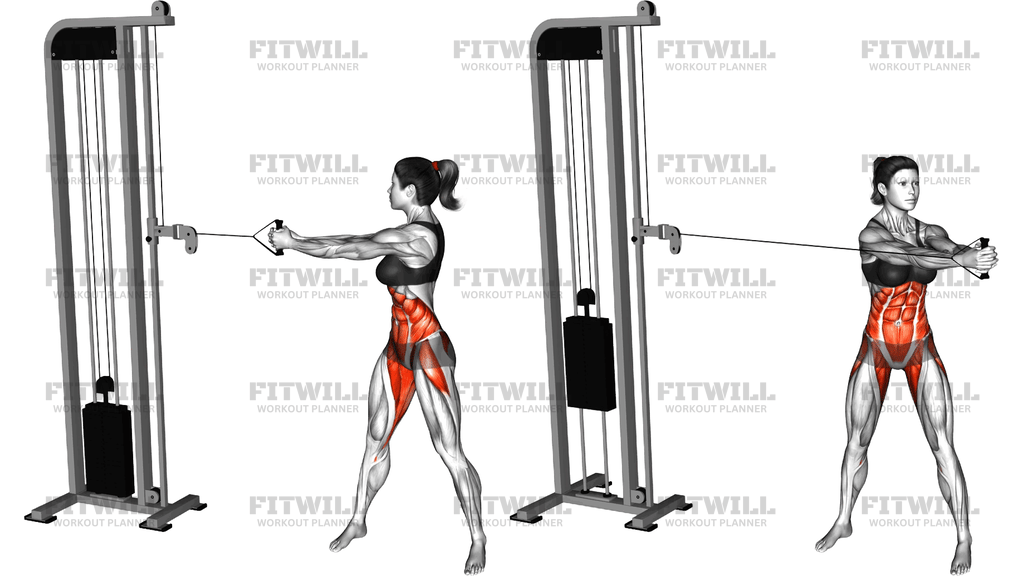
The setup matters because the cable line determines whether the exercise feels like a smooth rotation or a tug-of-war. Stand far enough from the machine that the handle starts with tension, keep the knees soft, and hold the handle with both hands at arm's length. The image shows a forward-reaching cable twist with the body turned away from the stack, so the torso should stay tall while the feet and hips give you a stable base. If the pulley is too high, too low, or too close, the rep usually turns into shoulder shrugging or lower-back cheating.
Think of the repetition as a controlled turn through the ribcage and pelvis instead of a quick yank with the arms. The hands stay connected to the handle while the torso rotates through a comfortable range, then returns slowly against the cable's pull. Keep the chest proud, ribs stacked over the pelvis, and neck relaxed. Exhale as you twist into the effort and inhale as you come back to the start so the trunk stays organized instead of braced so hard that the motion becomes rigid.
Cable Twist Version 2 fits well in core work, athletic prep, or accessory strength blocks where you want the trunk to resist and produce rotation under load. It is especially helpful for lifters and athletes who need cleaner torso control during swinging, striking, throwing, or changing direction. Use a light to moderate stack and stop the set if the shoulders start leading the movement, the hips spin wildly, or the low back takes over from the abdomen.
Because the exercise is easy to cheat, the best rep is usually the one that looks smaller but feels cleaner. A strict set should finish with the handle returning under control and the stack never slamming. If you need more challenge, lengthen the lever by keeping the arms straight, slow the return, or move a little farther from the machine rather than jerking the weight. If twisting bothers the lumbar spine, shorten the range and keep the motion smooth and symmetrical.
[ Workout Log & Planner ]
Put your next workout in Fitwill
Keep your plan and training log ready when you are.


Instructions
- Set the cable pulley around chest height and attach a single handle.
- Stand sideways to the stack with your feet staggered or shoulder-width apart and hold the handle with both hands at arm's length.
- Step far enough from the machine that the cable is already under tension before you start.
- Square your chest, stack your ribs over your pelvis, and keep a soft bend in both knees.
- Brace your trunk, then rotate your torso away from the stack while keeping your arms long.
- Turn only through a comfortable range and keep the handle moving in a smooth arc across your body.
- Pause briefly at the end of the twist without letting your shoulders shrug or your hips lunge.
- Return slowly to the start position under control, keeping the cable from snapping you back.
- Breathe out as you twist and breathe in as you come back, then reset your stance before the next rep.
Tips & Tricks
- Keep the pulley near sternum height so the cable pulls straight across your chest instead of yanking up or down on your shoulders.
- Use a split stance if your feet keep shifting; it usually makes the twist feel cleaner than a narrow stance.
- Think about turning your ribcage first and your hands second so the cable twist does not turn into an arm swing.
- Do not let the lower back over-rotate just to chase a bigger range; stop when the trunk starts to lose stack.
- A lighter stack with a slower return is usually better than a heavy stack that pulls you out of position.
- Keep the elbows nearly straight so the lever stays long and the obliques do more of the work.
- If the shoulders rise toward your ears, lower the load and keep the chest lifted instead of shrugging into the rep.
- Use a brief pause at the end of each twist to remove momentum and make the core do the decelerating.
- If one side feels much tighter, reduce the range on that side rather than forcing the handle farther across the body.
Frequently Asked Questions
What muscles does Cable Twist Version 2 train?
It mainly trains the obliques and deeper trunk muscles, with the hips, abs, and shoulders helping keep the body organized while you rotate.
How should I set up the handle for Cable Twist Version 2?
Set the pulley around chest height, attach a single handle, and stand far enough away that the cable already has tension before you start the twist.
Should my arms bend during Cable Twist Version 2?
Keep the arms long with only a soft elbow bend. Bending and pulling with the arms makes the cable twist feel like a row instead of a trunk rotation.
Do my hips move during Cable Twist Version 2?
Your hips should stay stable with only a small natural pivot if needed. If they spin hard, the low back and momentum are probably taking over.
Can beginners do Cable Twist Version 2 safely?
Yes, if the load is light and the range is short and controlled. Beginners should avoid chasing a big twist and focus on a smooth return.
Why does the cable twist feel harder on the way back?
The return phase is resisting the stack while your torso unwinds, so the obliques have to decelerate the movement instead of just starting it.
What is the most common mistake with Cable Twist Version 2?
Turning it into a fast arm swing or letting the shoulders shrug. The handle should move because the trunk rotates, not because the hands yank the cable.
Where does Cable Twist Version 2 fit in a workout?
It works well after your main lifts or in a core block, when you want controlled trunk work without fatiguing the whole body first.