Hangback Bar Stretch
Hangback Bar Stretch is a standing overhead stretch that uses a fixed bar to open the lats, side body, shoulders, and upper back. The body hangs back from the anchor point while the arms stay long overhead, creating a lengthened position through the ribcage, armpits, and triceps. It is less about brute force and more about finding a controlled angle where the stretch is strong enough to matter but calm enough to breathe through.
The setup is what makes this movement useful instead of awkward. A stable platform or step lets you stand under the bar, take a secure overhand grip, and shift your hips back without losing your footing. When the grip, foot position, and bar height are right, you feel a clean line of tension through the sides of the torso and shoulders instead of a jammed low back or pinched front shoulder.
Because the arms are overhead, small posture errors change the whole feel of the stretch. If the ribs flare, the neck shortens, or the lower back takes over, the stretch stops being useful and becomes a compensation pattern. Keeping the spine long and the shoulders controlled lets the upper back and lats do the job they are supposed to do while the rest of the body stays organized.
This stretch is a good fit before pull workouts, after pressing, or anytime the upper body feels tight from training or desk work. It can help restore overhead comfort for pulldowns, pull-ups, rows, and pressing patterns, as long as the shoulders tolerate the position. The goal is not to force the biggest possible lean; it is to create repeatable, pain-free opening through the back and shoulder line.
Use a smaller range if the shoulders pinch, the elbows lock uncomfortably, or the low back starts to arch to fake more stretch. Progress by holding a cleaner end position, breathing more steadily, and letting the chest and ribs soften gradually. A good Hangback Bar Stretch leaves you feeling taller, looser through the sides, and better prepared for the rest of the session.
Fitwill
Log Workouts, Track Progress & Build Strength.
Achieve more with Fitwill: explore over 9600 exercises with images and videos, access built-in and custom workouts, perfect for both gym and home sessions, and see real results.
Start your journey. Download today!




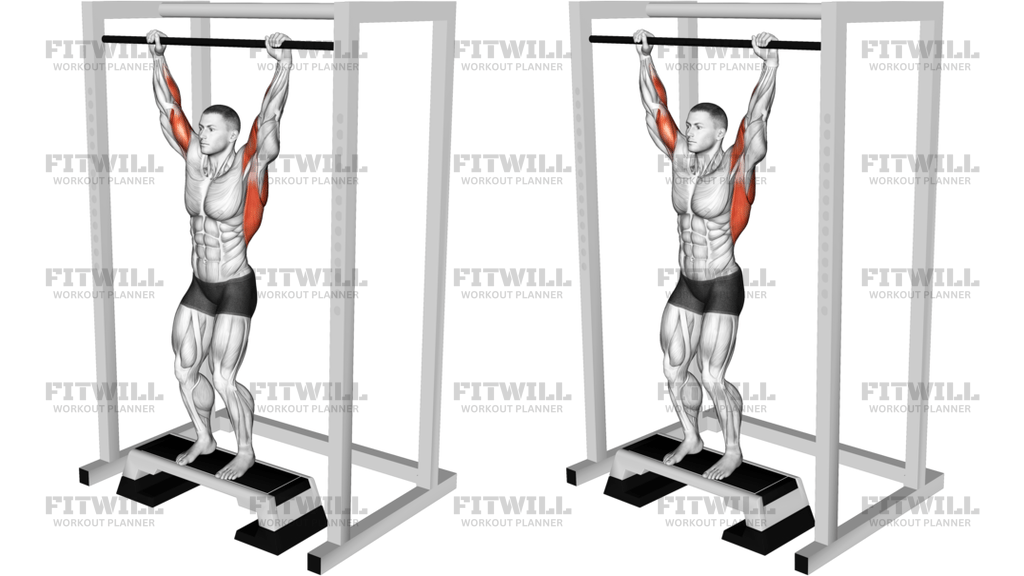
Instructions
- Stand on a stable step or platform directly under a fixed overhead bar.
- Take an overhand grip slightly wider than shoulder width and wrap your thumbs securely.
- Keep your arms long, your feet flat, and your knees softly unlocked before you lean back.
- Set your shoulders down away from your ears and keep your neck long.
- Shift your hips back and angle your torso away from the bar until you feel a stretch through the lats, shoulders, and side ribs.
- Keep your ribs stacked over your pelvis instead of arching your lower back to chase more range.
- Breathe slowly into the stretched position and hold the end range with control.
- Step back under the bar, release the grip, and reset before the next repetition or hold.
Tips & Tricks
- Choose a fixed, sturdy bar; any wobble makes the stretch harder to control and less useful.
- A slightly wider grip usually feels better on the shoulders, while a narrower grip shifts more tension into the lats.
- Move your feet back only until you feel the sides of the torso open; the goal is length, not a dramatic arch.
- Keep the elbows almost straight, but do not slam them into hard lockout if that irritates the joints.
- Exhale as you settle back, because a big rib flare can hide the stretch in the low back instead of the upper body.
- If the front of the shoulder pinches, shorten the range and widen the grip before trying again.
- Let the chest soften while the shoulders stay active; collapsing completely often turns the stretch sloppy.
- Hold the stretch long enough to breathe through it instead of bouncing in and out of the end position.
Frequently Asked Questions
What muscles does Hangback Bar Stretch target most?
It mainly targets the lats and side body, with the shoulders, triceps, and upper back helping hold the stretched position.
Do I need a special machine to do this stretch?
No. A stable pull-up bar, rack crossmember, or Smith machine bar can work as long as it does not move.
How far should I lean back from the bar?
Only far enough to feel a clear stretch through the lats, shoulders, and side ribs without arching the lower back.
Should my elbows stay straight or bent?
Keep them mostly straight so the stretch stays in the upper body, but soften them slightly if hard lockout feels rough.
Is this stretch beginner friendly?
Yes, if you keep the range small, use a secure setup, and do not force the shoulders past a comfortable position.
Why do I feel it in my lower back?
That usually means you are leaning back too far or flaring the ribs. Reduce the angle and keep your pelvis stacked under your ribs.
When is the best time to use Hangback Bar Stretch?
It works well before pull training, after pressing, or during a cooldown when the shoulders and lats feel tight.
What should I do if the front of my shoulder pinches?
Shorten the range, widen the grip a little, and stop if the pinch does not go away. A stretch should open the shoulder, not jam it.