Seated Neck Stretch
Seated Neck Stretch is a gentle neck mobility exercise performed from a stable seated position on an exercise mat. It is used to ease stiffness around the cervical spine, upper trapezius, and levator scapulae by moving the head and neck through a slow, controlled stretch rather than a forceful pull. The mat matters because it helps you settle the pelvis, lengthen the spine, and keep the torso quiet while the neck moves.
This movement is not about loading the neck or cranking for a bigger range. The goal is to create a clear stretch sensation along the side and back of the neck while the shoulders stay relaxed and the chest stays open. Because the neck is sensitive, small position changes matter: a tall spine, a calm jaw, and smooth breathing usually produce a better stretch than aggressive tugging or slumping forward.
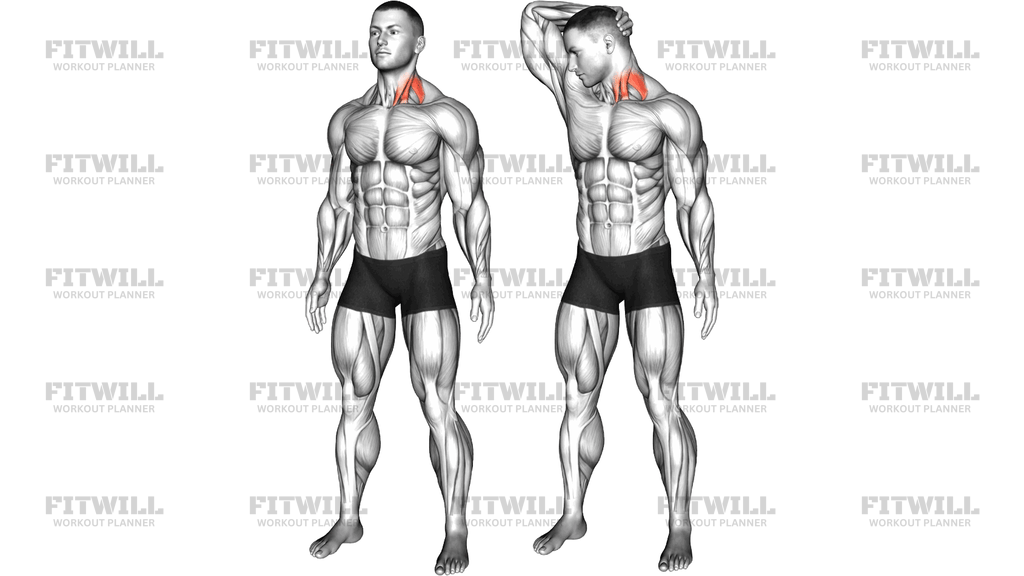
In a clean rep, you start seated upright, then gradually tilt or angle the head toward the target side until you feel a controlled stretch. Depending on the coaching cue, a light hand assist may help deepen the stretch, but the force should stay gentle and the shoulder on the stretched side should remain down. If the stretch is meant for both sides, the rep should be even and symmetrical rather than rushed on one side and skipped on the other.
This exercise is useful in warm-ups, between upper-body strength sets, or after long periods of desk work when the neck feels compressed or tight. It can also be used during recovery work to improve comfort in the upper back and neck before more demanding training. The best version of the stretch feels easy to breathe through, never sharp or pinchy, and never dependent on momentum.
Treat the range as disposable if symptoms change: stop if you feel tingling, numbness, headache, dizziness, or pain that travels into the arm. A good Seated Neck Stretch leaves the neck feeling longer and calmer, not irritated. The right dose is usually a short hold with repeatable positioning, not an aggressive max stretch.
[ Workout Log & Planner ]
Put your next workout in Fitwill
Keep your plan and training log ready when you are.


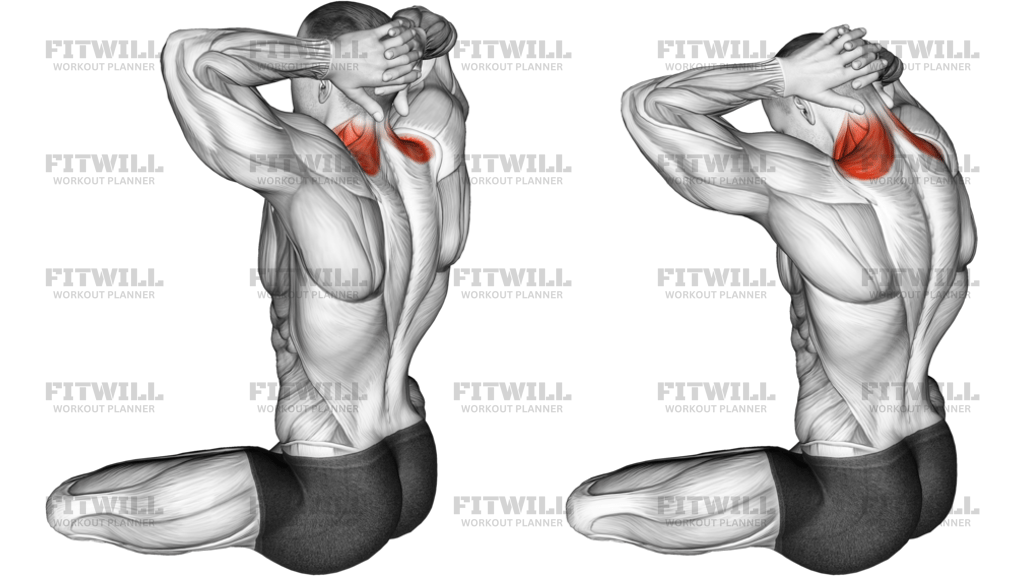
Instructions
- Sit tall on the exercise mat with your hips grounded and your spine long.
- Let your shoulders drop away from your ears and keep your chin level to start.
- Slowly tip your head toward one side until you feel a gentle stretch along the opposite side of the neck.
- Keep the moving shoulder relaxed and avoid shrugging it upward as the stretch deepens.
- If your version uses a hand assist, place the hand lightly on the head and guide the stretch without pulling.
- Breathe slowly into the stretch and keep the jaw, face, and upper chest relaxed.
- Hold the end position for a controlled pause without bouncing or twisting aggressively.
- Return the head to center with the same slow control you used to enter the stretch.
- Repeat on the other side if the exercise is performed bilaterally.
Tips & Tricks
- Keep the stretch small at first; neck mobility improves with gentle position changes, not force.
- Think about lengthening the top of the head upward before tipping to the side so the neck does not collapse.
- Let the shoulder on the stretching side stay heavy instead of hiking toward the ear.
- If you use your hand, apply only enough pressure to guide the stretch, not to crank the head lower.
- Move the head in one smooth path and avoid combining a big side bend with a hard twist unless that is the intended variation.
- Use slow exhalations to reduce tension in the jaw and upper traps.
- Stop before the stretch turns into pain, tingling, or a pinching feeling behind the neck.
- If one side feels much tighter, spend the same time on both sides rather than forcing extra range on the stiff side.
Frequently Asked Questions
What does Seated Neck Stretch target?
It mainly targets the neck muscles along the side and back of the cervical spine, especially the areas that feel tight after sitting or overhead work.
Do I need a weight or machine for this stretch?
No. It is a body-weight mobility drill done from a seated position on a mat.
Should my shoulders move during the stretch?
They should stay relaxed and low. If one shoulder hikes up, the stretch usually shifts away from the neck and into tension you do not want.
Can I pull harder with my hand to get a bigger stretch?
Only lightly. A strong pull can irritate the neck and make the stretch feel sharp instead of useful.
What is the main setup cue for this exercise?
Sit tall with the spine stacked, ribs quiet, and chin neutral before you tilt the head to one side.
Is it normal to feel this in the upper trap or behind the shoulder blade?
A mild stretch there can be normal, especially if the levator scapulae is tight, but the sensation should stay controlled and not pinch.
When is this stretch most useful?
It works well in a warm-up, after desk work, or between upper-body sets when the neck feels compressed or stiff.
What should make me stop the stretch?
Stop if you feel tingling, numbness, dizziness, headache, or pain that travels into the arm.