Riding Outdoor Bicycle
Riding Outdoor Bicycle is a steady cycling exercise done on a real bicycle outdoors, usually as a cardiovascular and lower-body conditioning movement rather than a gym isolation drill. The repeated pedal stroke loads the quadriceps, glutes, hamstrings, calves, and hip stabilizers while the hands, shoulders, and trunk keep you balanced on the bars. It is a simple movement pattern, but the setup and posture strongly affect how efficient and comfortable each ride feels.
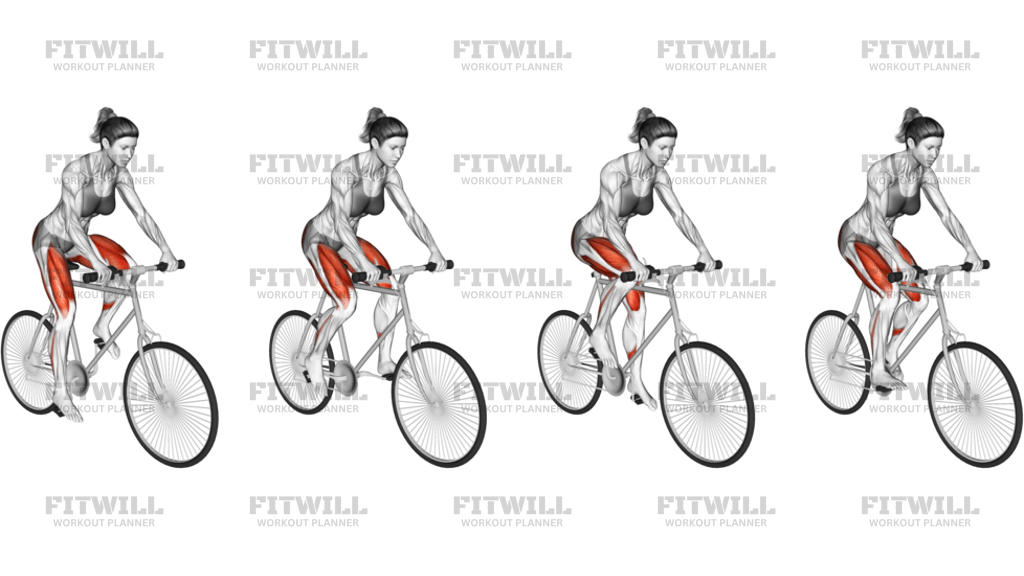
The image shows a rider on a road-style bike with the torso angled forward, hands on the handlebars, and the feet driving the pedals through alternating circles. That position asks for a stable pelvis, relaxed shoulders, and a steady torso so the legs can produce force without wasting energy through side-to-side sway. A clean ride should look smooth, rhythmic, and controlled, not bouncy or collapsed through the lower back.
Because the bicycle is outdoors, small adjustments matter: saddle height, handlebar reach, and pedal contact all change how much strain lands on the knees, hips, and hands. A good riding position lets the knees track in line with the feet, keeps the hips from rocking on the saddle, and allows the rider to breathe without hunching over the bars. When those pieces are right, the effort stays on the legs and the heart rate climbs without unnecessary joint stress.
Use this exercise for aerobic conditioning, leg endurance, active recovery, commuting volume, or longer steady-state training blocks. It can be done seated for a more economical effort or briefly out of the saddle for hills and accelerations, but the same rule applies: keep the pedal stroke smooth and the body organized. Beginners can do well here if they start with an easy gear, a comfortable cadence, and a bike fit that does not force the knees, wrists, or low back into an awkward position.
Riding Outdoor Bicycle is most effective when the rider treats every mile as repeatable technique work. Hold the bars lightly, keep the torso quiet, and let the legs turn the cranks in an even rhythm. The goal is not just to cover distance, but to do it with efficient mechanics that you can sustain comfortably over time.
[ Workout Log & Planner ]
Put your next workout in Fitwill
Keep your plan and training log ready when you are.


Instructions
- Adjust the saddle so your knee stays slightly bent at the bottom of each pedal stroke and set the bars so you can reach them without shrugging your shoulders.
- Sit tall on the saddle with both hands on the handlebars, feet placed evenly on the pedals, and your weight centered through the bike.
- Brace lightly through your trunk, then start pedaling with a smooth, circular rhythm instead of stomping straight down on the pedals.
- Press through one leg as the other leg rises, keeping both knees tracking forward instead of flaring outward or crossing inward.
- Keep your pelvis steady on the saddle and avoid rocking side to side as the cadence increases.
- Let your elbows stay soft and your shoulders relaxed so the upper body supports balance without locking up.
- Breathe steadily through the effort, matching your exhale to the harder part of the pedal stroke when needed.
- Maintain a controlled cadence for the planned distance or time, then ease the effort down before stopping or dismounting.
Tips & Tricks
- A saddle that is too low makes the knees fold sharply and can turn the pedal stroke into a short, grinding push.
- If your hips rock on the saddle, the seat is often too high or the gear is too heavy for your current cadence.
- Keep a light grip on the handlebars; white-knuckling the bars usually means the bike fit or core tension needs adjustment.
- Choose a gear that lets you spin smoothly instead of forcing a slow, mashing cadence that loads the knees and low back.
- On climbs, shorten the effort and keep the torso quiet rather than pulling hard on the bars with every stroke.
- If you ride clipped in, center the ball of the foot over the pedal axle so the ankle can stay efficient through the circle.
- A slightly forward torso is normal on a road bike, but the neck should stay long instead of craning up the road constantly.
- Stop and check the bike fit if you feel repeated pain at the front of the knee, hands, or lower back.
Frequently Asked Questions
What does Riding Outdoor Bicycle train most?
It mainly trains cardiovascular endurance and lower-body work from the quadriceps, glutes, hamstrings, calves, and hip stabilizers.
Should I stay seated the whole time?
Most steady riding is done seated, but you can briefly stand for hills or accelerations if you keep the bike stable and the cadence controlled.
How do I know if the saddle height is right?
At the bottom of the pedal stroke your knee should stay slightly bent, not fully locked, and your hips should not rock side to side.
Why do my hands hurt on the handlebars?
Too much weight may be drifting into the hands from a long reach, a low bar position, or a collapsed trunk. Ease the reach and support more of your posture through the saddle and core.
What is a common mistake with outdoor cycling form?
A common error is mashing a very heavy gear with a jerky pedal stroke, which can overload the knees and make the ride inefficient.
Can beginners use this exercise for cardio?
Yes. Beginners usually do best with an easy gear, shorter rides, and a cadence that feels smooth rather than forced.
What should my knees do while pedaling?
They should track mostly forward in line with the feet, without flaring outward or caving inward as you turn the cranks.
How can I make the ride feel more efficient?
Keep the upper body quiet, hold the bars lightly, and spin a gear that lets each pedal stroke feel even and repeatable.