Side Bear Crawl
Side Bear Crawl is a bodyweight lateral locomotion drill performed from a bear-crawl stance. It trains shoulder stability, trunk control, hip coordination, and the ability to keep the torso quiet while the limbs move underneath you. Because the body stays low and partially unloaded, the exercise is useful for building coordination and bracing without needing external resistance.
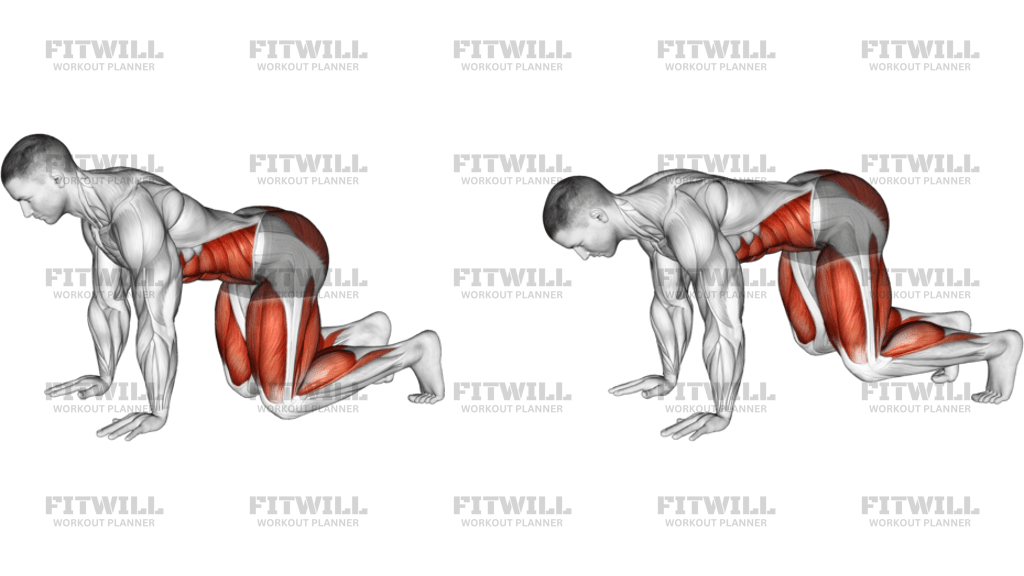
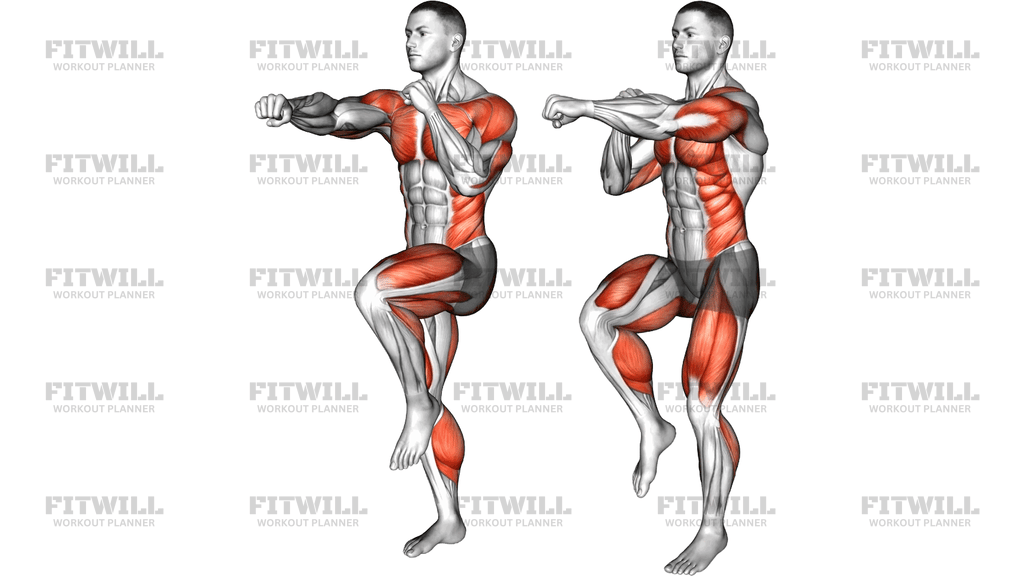
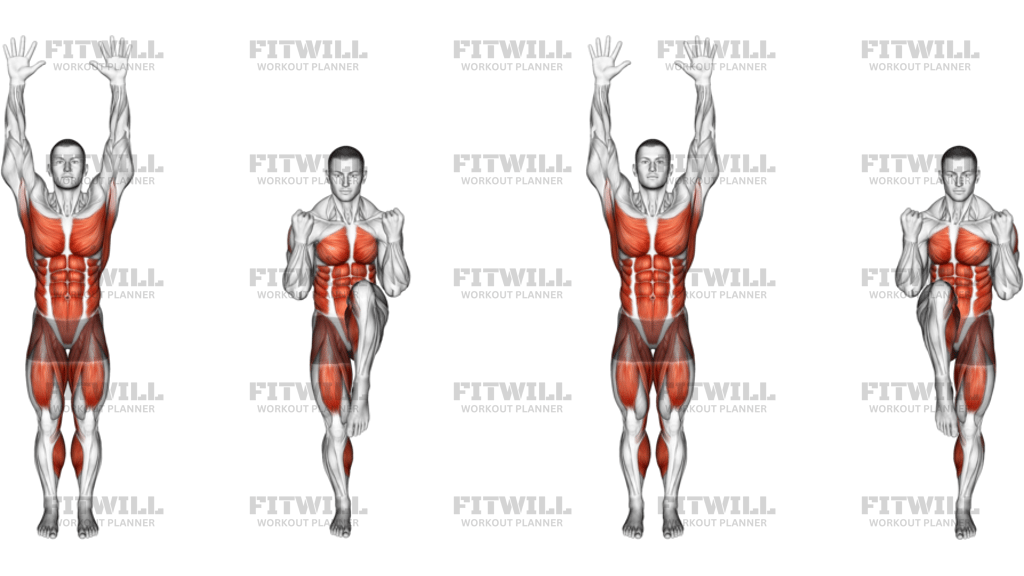
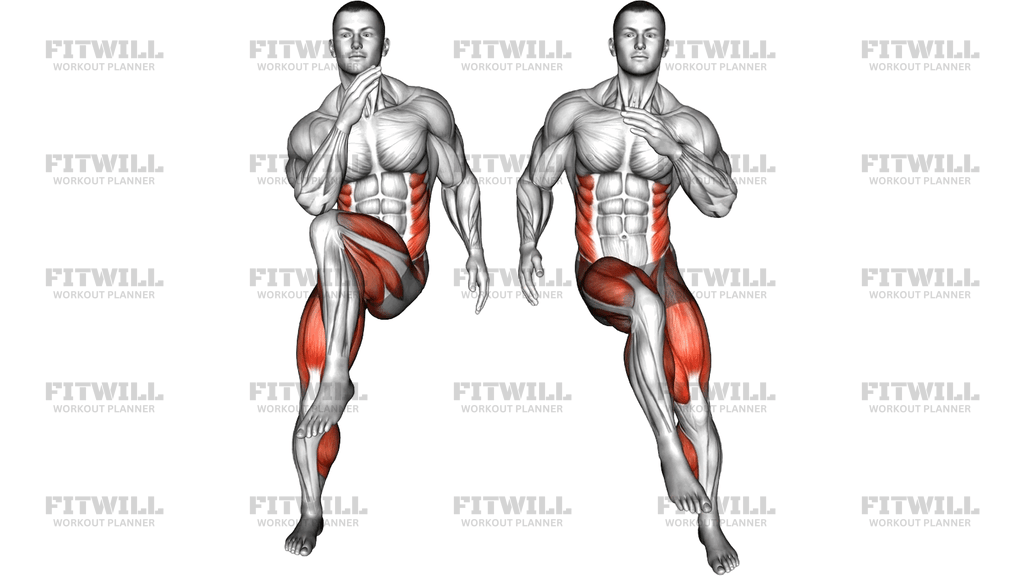
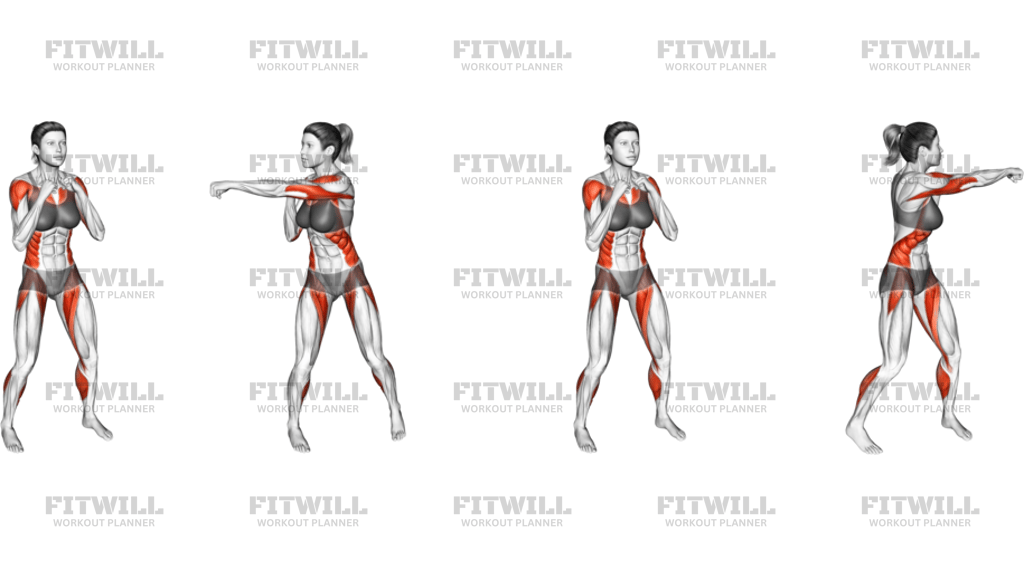
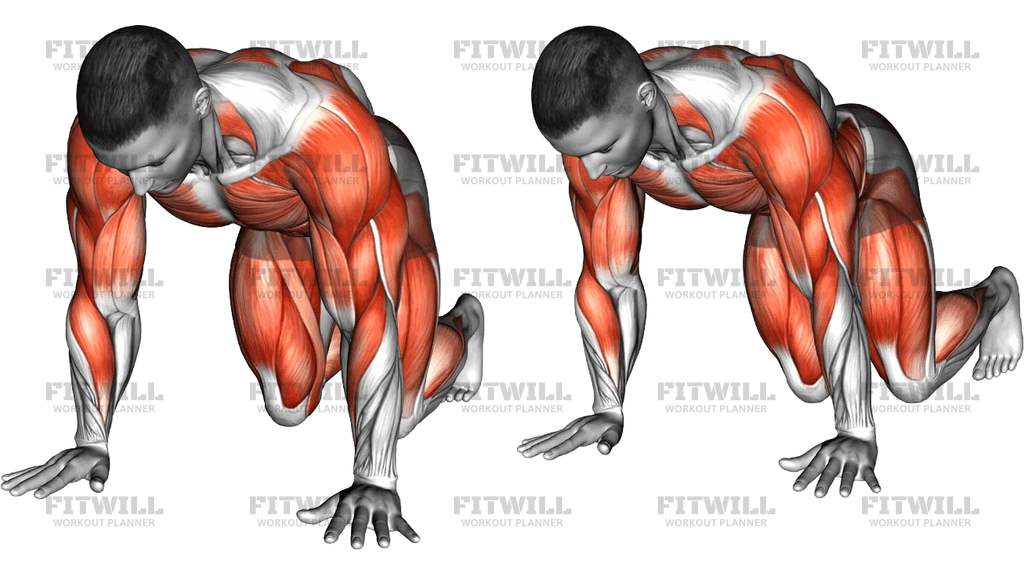
The image shows a low crawl position with the hands under the shoulders, knees bent, and the hips held only a few inches above the floor. That setup matters: if the hips rise too high, the movement turns into a loose shuffle; if the chest collapses, the shoulders and core lose their job. The goal is to stay square to the floor while traveling sideways in small, deliberate steps.
Each rep should look controlled and compact. Move one hand and the opposite foot, or the paired side as prescribed by your coaching style, while keeping the knees hovering and the spine long. The support hand should press firmly into the floor as the opposite side reaches, then the body should re-stack before the next step. The crawl is more about quality than distance, so the cleanest reps come from a steady rhythm rather than a fast scramble.
Use Side Bear Crawl as a warm-up, athletic prep drill, core accessory, or conditioning finisher when you want full-body tension without heavy loading. It fits well before squats, lunges, carries, or ground-based drills because it teaches bracing, shoulder packing, and foot-hand coordination. Keep the steps short, breathe under control, and stop the set as soon as the hips start to sway, the knees touch down, or the hands lose a strong line under the shoulders.
[ Workout Log & Planner ]
Put your next workout in Fitwill
Keep your plan and training log ready when you are.


Instructions
- Start on hands and feet in a bear-crawl position with your shoulders stacked over your wrists and your knees hovering a few inches off the floor.
- Keep your feet about hip-width apart, tuck your toes, and set your hips low enough that your back stays flat and your ribs do not flare.
- Brace your midsection before you move and press the floor away with both hands so your shoulders stay active.
- Step sideways with a short hand-and-foot pattern, moving only as far as you can without twisting your torso.
- Keep your knees off the ground as you travel and keep your hips level instead of bouncing up and down.
- Place each hand quietly under or slightly ahead of the shoulder line, then re-stack your weight before the next step.
- Breathe in small controlled breaths while crawling and keep the exhale steady as you shift across the floor.
- Continue for the chosen distance or time, then lower your knees and reset before the next set.
Tips & Tricks
- Keep the crawl short and crisp; long reaches usually make the hips twist and the lower back take over.
- Think about balancing a cup on your lower back so the torso stays level as your arms and legs move.
- If your shoulders burn before your core does, slow the pace and push the floor away harder with the planted hand.
- Use a low knee hover, but do not drag the knees or let them crash to the floor between steps.
- Choose a smooth floor, mat, or turf strip that lets your hands and feet move without catching.
- Keep the neck long and look a few feet ahead so the head does not drop between the shoulders.
- Smaller steps are often better than bigger steps for this drill because they preserve line and tension.
- Stop the set when the crawl turns into a sway, hop, or knee-to-floor reset instead of a controlled side travel.
Frequently Asked Questions
What does Side Bear Crawl train most?
It primarily trains core control, shoulder stability, and coordinated hip movement while you travel sideways.
Is Side Bear Crawl a good beginner drill?
Yes, if the crawl is kept short and slow. Beginners should focus on the hover position first, then add distance only when the torso stays steady.
How high should my hips be during the crawl?
Just high enough for the knees to clear the floor. If the hips rise too much, you lose the bear-crawl position and turn it into a loose side shuffle.
Should my knees touch the ground between steps?
No. The knees should hover the whole time. Brief contact usually means the crawl is too fast, too long, or too fatiguing.
Which muscles do I feel working?
You should feel the shoulders, obliques, deep core, glutes, and the muscles around the hips working to keep the body square.
What if my wrists bother me?
Use a mat, warm up the wrists first, and shorten the hold time. If the wrists still hurt, reduce the volume or switch to a less hand-dominant crawl variation.
How far should I travel each rep?
Only as far as you can move without the shoulders shifting past the hands or the torso rotating. Quality matters more than distance.
Can I use Side Bear Crawl as conditioning?
Yes. It works well as a short high-effort crawl interval, especially when you want conditioning with core and shoulder control.