Barbell Wide Shrug
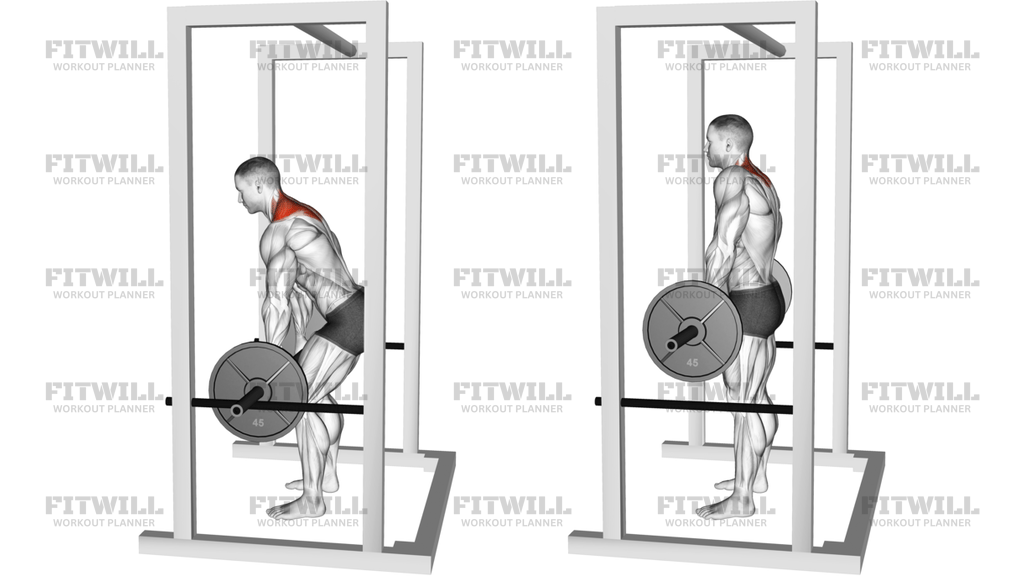
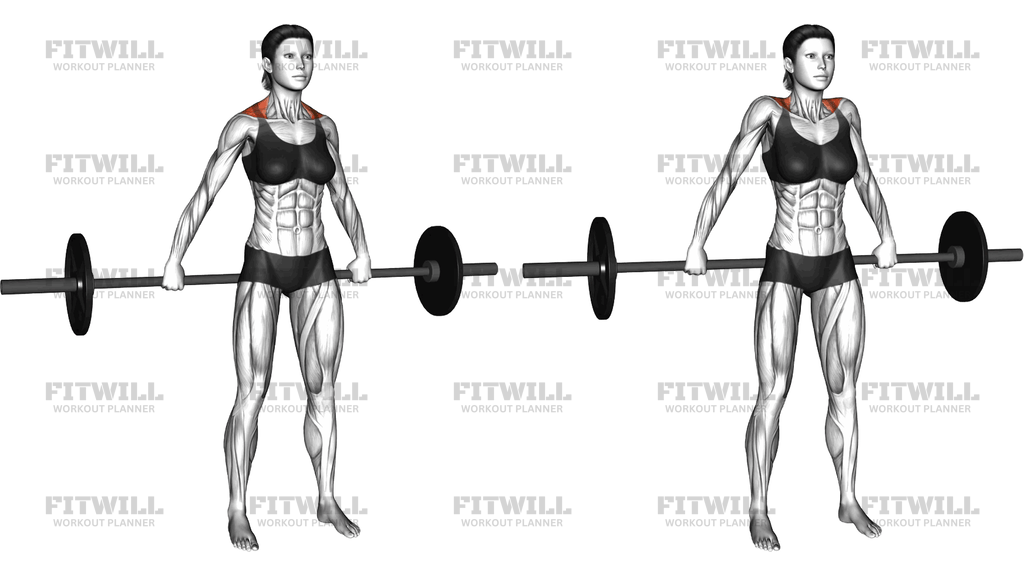
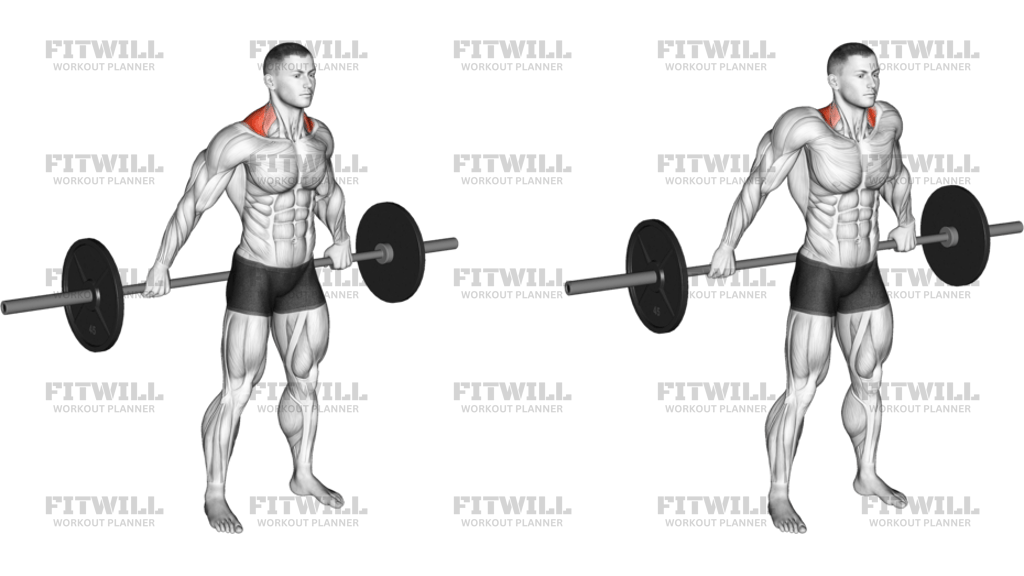
Barbell Wide Shrug is a standing trap exercise built around pure shoulder elevation with a wide overhand grip. The wider hand position keeps the arms long and makes it harder to turn the rep into a curl or row, so the upper traps have to do the main work. It is a simple but very specific lift for building upper-back tension, reinforcing scapular control, and teaching the shoulders to move straight up under load.
The setup matters because the shrug is a small movement and every bit of body cheat shows up immediately. Stand tall with the bar resting against the front of your thighs, take your hands wider than shoulder width, and lock in straight elbows before the first rep. A balanced stance and neutral torso keep the load centered so the traps can lift the bar instead of the lower back, hips, or arms trying to help.
On each repetition, raise the shoulders straight toward the ears and keep the neck long and neutral. Do not bend the elbows or swing the torso; the bar should rise because the shoulders are lifting, not because the body is rocking. At the top, squeeze briefly without rolling the shoulders forward, then lower the bar under control until the shoulders fully reset and the plates stop moving. Exhale as you shrug and inhale on the way down.
Use Barbell Wide Shrug as accessory work after pulls, on an upper-back day, or anywhere you want direct trap loading without a lot of joint motion. It is also useful for lifters who prefer a barbell to cables or machines and want a standing version they can load progressively. Keep the reps clean and deliberate, because once the movement turns into a bounce or partial shrug, the traps lose the tension that makes this exercise worthwhile.
[ Workout Log & Planner ]
Put your next workout in Fitwill
Keep your plan and training log ready when you are.


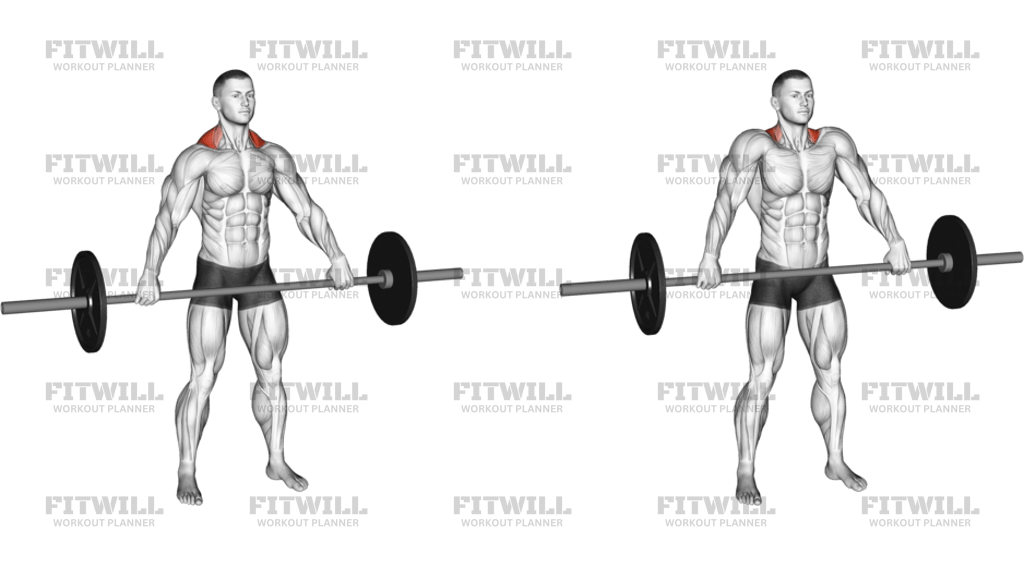
Instructions
- Stand with your feet about hip width apart and hold a barbell with a wide overhand grip so it hangs against the front of your thighs.
- Let your arms stay straight, set your chest tall, and keep your shoulders down before the first rep.
- Brace your torso and keep your chin level so the bar starts from a still, balanced position.
- Lift your shoulders straight up toward your ears without bending your elbows or leaning back.
- Squeeze the top for a brief pause when the traps are fully shortened.
- Lower the bar slowly until your shoulders come back down and the weight settles at thigh level again.
- Keep the bar close to your body and let the plates stay quiet instead of swinging.
- Repeat for the planned reps, then lower the bar to the floor or rack it safely when the set is done.
Tips & Tricks
- Pick a grip wide enough that the bar clears your thighs without forcing your elbows to bend.
- Think straight up, not back; rolling the shoulders rearward turns the shrug into a loose upper-back movement.
- Keep the arms locked out the whole set so the biceps do not start helping.
- A one-second pause at the top makes the traps work harder than a fast bounce.
- If the bar drifts forward, reset with the chest tall and the shoulders stacked over the hips.
- Use straps if your grip gives out before your traps do, especially on heavier sets.
- Stop the set when the shoulders stop rising cleanly and the torso starts to sway.
- Keep the neck long and avoid jutting the chin forward when you shrug.
Frequently Asked Questions
What does Barbell Wide Shrug train most?
It mainly trains the upper traps, with the upper back and forearms helping stabilize the bar.
How is Barbell Wide Shrug different from a regular shrug?
The wider overhand grip keeps the arms long and makes it easier to isolate shoulder elevation instead of turning the rep into a curl or row.
Should I bend my elbows during Barbell Wide Shrug?
No. Keep the elbows straight so the shoulders do the work and the bar rises from trap contraction, not arm drive.
How heavy should I use on Barbell Wide Shrug?
Use a load you can hold at thigh level without jerking, swaying, or shortening the top position.
Do I need straps for Barbell Wide Shrug?
Not always, but straps are useful if your grip fails before your traps do on heavier sets.
Is Barbell Wide Shrug good for beginners?
Yes, as long as the load is light enough to keep the torso still and the shoulders moving straight up and down.
Why do my arms feel involved in Barbell Wide Shrug?
That usually means the elbows are bending or the bar is drifting into a partial curl. Keep the arms straight and let the traps lift the load.
Can I use Barbell Wide Shrug after deadlifts or rows?
Yes. It fits well as accessory trap work after pulling sessions because it loads the same area without much extra fatigue from a big compound lift.