Kneeling Abdominal Draw In
Kneeling Abdominal Draw In is a floor-based core activation drill performed on hands and knees. The goal is not to crunch the torso or chase a big visible range of motion. Instead, you create a subtle hollowing action by drawing the lower abdomen inward while keeping the spine, shoulders, and hips quiet. That makes it useful for teaching bracing, breathing control, and deep trunk engagement before heavier training.
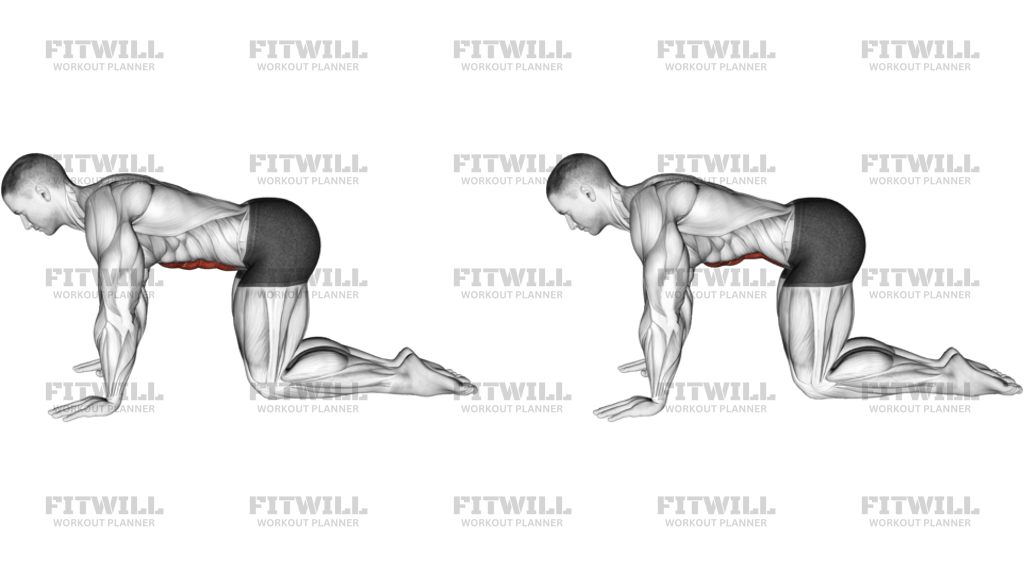
The image shows a quadruped setup with the hands under the shoulders and the knees under the hips. From that position, the ribs stay stacked over the pelvis while the belly gently pulls away from the floor. The strongest sensation should come from the deep abdominal wall, especially the transversus abdominis and rectus abdominis, with the obliques assisting to keep the trunk from twisting or sagging.
Because the movement is small, the setup matters more than the range. A neutral neck, steady shoulders, and even pressure through both hands help keep the torso from drifting into a plank, cat pose, or low-back arch. The exercise works best when the draw-in is paired with a slow exhale and a brief hold, then a controlled return without losing the stacked position.
Use this drill as a warm-up, core reset, or accessory exercise when you want better abdominal control rather than high fatigue. It is especially helpful before lifts that depend on trunk stiffness, but it should still feel precise and calm. If you feel the movement mostly in the hip flexors, lower back, or shoulders, the rep is too big or the brace is too hard. Keep the action subtle and exact.
Fitwill
Log Workouts, Track Progress & Build Strength.
Achieve more with Fitwill: explore over 9600 exercises with images and videos, access built-in and custom workouts, perfect for both gym and home sessions, and see real results.
Start your journey. Download today!




Instructions
- Come onto your hands and knees with your hands under your shoulders and your knees under your hips.
- Spread your fingers, press the floor away, and keep your elbows straight but not locked.
- Set your head and neck in line with your spine so you are looking down slightly ahead of your hands.
- Before each rep, exhale gently and let your ribs soften down without rounding your upper back.
- Draw your lower abdomen inward and slightly upward, as if zipping your navel away from the floor.
- Hold that hollowed position for the planned count while keeping your hips still and your back quiet.
- Inhale slowly enough to keep the draw-in under control, then release the abdomen without losing your posture.
- Reset, repeat for the target reps, and stop if you start arching, twisting, or losing the hollow hold.
Tips & Tricks
- Keep the movement small; this is a hollowing drill, not a crunch.
- Think about pulling the belt line up and in, not just sucking in the chest.
- Press evenly through both palms so one shoulder does not collapse toward the floor.
- Do not shove the hips back toward the heels during the draw-in.
- If the low back arches, shorten the hold and soften the exhale.
- Keep the ribs stacked over the pelvis instead of flaring the rib cage forward.
- A slow nasal inhale after the contraction helps you keep the torso calm between reps.
- Stop each set before the belly starts shaking or the neck starts tensing.
Frequently Asked Questions
What muscles does Kneeling Abdominal Draw In target most?
It primarily targets the deep abdominal wall, especially the rectus abdominis and transversus abdominis, with the obliques helping stabilize the torso.
Is this a crunch or a vacuum-style core drill?
It is closer to an abdominal draw-in or hollowing drill. The torso stays still while the lower abdomen pulls inward.
How should my hands and knees be positioned?
Place the hands directly under the shoulders and the knees under the hips so the trunk can stay stacked and stable.
Where should I feel the contraction?
You should feel a subtle but clear tension around the lower abdomen and sides of the waist, not a big movement in the back or hips.
Can I hold my breath during the rep?
A short controlled hold is fine, but the neck, shoulders, and jaw should stay relaxed. Avoid bracing so hard that the torso stiffens or the ribs flare.
What is the biggest form mistake?
The most common mistake is turning the drill into a back arch or a cat-cow motion instead of keeping the spine quiet and letting the lower abdomen do the work.
Is this suitable before heavier lifts?
Yes. It works well before squats, deadlifts, presses, or carries when you want better trunk awareness and breathing control.
How do I make it harder without changing the exercise?
Increase the hold time, slow the breathing, or keep the hollowed position cleaner without letting the pelvis shift or the low back arch.