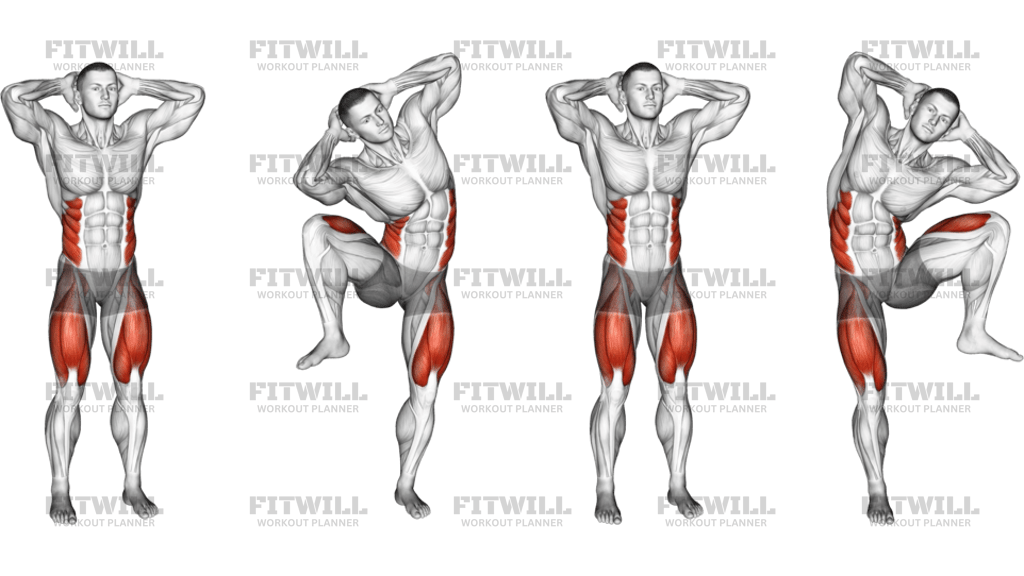
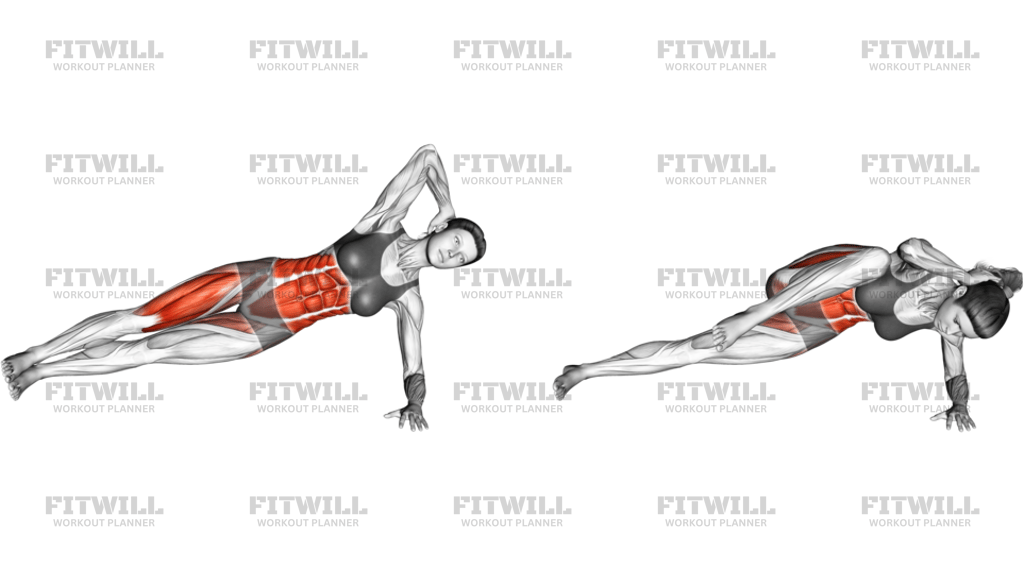
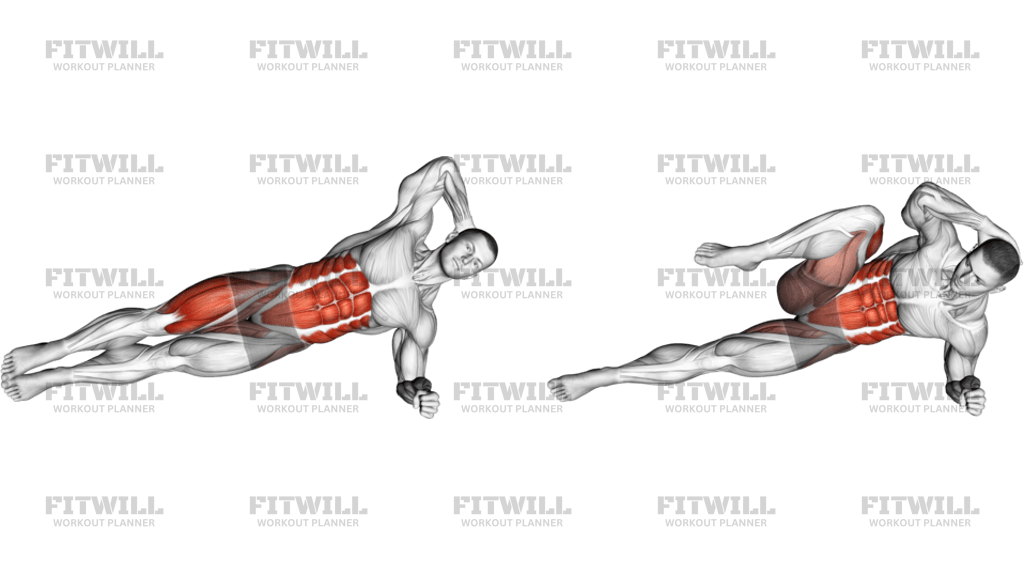
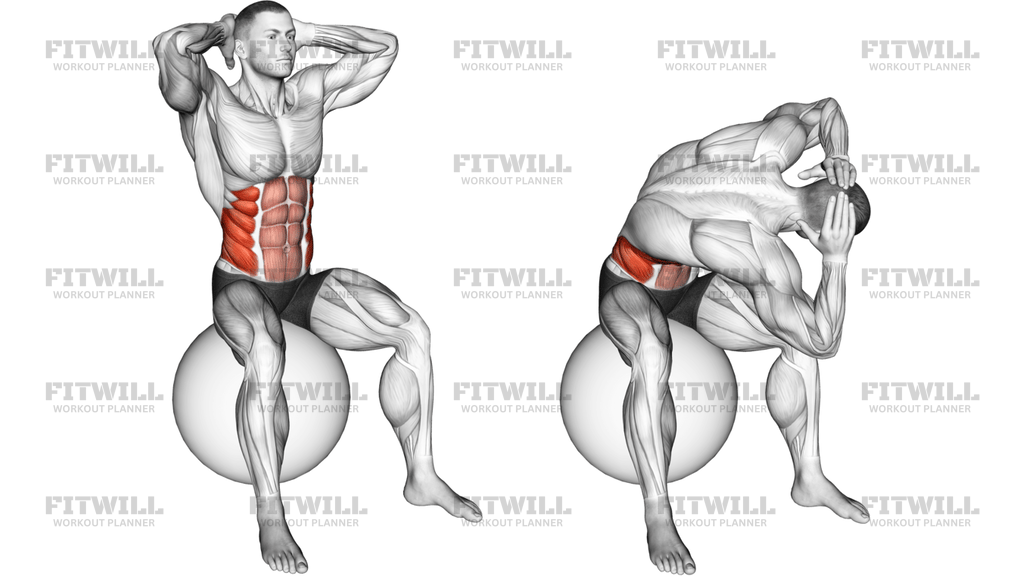
Air Twisting Crunch
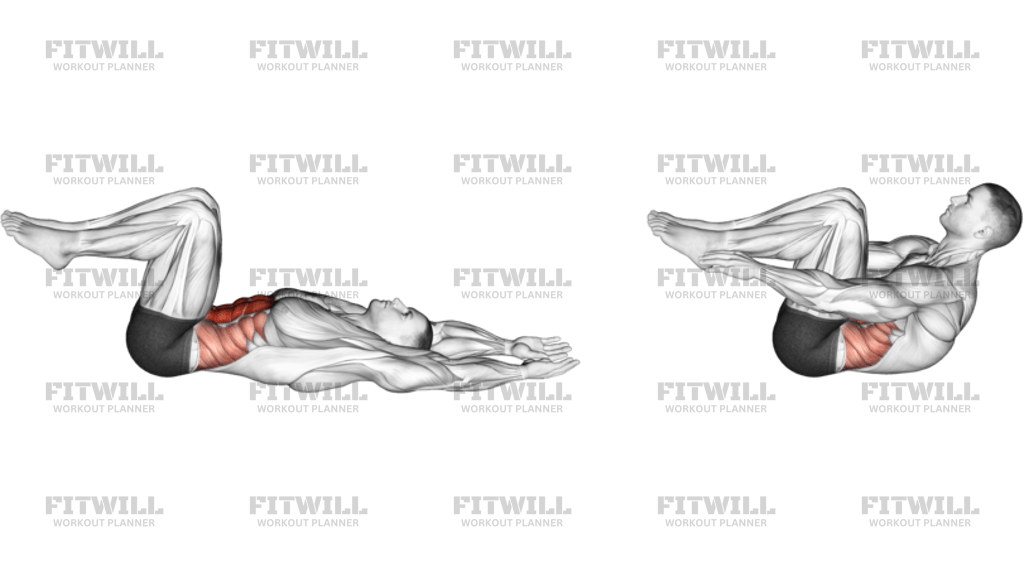
Air Twisting Crunch is a floor-based core exercise that combines a crunch with a controlled cross-body twist. You lie on your back, keep your knees bent, and curl one shoulder toward the opposite knee while the other leg lengthens away. The movement is small, but it is demanding when you keep the lower back anchored and move the ribcage instead of yanking the head or swinging the legs.
The exercise is meant to train the abs through spinal flexion while asking the obliques to control rotation. In the image, the working side crunches across the body and the opposite leg extends only as far as the torso can stay tight. That makes the rectus abdominis the main driver, with the external obliques and deep core muscles helping stabilize the pelvis and keep the twist clean. If the setup is sloppy, the hip flexors will take over and the rep turns into a leg swing.
A good setup starts on a mat or flat floor with the hands lightly behind the head or at the temples, elbows open, chin slightly tucked, and the low back pressed gently into the ground. From there, brace before each rep so the ribs stay down. The shoulders should lift just enough to clear the floor, not so high that the neck tightens. Keep the nonworking leg controlled as it extends and return to the start without losing the pelvic position.
This is a useful accessory exercise for core-focused sessions, warmups, circuits, or conditioning work when you want a bodyweight movement that rewards control. It fits beginners well if the range stays short and the pace is slow, and it also scales for advanced users by adding longer holds, slower eccentrics, or a longer leg lever. The main safety point is simple: if the lower back arches, the neck strains, or the twist turns into momentum, shorten the range and reset the rep.
[ Workout Log & Planner ]
Put your next workout in Fitwill
Keep your plan and training log ready when you are.


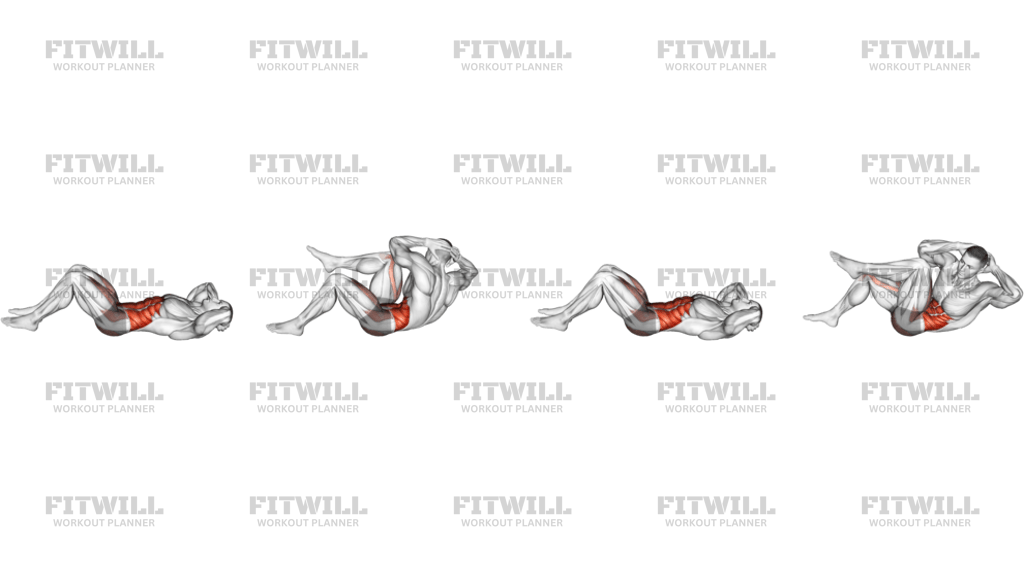
Instructions
- Lie on a mat or floor with your knees bent, feet lightly planted or hovering, and your hands at your temples or behind your head.
- Press your lower back gently into the floor, keep your chin slightly tucked, and open your elbows so your neck stays relaxed.
- Brace your abs before you move so your ribs stay down and your pelvis does not tip forward.
- Exhale as you curl your shoulders off the floor and twist one ribcage toward the opposite knee.
- At the same time, extend the other leg only as far as you can keep your low back from arching.
- Lift with the abs rather than pulling on your head or swinging the legs.
- Lower under control until your shoulder blades are close to the floor, then reset for the next side.
- Alternate sides smoothly or complete the planned reps on one side before switching, depending on the workout.
Tips & Tricks
- Keep the twist small and deliberate; the goal is a clean ribcage rotation, not a huge elbow-to-knee reach.
- Think about lifting the shoulder blade off the floor and turning the sternum across the body instead of pulling the head forward.
- If your neck gets tired first, touch the fingertips lightly to the sides of the head and keep the elbows wide.
- The extending leg should hover low only if the pelvis stays steady; a higher leg position is better than an arched low back.
- Exhale through the crunch and twist to help the ribs stay closed as the torso shortens.
- Slow the lowering phase so you do not drop back onto the mat and lose tension between reps.
- If the hip flexors dominate, bend the moving knee more and shorten the leg extension.
- Stop the set as soon as you start rocking side to side or using momentum to reach the top.
Frequently Asked Questions
What muscle does Air Twisting Crunch target most?
The rectus abdominis is the main driver, with the obliques helping rotate and stabilize the torso.
Can beginners perform this exercise?
Yes. Beginners usually do best with a shorter range, a slower tempo, and one foot staying closer to the floor.
Should my lower back stay on the floor the whole time?
It should stay gently pressed down for most of the rep. If it arches, shorten the leg extension and reduce the twist.
Where should the twist come from?
From the ribcage and upper trunk, not from yanking the head or swinging the knee across the body.
Do I need to touch elbow to knee?
No. A controlled cross-body crunch with clear trunk rotation is better than forcing contact.
Why do I feel this in my hip flexors?
The leg extension is pulling too much of the load. Bend the moving knee more and keep the abs braced before each rep.
Is this the same as a bicycle crunch?
It is similar, but this version is more of a controlled twist-crunch with a deliberate opposite-leg extension rather than a fast pedaling motion.
How can I make the exercise harder without weights?
Slow the lowering phase, pause at the top of each twist, or extend the leg a little farther while keeping the low back pinned.