Ring High Row
Ring High Row is a bodyweight pulling exercise that uses suspended rings to train the upper back, rear delts, biceps, and trunk together. Because the rings move freely, the exercise rewards a stable body line and a precise pulling path more than brute force. It is especially useful for building the strength and control needed for harder ring rows, inverted pulls, and other suspension movements.
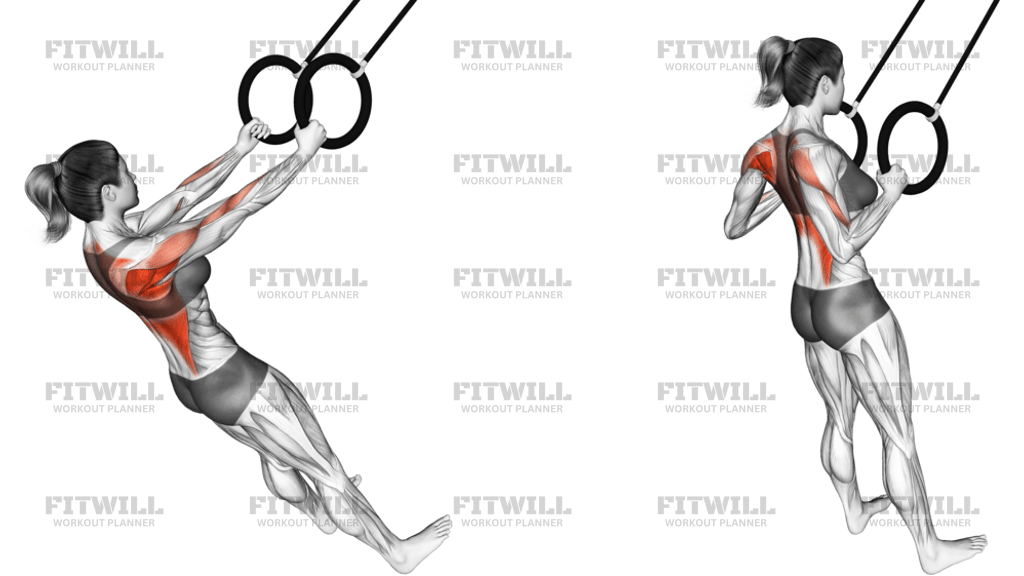
The image shows the body angled back from the feet with the arms reaching to the rings at about chest-to-face height. That setup changes the row into a higher pulling pattern: the elbows travel slightly out and back instead of staying tucked low. The goal is to pull the chest toward the rings while keeping the torso rigid, the neck long, and the shoulders organized rather than shrugging up toward the ears.
Setup matters because the rings are unstable and the line of pull changes with every small shift in stance. A clean rep starts with the feet planted, body straight from head to heels, and arms fully extended without losing tension through the shoulders. From there, the row should feel like the upper back initiates the movement, the elbows drive back under control, and the shoulder blades finish the rep without overextending the lower back.
This exercise works well in strength, hypertrophy, and skill-focused sessions because it scales easily by changing foot position and body angle. A more upright position makes the row easier, while stepping the feet farther forward and leaning back makes it harder. That makes it a practical choice for beginners learning ring stability as well as experienced lifters who want strict upper-back work without a barbell or machine.
The biggest risks are turning the row into a hip hinge, yanking on the rings, or losing position at the top. Keep the ribs down, avoid letting the shoulders roll forward at the bottom, and lower yourself with the same control you use to pull up. If the rings drift or the body twists, make the angle easier and clean up the rep before adding load or volume.
[ Workout Log & Planner ]
Put your next workout in Fitwill
Keep your plan and training log ready when you are.


Instructions
- Set the rings at chest height or slightly higher, then hold one handle in each hand with a neutral grip.
- Walk your feet forward and lean back until your body forms a straight line from head to heels.
- Let the arms straighten fully while keeping tension in the shoulders and upper back.
- Brace your ribs down and keep your glutes lightly engaged so the torso does not sag.
- Pull the rings toward the upper chest by driving the elbows back and slightly out.
- Squeeze the shoulder blades together without shrugging the shoulders toward your ears.
- Pause briefly when the rings reach the sides of the chest or lower ribs.
- Lower yourself under control until the arms are long again and the shoulders stay organized.
- Exhale as you pull, inhale as you return, and reset your body line before the next rep.
Tips & Tricks
- If your elbows drift too low, raise the rings a little and pull to the upper chest instead of the stomach.
- Keep your heels planted and your body rigid so the row comes from the upper back, not a swing through the hips.
- Stop the rep when the rings reach your chest; chasing extra range usually turns the finish into shoulder shrugging.
- A small change in foot position changes difficulty a lot, so adjust the angle before you add more reps.
- Keep the wrists neutral and avoid collapsing them backward into the straps.
- Let the shoulder blades reach forward only at the bottom; do not lose the stacked ribcage position.
- If the rings wobble, slow the lowering phase and shorten the set until you can control the handles cleanly.
- Use a lighter body angle when learning the movement so you can feel the elbows move back without neck tension.
- End the set when the torso starts to twist or the shoulders begin to climb.
Frequently Asked Questions
What does Ring High Row train most?
It emphasizes the upper back, rear delts, and biceps, with the core working hard to keep the body in a straight line.
How high should the rings be set?
Chest height or slightly higher works well for this version. Higher rings usually make the row easier and help keep the pull path clean.
Where should my elbows travel?
Drive them back and slightly out so the rings come toward the upper chest, not low toward the hips.
Should my body stay straight the whole time?
Yes. Keep a straight line from head to heels and avoid bending at the hips to fake the row.
Is this easier than a bar row?
Usually yes, because you can change the body angle and the free rings let the hands move naturally.
What are the most common mistakes?
Shrugging the shoulders, swinging the hips, and pulling too low are the main form breaks to watch for.
How do I make the exercise harder?
Walk the feet farther forward, lower the rings slightly, or pause longer at the top while keeping the body rigid.
Can beginners use Ring High Row?
Yes. Start with a more upright body angle and shorter sets so you can learn the ring path without losing position.