Bodyweight Glute Dominant Step-Up
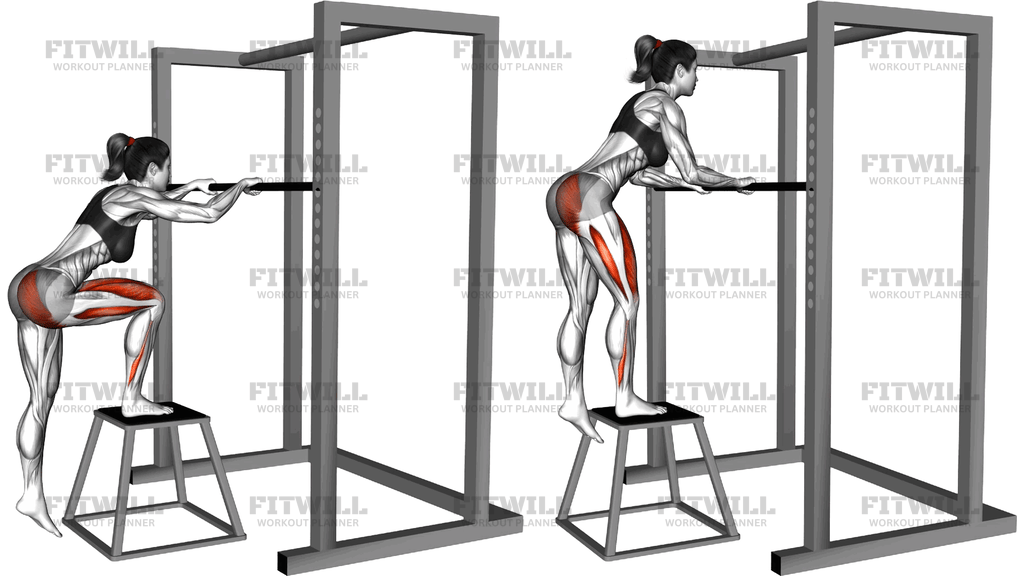
Bodyweight Glute Dominant Step-Up is a supported unilateral lower-body exercise that shifts emphasis toward the lead-side glute by using a box, bench, or step and a light hand support for balance. The image shows the lifter keeping one foot planted on the platform, leaning the torso slightly forward, and driving through the heel to stand up instead of bouncing off the back leg. That setup makes the exercise more useful for glute-focused training than a fast, upright step-up because it keeps tension on the working hip through a bigger hip extension moment.
This movement primarily trains the glutes, with the hamstrings and core contributing to hip control and trunk stability. The technical emphasis is on the Gluteus maximus, assisted by the Biceps femoris, Rectus abdominis, and Erector spinae. The working leg should feel the main demand as it extends the hip and lifts the body, while the trailing leg stays light and only helps with balance or a gentle guide through the top position.
The setup matters more here than in a casual step-up. The platform should be high enough to challenge the lead glute, but not so high that you have to twist, push off hard with the back leg, or round the lower back to get on top. A slight forward torso angle, a stable midfoot-to-heel contact on the box, and a quiet, controlled knee track help keep the load where you want it. The support handle or bar is there to reduce wobble, not to pull yourself up.
Each repetition should start from a braced, stacked position with the pelvis controlled and the ribs not flaring. Drive through the planted foot, stand by extending the hip and knee of the working leg, then finish tall without over-arching the back. Lower yourself slowly and place the trailing foot down under control before resetting the next rep. The eccentric phase is where a lot of the training effect lives, so a deliberate return is just as important as the ascent.
Use this exercise in accessory blocks, glute-focused lower-body sessions, warm-ups that need unilateral activation, or rehabilitation-style strength work where balance support is helpful. It is beginner-friendly when the box is low and the rep speed is controlled, but it still rewards precise execution. The main coaching cues are simple: keep the support light, keep the torso organized, and let the lead glute do the work instead of turning it into a jumping step or a quad-dominant climb.
[ Workout Log & Planner ]
Put your next workout in Fitwill
Keep your plan and training log ready when you are.


Instructions
- Place one foot fully on the box or step, with the whole foot flat and the heel loaded.
- Keep the other foot on the floor behind you and lightly hold the support bar or frame for balance.
- Lean your torso slightly forward and keep your ribs stacked over your pelvis before you start.
- Brace your core, then drive through the planted heel and midfoot to stand up on the box.
- Let the working hip and knee extend together instead of pushing off aggressively from the back leg.
- Finish the rep tall with the glute squeezed, but do not lean back or over-arch your lower back.
- Lower yourself slowly until the trailing foot can return to the floor under control.
- Reset the stance, re-brace, and repeat for the planned reps before switching sides.
Tips & Tricks
- Keep the support hand light; if you are pulling hard on the bar, the glute is probably not doing enough work.
- Use a box height that lets the lead heel stay down and the knee track cleanly over the toes.
- A slight forward torso angle usually increases glute demand better than staying perfectly upright.
- Think about pressing the box away through the heel rather than jumping upward with both legs.
- Control the descent for at least as long as the ascent so the working hip stays loaded.
- If the trailing foot keeps kicking off the floor, lower the step or slow the rep down.
- Keep the pelvis level; hiking one hip up usually turns the rep into a balance drill instead of a glute exercise.
- Stop before the lower back starts to take over at the top of the rep.
Frequently Asked Questions
What does Bodyweight Glute Dominant Step-Up train the most?
It mainly trains the glutes on the working leg, with the hamstrings and core helping stabilize the hip and trunk.
Why use a support bar or frame on this step-up?
The light hand support reduces balance demand so you can keep the lead leg and glute doing most of the work.
How high should the step or box be?
Use a height that challenges the glute without forcing you to twist, bounce, or lose the heel-loaded position.
Should I push off with the back leg?
No, the back leg should stay as light as possible. A strong push-off usually turns the movement into a two-leg climb.
What should I feel at the top of the rep?
You should feel the lead glute finish the stand-up, with the pelvis and lower back staying controlled rather than overextended.
Is this exercise good for beginners?
Yes, especially with a low step and a stable support point, because it teaches single-leg control without requiring external load.
What is the most common form mistake?
The biggest mistake is using momentum or a strong push from the trailing leg instead of loading the planted foot and hip.
Can I make this more glute-focused?
Yes, a slightly forward torso lean, heel-driven pressure on the box, and a slower lowering phase all increase glute emphasis.