Dumbbell Sprinter Thrust Chest Press
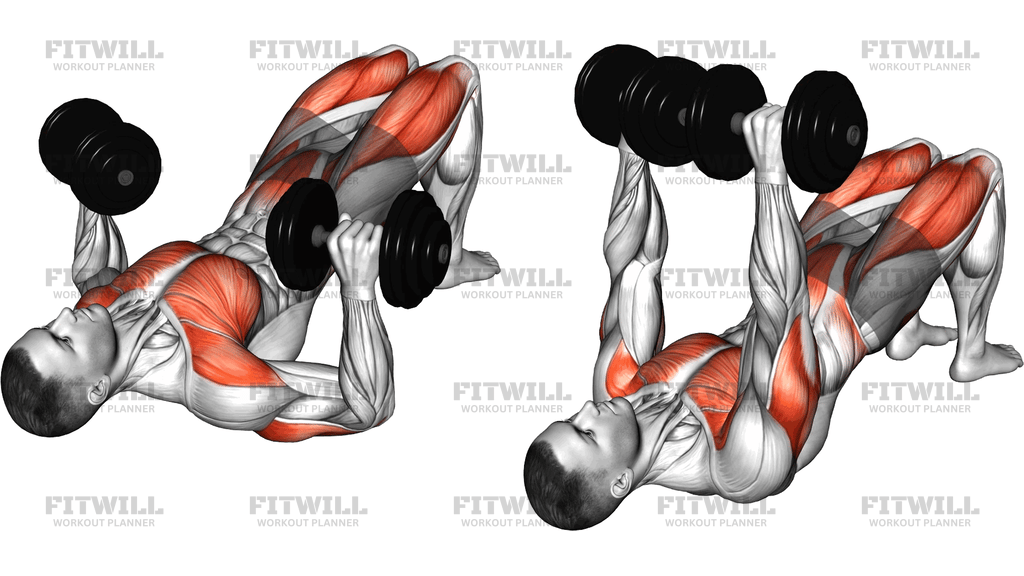
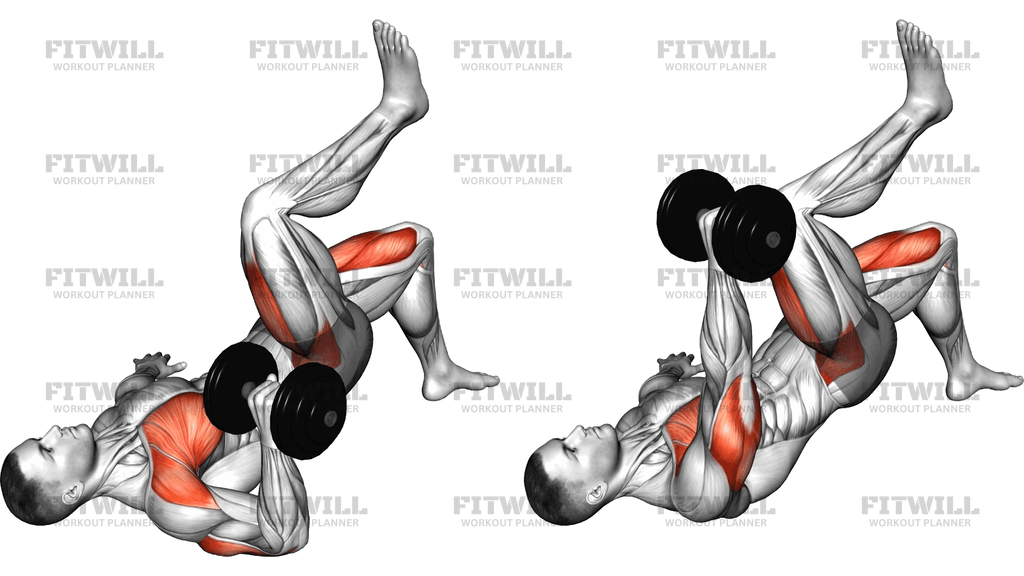
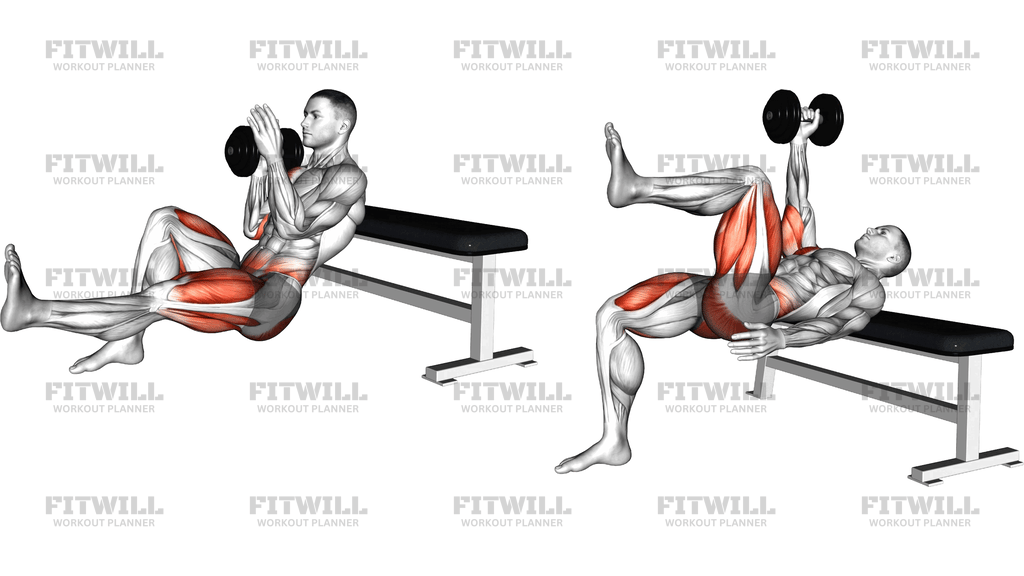
Dumbbell Sprinter Thrust Chest Press combines a hip bridge in a sprinter-style stance with a dumbbell press. The bench supports the upper back while the legs do most of the stabilizing work, so the exercise looks like a chest press layered on top of a single-leg glute drive. It is a good choice when you want to train glutes hard without taking away the upper-body challenge of pressing.
The bridge position matters because it keeps the pelvis high and the trunk braced while one leg helps drive the body into a split or sprinter stance. That makes the glutes the main driver, with the hamstrings, core, and lower back helping to keep the hips level. At the same time, the pressing arm has to work through the chest, shoulders, and triceps without letting the rib cage flare or the shoulders roll forward.
The best reps start with a stable bench setup and a clear hip position. Keep the shoulders anchored on the bench, the planted foot flat, and the lifted knee organized instead of flopping outward. From there, press the dumbbell smoothly while the hips stay high. The goal is not a huge arch or a frantic leg drive; it is a strong bridge, a clean press path, and a controlled lower back to the start.
Use this movement for accessory strength, glute-focused conditioning, or as a pressing variation when you want more core and pelvic control than a flat dumbbell press provides. Beginners can use a light dumbbell and a shorter range until they can keep the hips steady. If the lower back takes over, the bridge collapses, or the press turns into a shrug, the load is too heavy or the setup is off.
[ Workout Log & Planner ]
Put your next workout in Fitwill
Keep your plan and training log ready when you are.


Instructions
- Sit in front of the bench, then position your upper back across the pad so your shoulders are supported and your hips can lift freely.
- Hold one dumbbell above the chest with the working hand and keep the free hand ready for balance near the torso or hip.
- Place one foot flat on the floor and bring the opposite knee up into a sprinter position, with the shin roughly parallel to the floor or slightly angled upward.
- Drive through the planted foot and squeeze the glute to lift the hips until the torso is nearly level from shoulders to knee.
- Keep the ribs stacked and the neck long so the bridge stays strong without excessive lower-back arching.
- Press the dumbbell straight up until the arm is extended without locking the shoulder forward.
- Lower the dumbbell under control to the chest while keeping the hips high and the knee position steady.
- Reset the bridge, switch sides if the set calls for alternating reps, and keep the tempo smooth and deliberate.
Tips & Tricks
- Keep the bench under the upper back only; if you slide too far up, the press becomes unstable and the bridge loses leverage.
- Use the planted foot to create tension through the heel and outer hip, not by pushing through the toes.
- Think of lifting the hip with the glute first, then finishing the press, so the lower back does not take over.
- Let the working elbow travel at a natural angle instead of flaring straight out to the side.
- Keep the lifted knee quiet; if it swings around, the pelvis will rotate and the press will wobble.
- Choose a lighter dumbbell than you would for a flat press because the bridge and single-leg position reduce stability.
- Exhale as you press and breathe in as you lower without letting the rib cage pop upward.
- Stop the set if the hips drop, the shoulder shrugs, or you need to twist hard to finish the rep.
Frequently Asked Questions
What does Dumbbell Sprinter Thrust Chest Press train most?
The main emphasis is on the glutes, with the chest, shoulders, triceps, hamstrings, and core all working to keep the rep stable.
Why is the bench support important?
The bench supports the upper back so you can hold the bridge position while pressing, which makes the glutes work harder and keeps the torso more stable.
Should I keep one knee lifted during every rep?
Yes, the sprinter-style knee position is part of the exercise and helps challenge pelvic control while the hips stay elevated.
How do I know if my setup is correct?
Your shoulders should be on the bench, one foot should be firmly planted, the other knee should be up, and the hips should be high enough that you can press without collapsing.
Can beginners use this movement?
Yes, but they should start with a light dumbbell and master the bridge position before adding load or speed.
What usually causes the lower back to feel it?
The common cause is letting the ribs flare and the hips over-arch instead of keeping the glutes and abs stacked to hold the bridge.
Is this the same as a regular dumbbell chest press?
No. The press happens while you hold a bridge and sprinter stance, so balance, hip drive, and core control are a big part of the exercise.
What is the best way to progress it?
Add load only after you can keep the hips level, the knee steady, and the dumbbell path smooth on every rep.