Cable Kneeling Preacher Curl
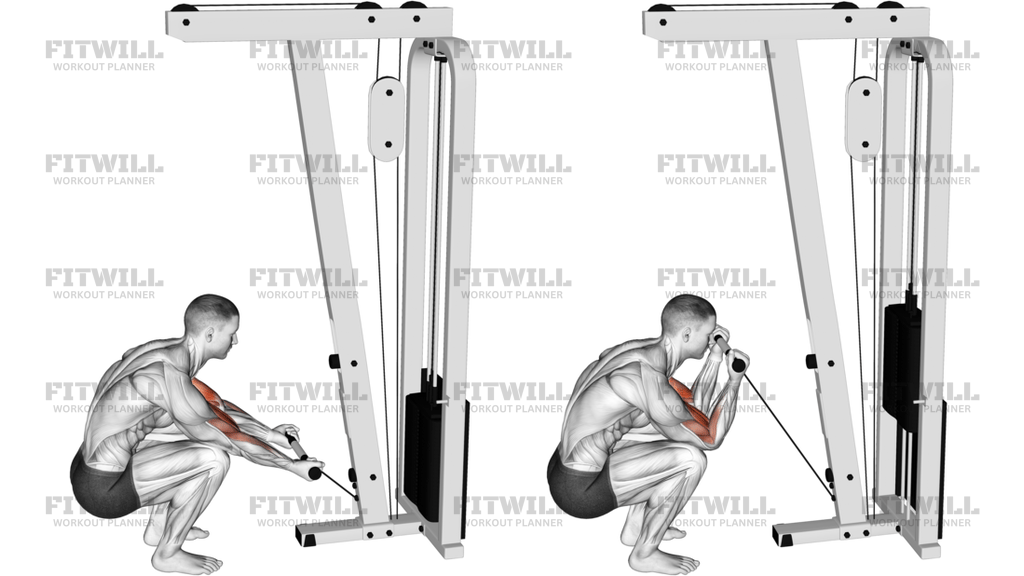
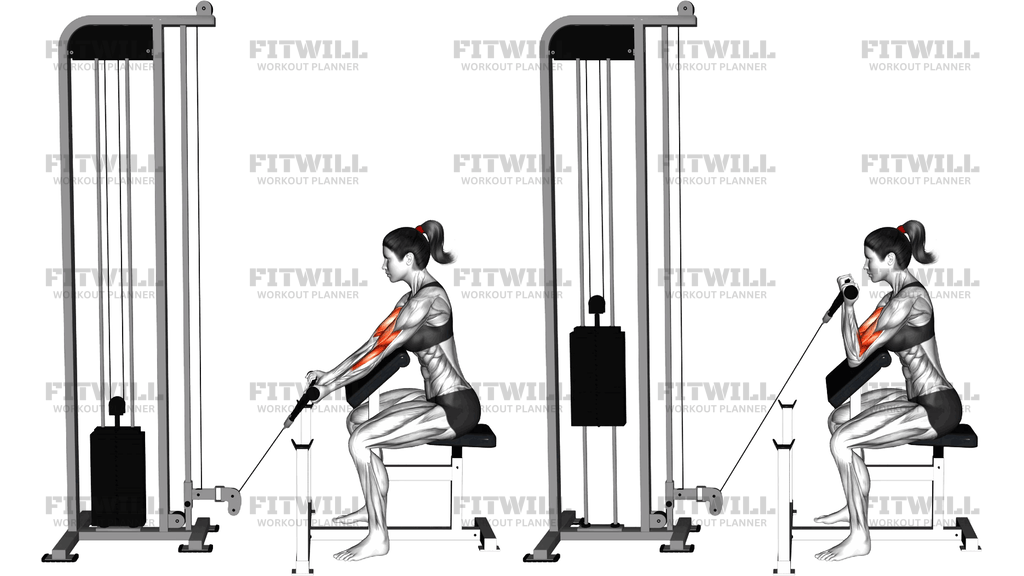
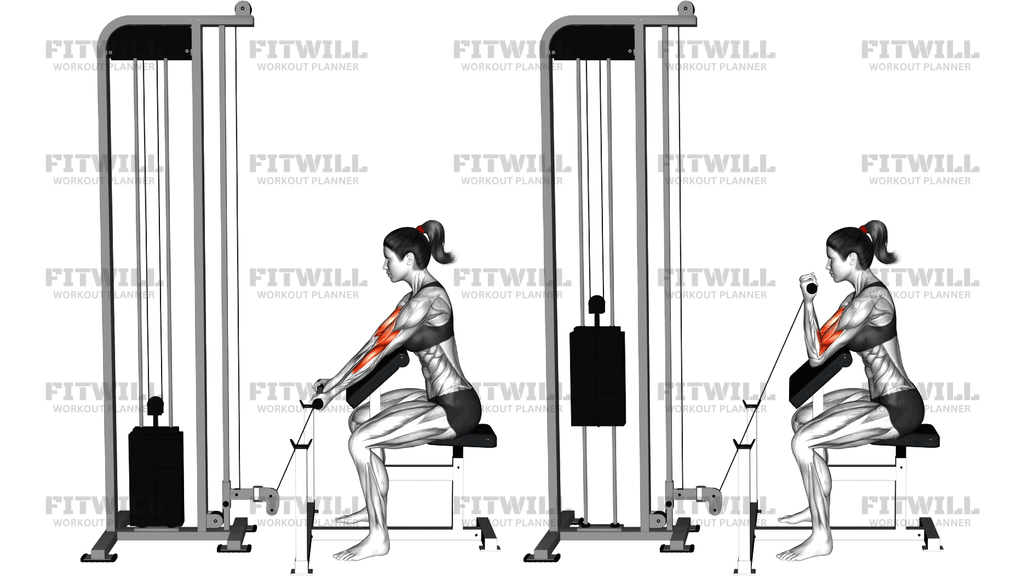
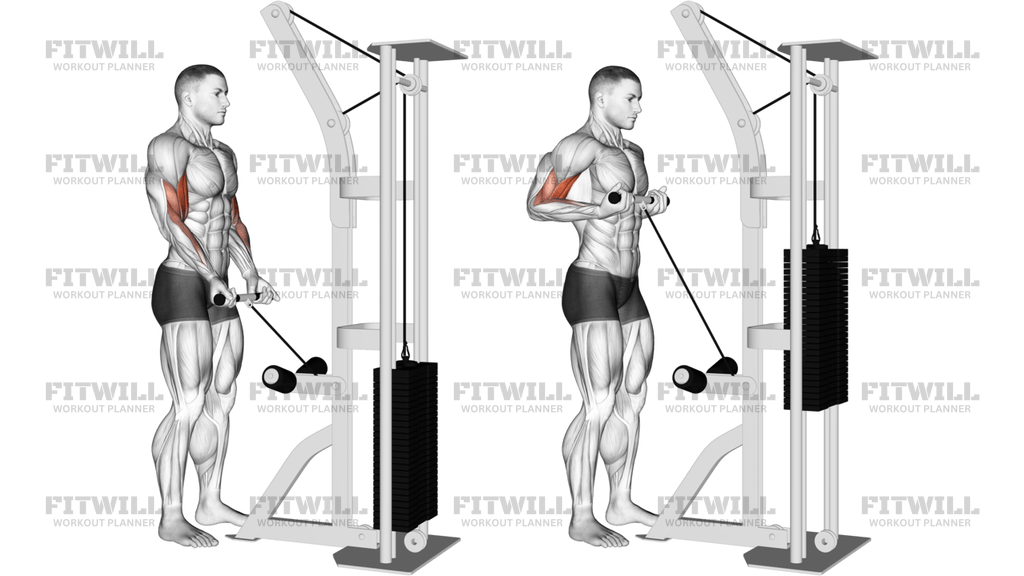
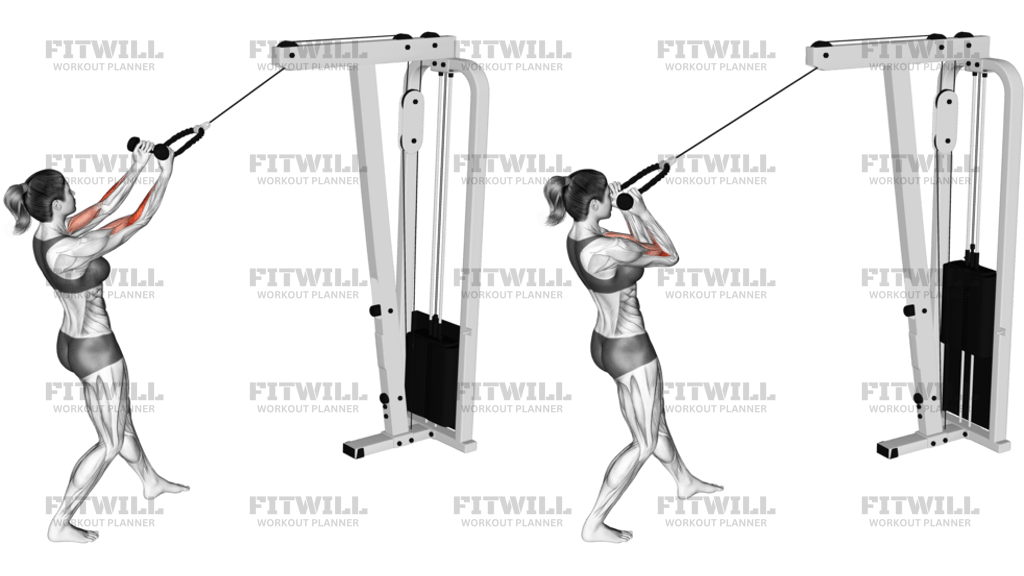
Cable Kneeling Preacher Curl is a cable-based elbow-flexion exercise that places the upper arms against the thighs while you kneel in front of a low pulley. The braced position removes most of the ability to swing the torso, so the biceps have to do the work through a very honest range of motion. It is a good choice when you want strict arm training, a clear squeeze at the top, and less cheating than a free-standing curl.
The setup matters because the cable line of pull and your kneeling distance determine how much tension you feel at the bottom and how smoothly the curl loads the biceps. With the handle low and the torso folded forward, the exercise emphasizes elbow flexion while the shoulders stay quiet. The primary target is the biceps brachii, with the brachialis, brachioradialis, and forearm flexors assisting. If the torso starts drifting or the shoulders take over, the set stops being a preacher-style curl and becomes a looser cable curl.
Kneel close enough to keep tension on the cable without letting it drag your shoulders forward. Brace the upper arms against the inner thighs, keep the wrists stacked, and begin each rep from a fully controlled stretch. Curl the handle toward the face or upper chest by bending the elbows, then lower it slowly until the arms are almost straight again. The motion should feel like the forearms are hinging around a fixed elbow position, not like the whole body is helping to lift the stack.
This exercise is useful for arm-focused training days, hypertrophy work, or as a strict accessory after heavier pressing and pulling. It can also be a good option when you want biceps work with less body English than a standing curl. Because the elbows are held in a fixed position, lighter loads often produce better training than chasing a heavy stack. Clean tempo, a brief squeeze, and a controlled return matter more than moving the weight fast.
Keep the movement pain-free and respectful of the elbows and wrists. If the handle pulls your shoulders forward, step back, lower the load, or reset the kneeling position so the cable stays smooth through the whole rep. Done well, Cable Kneeling Preacher Curl gives the biceps a strong shortened contraction, a clear stretch at the bottom, and a very repeatable line of tension from the first rep to the last.
[ Workout Log & Planner ]
Put your next workout in Fitwill
Keep your plan and training log ready when you are.


Instructions
- Set a low pulley with a handle attachment and kneel facing the machine, close enough that the cable stays tight when your arms are extended.
- Place your upper arms against the inside of your thighs so the elbows stay fixed and your torso is folded forward over the knees.
- Grip the handle with an underhand hold, keep your wrists straight, and let the cable pull the hands slightly forward without losing the brace.
- Start with the arms almost straight and the shoulders quiet, leaving only a small bend in the elbows if you need to protect the joint.
- Exhale and curl the handle toward your face or upper chest by bending the elbows while keeping the upper arms pinned to the thighs.
- Squeeze hard at the top without letting the elbows drift forward or the shoulders shrug up toward the ears.
- Inhale and lower the handle slowly until the biceps are stretched again and the elbows are nearly straight.
- Reset the brace before the next rep and keep the same body angle, wrist position, and cable path for the full set.
Tips & Tricks
- Set the kneeling distance so the cable is already under tension at the bottom; if the stack goes slack, move a little farther back.
- Keep the upper arms pressed into the thighs the whole time, because once the elbows float forward the exercise turns into a loose cable curl.
- Use a supinated grip that feels natural and keep the knuckles stacked over the forearms so the wrists do not bend back under load.
- Choose a lighter load than you would for a standing curl; the braced position makes cheating obvious and usually reduces the weight you can use well.
- Pause briefly at the top to remove momentum and to make the biceps finish the rep instead of the cable carrying it through.
- Lower the handle slowly so the biceps stay loaded through the stretch instead of dropping the weight back to the start.
- If the handle bangs into your thighs or knees, adjust the distance or the cable angle before adding more weight.
- Stop the set when you can no longer keep your shoulders down and your upper arms pinned, even if the stack still feels manageable.
Frequently Asked Questions
What muscles does Cable Kneeling Preacher Curl train most?
The biceps brachii is the main target, with the brachialis, brachioradialis, and forearm flexors helping during the curl.
Why kneel for this preacher curl instead of standing?
Kneeling lets you brace the upper arms against the thighs and reduces torso swing, which makes the biceps do more of the work.
Where should the handle travel on each rep?
Curl it toward your face or upper chest, then lower it back to the stretched start without letting the elbows drift forward.
How much elbow bend should I keep at the bottom?
Almost straight is fine, but avoid snapping into a hard lockout if that irritates your elbows.
What is the most common mistake on this machine setup?
Letting the shoulders shrug and the upper arms leave the thighs is the biggest error, because it removes the preacher-style brace.
Is this a good beginner biceps exercise?
Yes. The fixed setup makes the path easy to learn, but beginners should start light so they can keep the brace and slow lowering phase.
Can I use a rope, bar, or single handle?
Any attachment that lets you keep a steady underhand curl works, but the handle should feel stable in the hand and not force the wrists back.
How do I know if the weight is too heavy?
If you need to rock your hips, pull your shoulders forward, or lose the upper-arm brace to finish the rep, the load is too high.