Dumbbell Glute Dominant Step-Up
Dumbbell Glute Dominant Step-Up is a unilateral lower-body strength exercise built to load the working glute hard while still challenging balance, hip control, and trunk stability. The dumbbells add resistance at the sides, while the elevated platform creates the range of motion needed to make the lead leg do most of the work. Because the movement is glute-biased, setup matters more than raw load: the box height, torso angle, and foot placement decide whether the rep lands in the hip or turns into a knee-dominant climb.
This version of the step-up is meant to feel like a controlled hip drive, not a bounce. The working foot stays fully planted on the box, the torso leans slightly forward from the hips, and the trail leg stays light so it does not steal work from the lead side. When those details are right, the gluteus maximus is the main mover, with the hamstrings helping to extend the hip and the core keeping the pelvis from tipping or twisting.
The exercise is especially useful when you want single-leg strength that carries over to lunges, split squats, climbing, and athletic change-of-direction work. It also fits well in lower-body programs where you want glute volume without always relying on heavy barbell loading. A stable hand support, like the rack shown in the image, can help you stay organized enough to keep tension on the working leg instead of fighting for balance.
To perform it well, choose a box or bench height you can step onto without losing pelvis position or pushing off the floor leg. Keep the front foot flat, drive through the heel and midfoot, and finish with the hip and knee of the working side fully extended. On the way down, resist the descent and keep control until the trail foot can touch lightly or hover, depending on your setup. If the low back takes over, the box is probably too high, the torso is too upright, or the load is too heavy.
Use this movement when you want clean unilateral glute work, a controlled accessory lift, or a balance-friendly step pattern that still demands real force production. It works well for beginners with a low box and bodyweight or light dumbbells, and it scales well as long as the rep stays smooth, the pelvis stays level, and the working leg remains the clear driver of the ascent.
[ Workout Log & Planner ]
Put your next workout in Fitwill
Keep your plan and training log ready when you are.


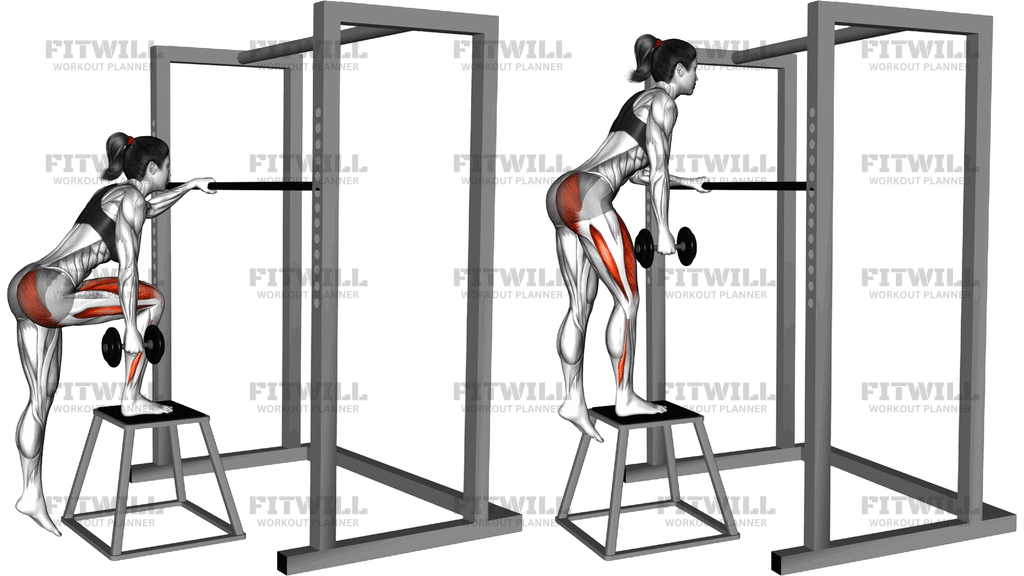
Instructions
- Stand beside a sturdy box or bench with a dumbbell in each hand and, if needed, one hand lightly touching a rack or post for balance.
- Place the working foot fully on the platform so the whole foot is supported and the knee tracks in line with the toes.
- Set the trail foot on the floor with only a light contact, then hinge slightly forward from the hips to bias the glutes.
- Brace your torso before the rep so the pelvis stays level and the dumbbells remain quiet at your sides.
- Drive through the heel and midfoot of the working leg to stand up, letting the working hip and knee extend together.
- Keep the trail leg relaxed and avoid pushing off the floor leg as you rise.
- Squeeze the working glute at the top without leaning back or shrugging the shoulders.
- Lower under control until the trail foot can tap down lightly or hover again, then reset for the next repetition.
- Breathe out as you drive up and inhale as you lower back to the box.
Tips & Tricks
- Use a box height that lets you stand up without the pelvis twisting; if you have to rock or reach, the step is too high for glute bias.
- Keep the front shin close to vertical so the knee does not travel far forward and steal tension from the hips.
- A slight forward torso lean is intentional here; staying too upright usually shifts the work toward the quads.
- Let the support hand help only with balance. If you are pulling on the rack, the working leg is no longer doing the job alone.
- Keep the dumbbells close to your thighs so they do not swing and pull your torso off line.
- Do not bounce off the trailing foot at the bottom. That turns the rep into a jump instead of a step-up.
- Lower slowly enough that you can feel the working glute lengthen on the way down.
- If you feel the low back more than the hip, reduce load, shorten the box height, or soften the forward lean.
Frequently Asked Questions
What muscle does Dumbbell Glute Dominant Step-Up target most?
The main target is the gluteus maximus on the working leg, with the hamstrings and core helping to stabilize the climb.
Is the hand on the rack supposed to do most of the work?
No. The support hand is there to steady you, not to pull you up. The working leg should still drive the rep.
How high should the box or bench be?
Use a height that lets you keep control and a slight forward lean without twisting the pelvis. Lower is usually better for a glute-biased step-up.
Why do I need to lean forward a little?
The forward hinge shifts more of the work into the hips and glutes. Staying perfectly upright usually makes the movement more quad-dominant.
Can I do this without dumbbells?
Yes. Bodyweight, a goblet hold, or light dumbbells all work as long as the working leg controls the step.
What is the most common mistake with this step-up?
People often push hard off the trailing leg, bounce at the bottom, or use a box that is too high and lose hip control.
Is this exercise beginner friendly?
Yes, if you start with a low step, light resistance, and a support point for balance while you learn the hip-driven path.
What should I feel if the setup is right?
You should feel the working glute doing most of the lift, with the hamstring and core helping, not the low back or the trailing leg.