Roll Lower Back Side Lying On Floor
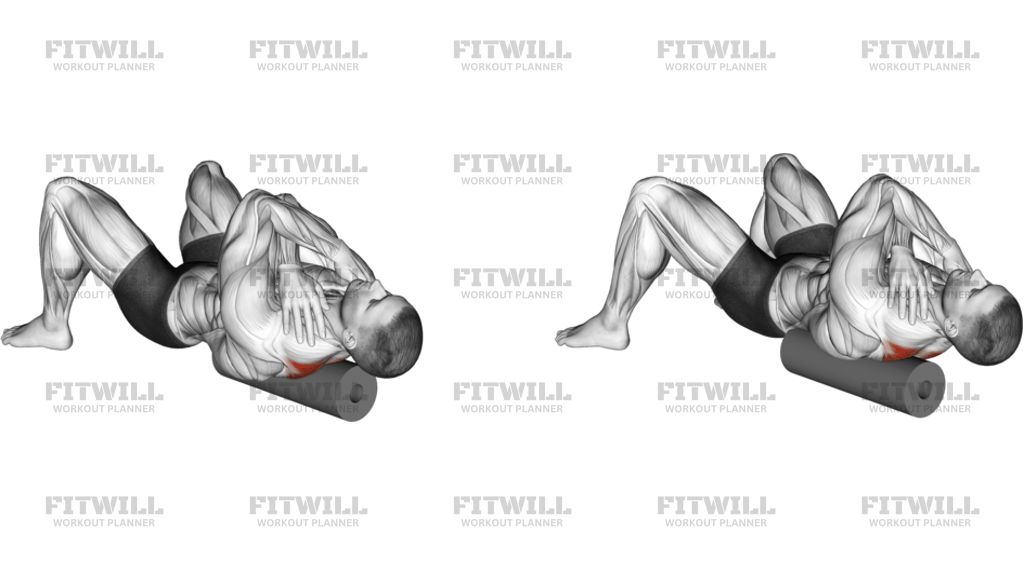
Roll Lower Back Side Lying On Floor is a side-lying self-release drill for the muscles along the lower back, the side of the torso, and the tissues around the top of the hip. The image shows the body supported on the floor with a small roller or ball placed under the flank/lumbar area, so the exercise should be treated as a controlled mobility and soft-tissue movement rather than a strength rep.
The goal is to find a tender but manageable spot, then use small shifts of body weight to roll that area slowly. Because the lower back is close to the spine, the setup matters more than the range. The pressure should stay on the soft tissue beside the spine, not directly on the bones or joints, and the neck and ribs should stay relaxed while you work.
A good repetition starts by settling into a stable side-lying position with the top arm helping balance the torso. From there, make short forward-and-back or up-and-down passes over the lower-back area, usually between the top of the pelvis and the lower ribs. The movement should feel slow and deliberate, with pauses on tight spots so the tissue can soften instead of being forced through the range.
This drill is often used in warm-ups, recovery sessions, or between heavier exercises when the lower back feels stiff from sitting, hinging, or bracing work. It is not meant to create pain or a deep spinal crunch. A useful version feels like steady pressure, controlled breathing, and small adjustments in angle until the pressure lands on the right tissue.
Keep the range conservative and stop if the sensation shifts from muscular pressure to sharp pain, numbness, or pinching. The best result is usually a calmer, looser lower back and easier trunk movement afterward, not an aggressive roll or a large range of motion.
Fitwill
Log Workouts, Track Progress & Build Strength.
Achieve more with Fitwill: explore over 9600 exercises with images and videos, access built-in and custom workouts, perfect for both gym and home sessions, and see real results.
Start your journey. Download today!




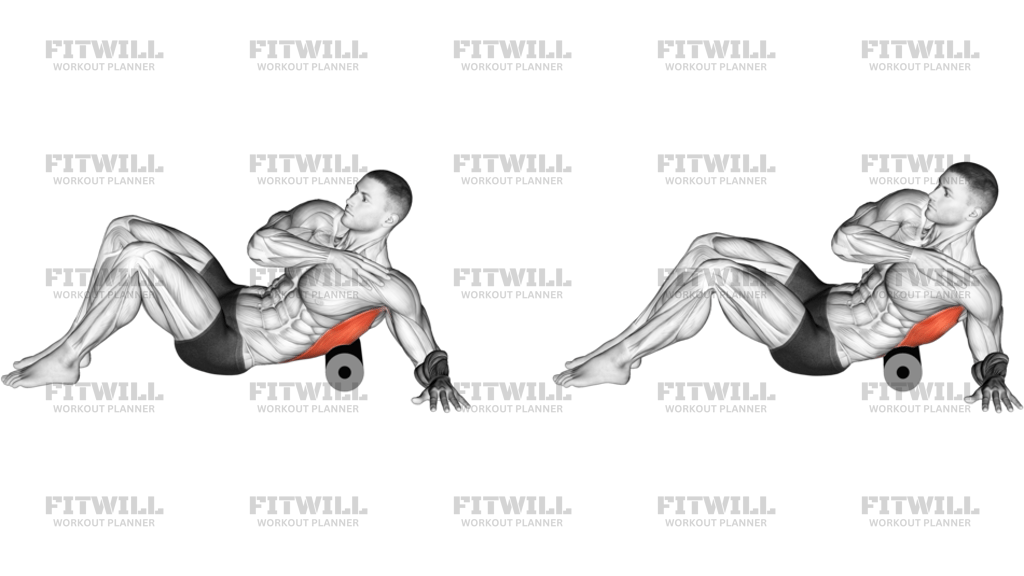
Instructions
- Place a small roller or ball on the floor and lie on your side with it tucked under the lower-back area, just above the top of the hip and beside the spine.
- Bend the knees enough to keep balance, and use the bottom hand or forearm on the floor to support part of your body weight.
- Keep the top arm across your chest or lightly in front of you so the torso can stay relaxed and balanced.
- Settle onto the tender tissue, then take a slow breath and let your weight sink into the contact point before you start rolling.
- Shift your body a few centimeters forward and back, or slightly up and down, so the roller passes over the tight lower-back area.
- Keep the movement small and controlled, working between the top of the pelvis and the lower ribs without rolling directly on the spine.
- Pause for a few breaths on any knotty spot, then ease off the pressure and move to the next area.
- Continue for the planned time, breathing steadily and keeping your neck, ribs, and shoulders loose.
- To finish, take pressure off the roller or ball slowly, then roll onto your back or sit up before changing sides or standing.
Tips & Tricks
- Stay on the soft tissue beside the lumbar spine; if the pressure lands on bone or feels sharp, move the roller slightly outward.
- Use very small shifts of body weight. Big rocking motions usually turn this into a sloppy sweep instead of a useful release.
- Keep the knees bent and stacked enough to control rotation so the lower back does not twist aggressively.
- If the top shoulder is collapsing forward, open the chest a little more so you can breathe without pinching the ribs.
- Slow nasal breathing helps the area relax; if you are holding your breath, the pressure is probably too high.
- Treat tender spots as a place to pause, not a place to grind through. A short hold is usually more effective than forcing movement.
- Do not dig into the vertebrae, sacrum, or hip bone. This drill should feel like tissue work, not joint compression.
- If the lower back is highly irritated, reduce pressure by supporting more body weight with the floor hand or using a softer ball.
- Finish the drill feeling looser and more mobile, not bruised or guarded.
Frequently Asked Questions
What is Roll Lower Back Side Lying On Floor used for?
It is a lower-back self-release drill used to reduce stiffness and target tight tissue along the flank and lumbar area.
Should the roller be placed directly on the spine?
No. Keep it on the soft tissue beside the spine, between the top of the pelvis and the lower ribs.
How much pressure should I use on the lower back?
Use enough pressure to feel a useful release, but not so much that you brace, hold your breath, or feel sharp pain.
What muscles does this movement affect most?
It mainly affects the tissues along the lumbar area and the side of the trunk, especially where the lower back meets the hip.
Can beginners do this exercise?
Yes, as long as they use a small, controllable amount of pressure and avoid rolling over bony landmarks.
What is the biggest mistake people make with this drill?
The most common mistake is rolling too hard or too far and turning it into direct pressure on the spine instead of the surrounding tissue.
How long should I stay on one tight spot?
A short pause for a few slow breaths is usually enough before shifting to the next area.
When is this drill most useful?
It works well during warm-ups, recovery sessions, or after activities that leave the lower back feeling stiff from hinging or sitting.