Dumbbell Full Can Lateral Raise
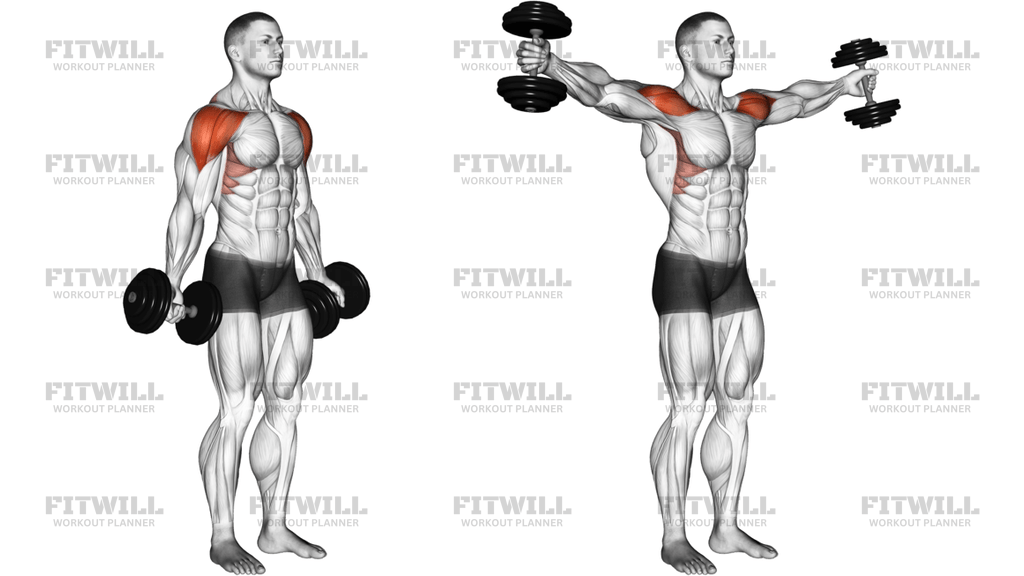
Dumbbell Full Can Lateral Raise is a standing dumbbell shoulder raise performed in the scapular plane with the thumbs turned up. The position shifts the arms slightly in front of the body instead of straight out to the side, which makes the exercise feel more joint-friendly for many lifters while still loading the side delts hard. It is a controlled accessory movement, not a momentum lift, so the rep quality matters more than the number on the dumbbells.
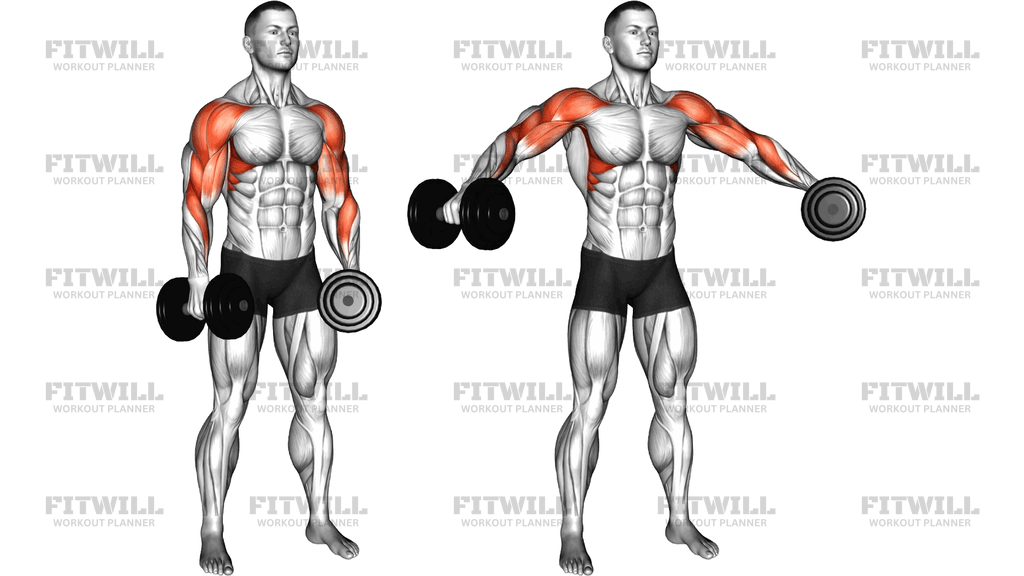
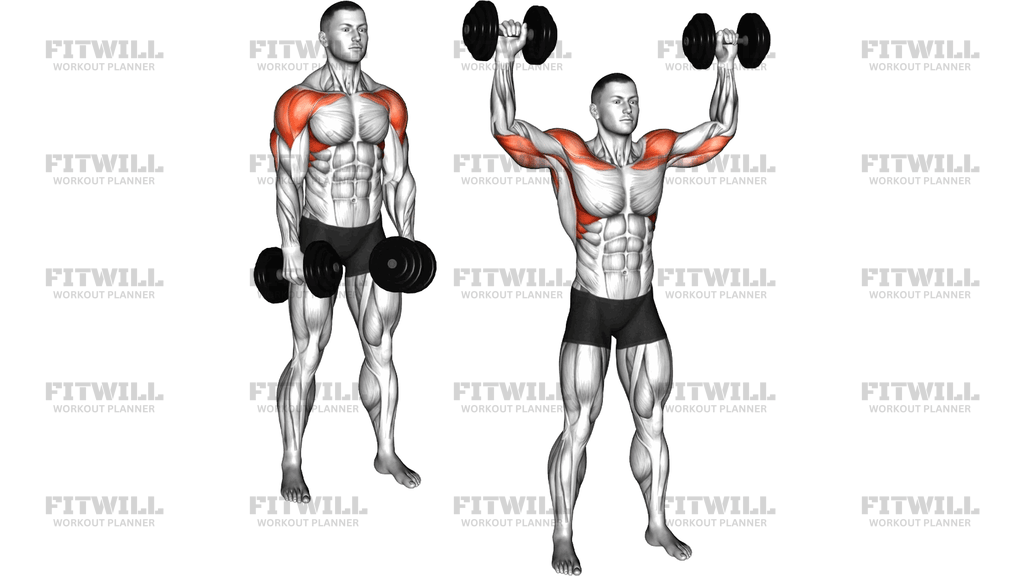
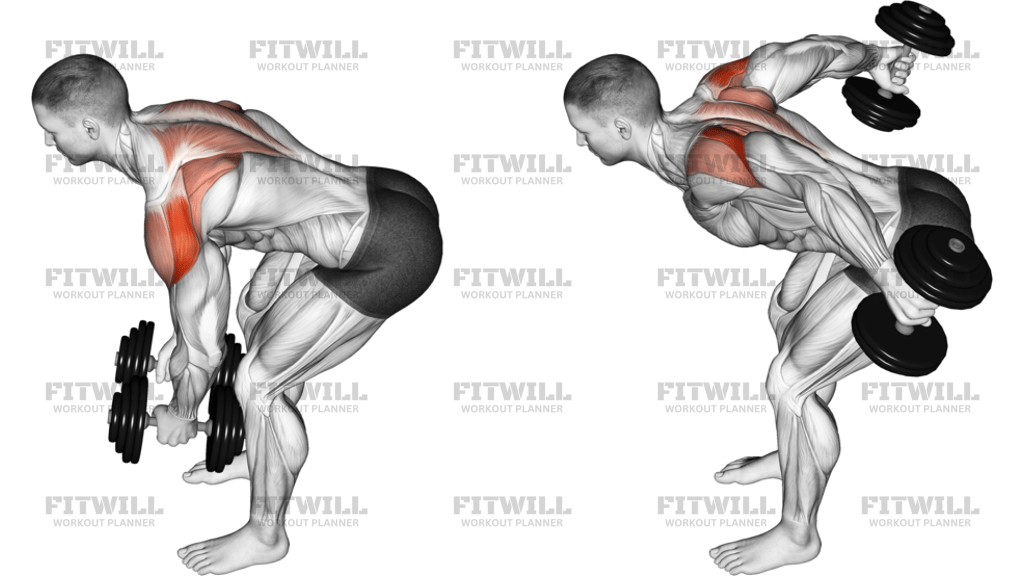
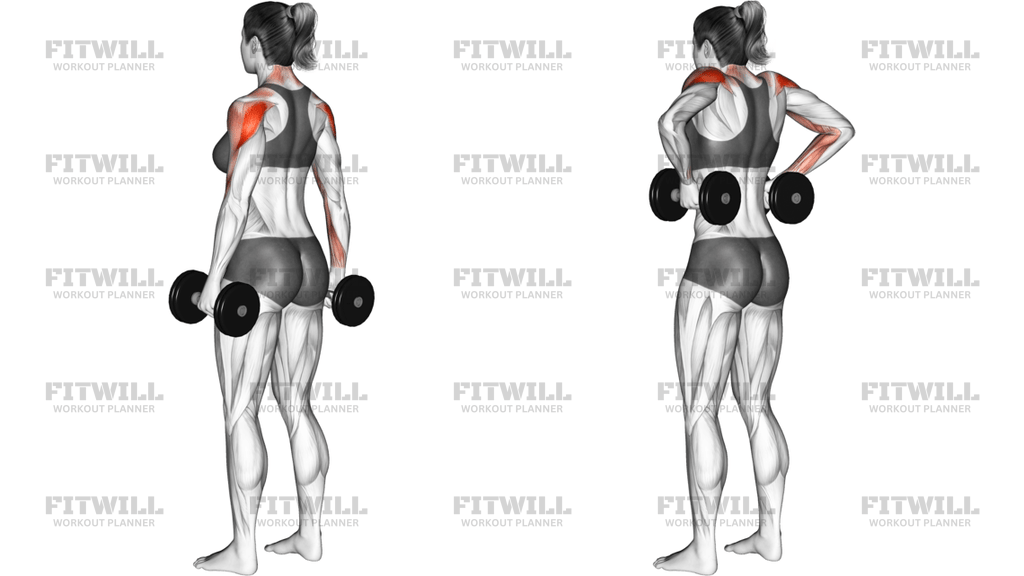
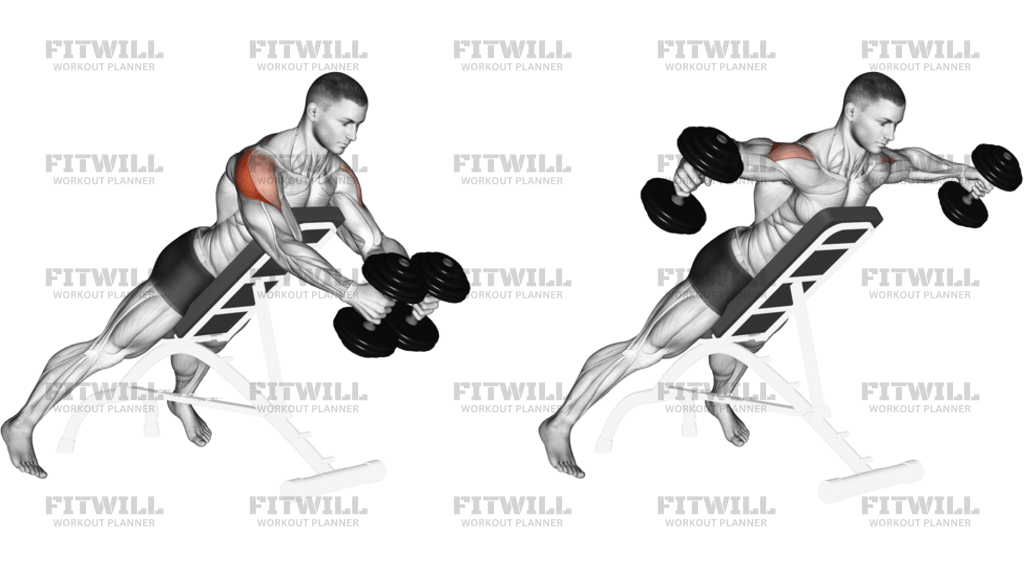
The exercise primarily trains the deltoids, especially the middle fibers, while the rotator cuff, upper traps, rhomboids, and other upper-back stabilizers help keep the humerus and shoulder blade organized as the arms travel upward. That support work is part of the exercise: if the torso sways, the traps shrug, or the shoulders roll forward, the target tension drops and the movement stops matching the full-can pattern shown in the image.
Set up with light dumbbells at your sides, standing tall with your ribs stacked over your pelvis and your neck long. Keep a soft bend in the elbows and turn the thumbs slightly forward so the palms stay angled up or neutral rather than fully pronated. From there, raise the arms out and a little forward in a smooth arc until they reach about shoulder height. The dumbbells should travel under control, not fling upward, and the shoulders should stay down instead of creeping toward the ears.
At the top, the arms should be roughly level with the shoulders and slightly in front of the torso, with the thumbs still up. Pause briefly, then lower the weights along the same path with a slow, deliberate return. Exhale as you lift and inhale as you lower. If you need to lean back, kick the weights, or pinch the front of the shoulder to finish the rep, the load is too heavy or the range is too aggressive for the current set.
This exercise is a strong choice for shoulder days, warm-ups before pressing, and higher-rep deltoid work when you want a strict lateral raise variation that is easier to keep clean than a heavy, straight-out side raise. It also works well when you want to emphasize shoulder control and positioning rather than maximal loading. Keep the motion smooth, stay in the pain-free range, and let the shoulders do the work instead of turning the rep into a whole-body swing.
[ Workout Log & Planner ]
Put your next workout in Fitwill
Keep your plan and training log ready when you are.


Instructions
- Stand tall with a dumbbell in each hand, feet about hip-width apart, and the weights hanging beside your thighs.
- Turn the thumbs slightly forward so the palms are not fully facing down, and keep a soft bend in both elbows.
- Stack your ribs over your pelvis, brace lightly, and keep your chest tall without flaring your lower back.
- Start each rep with the dumbbells a little in front of your hips rather than directly beside your thighs.
- Raise both arms out and slightly forward in a wide arc, leading with the elbows instead of the hands.
- Stop when the dumbbells reach about shoulder height, with the thumbs still up and the shoulders away from your ears.
- Pause briefly at the top without leaning back or shrugging.
- Lower the dumbbells slowly along the same arc until they return to the start position under control.
- Reset between reps if needed so each repetition stays strict and smooth.
- Exhale as you lift and inhale as the weights come back down.
Tips & Tricks
- Keep the dumbbells slightly in front of your body line so the raise stays in the full-can plane instead of drifting straight out to the side.
- Choose lighter dumbbells than you would use for a loose lateral raise; this variation rewards positioning more than load.
- Maintain the same elbow bend from start to finish so the arms do not turn into straight-arm swings.
- Think about lifting the elbows outward and slightly forward, not pinning the hands high with the wrists.
- If your upper traps take over, lower the weight and stop a little short of shoulder height.
- Keep the thumbs up through the whole rep; letting the hands rotate down usually makes the shoulders feel worse and the form less clean.
- Use a controlled lowering phase of about two to three seconds to keep tension on the delts.
- Avoid rocking the torso or shifting onto your toes to get the dumbbells moving.
- If one shoulder feels pinchy, reduce the range and keep the arms a touch farther forward.
- Do not chase a higher top position if the shoulders start to shrug or the neck tightens.
Frequently Asked Questions
What muscles does Dumbbell Full Can Lateral Raise work?
It mainly targets the middle deltoids, with help from the rotator cuff, upper traps, rhomboids, and other shoulder stabilizers.
Is Dumbbell Full Can Lateral Raise good for beginners?
Yes, if you keep the load light and the range strict. Beginners usually do best with a small range, a slow lowering phase, and no shrugging.
Why are the thumbs turned up in the full-can position?
The thumbs-up angle places the arms in a shoulder-friendly plane for many lifters and keeps the rep closer to the movement shown in the image.
How high should the dumbbells come up?
Stop around shoulder height. Going higher usually shifts the work into the upper traps and makes it harder to keep the shoulders down.
What is the most common mistake in Dumbbell Full Can Lateral Raise?
Using too much weight and turning the raise into a swing is the biggest issue. Letting the shoulders shrug is the other common problem.
Should the arms stay directly out to the sides?
No. A slight forward angle is part of the full-can version and usually feels better on the shoulders than a strict side raise.
How heavy should I go on this exercise?
Use a load that lets you keep the thumbs up, the torso still, and the descent slow. If the last few reps turn into swings, the weight is too heavy.
Can I do this seated instead of standing?
Yes. Seated reps remove a lot of body sway, which can make it easier to keep the raise strict and isolate the delts.
Should this exercise hurt my shoulders?
No. A hard delt burn is normal, but sharp pinching, catching, or numbness means you should stop and shorten the range or adjust the angle.