Roll Thoracic Spine Lying On Floor
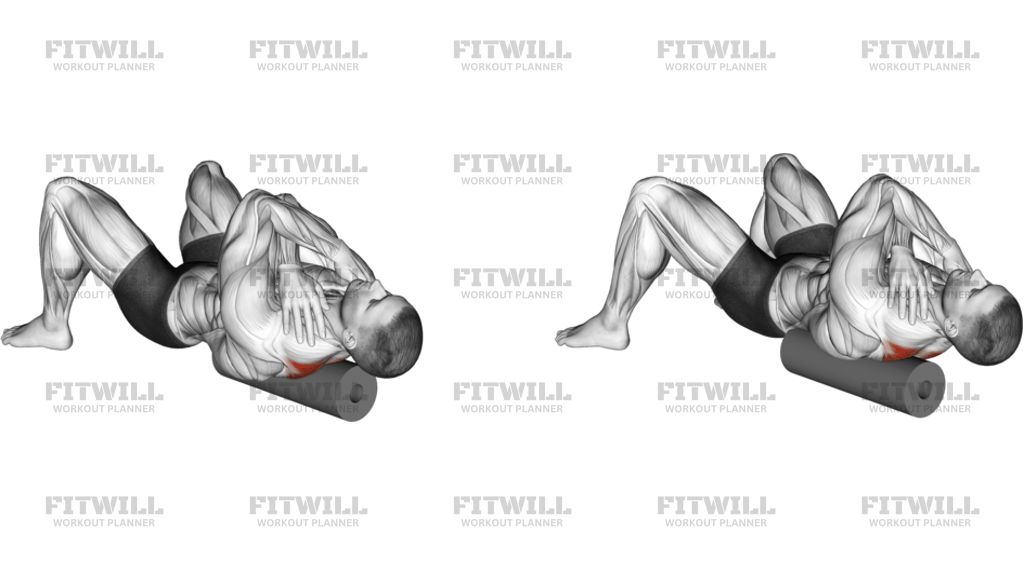
Roll Thoracic Spine Lying On Floor is a thoracic mobility drill performed on the floor with a foam roller placed across the mid-back. The movement is meant to open the upper spine, reduce stiffness through the ribcage area, and improve how the shoulders and torso move together without forcing the lower back to do the job.
The setup matters more than the size of the rep. The roller should sit across the thoracic spine, usually around the bra line or just below the shoulder blades. Knees stay bent, feet stay flat, and the hips remain grounded so the lumbar spine does not turn the drill into a low-back arch. The hands support the head lightly, which keeps the neck relaxed while the chest and upper back do the work.
As you extend, think about moving the sternum and upper ribs over the roller rather than throwing the head back. The range should feel like a controlled opening through the upper back, not a collapse into the neck or a hinge through the pelvis. A smooth exhale helps the ribs settle and keeps the motion centered where it belongs.
This exercise is useful as a warm-up before pressing, overhead work, rowing, or any session where upper-back stiffness limits posture and shoulder motion. It also fits well in recovery sessions and mobility blocks when the goal is to restore extension through the thoracic spine after long periods of sitting or repeated flexed positions.
Done well, the rep should feel calm and specific: the lower body stays quiet, the neck stays long, and the upper back moves with control over the roller. If the motion produces sharp pain, pinching, or an aggressive arch in the low back, reduce the range or move the roller slightly until the thoracic segment can open comfortably.
[ Workout Log & Planner ]
Put your next workout in Fitwill
Keep your plan and training log ready when you are.


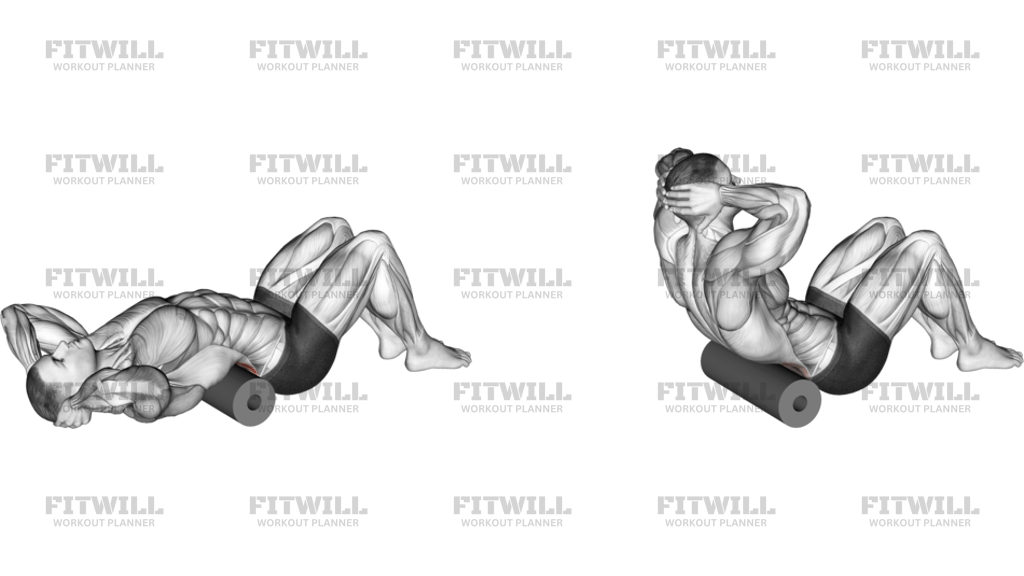
Instructions
- Place a foam roller across the middle of your back, lie on the floor with your knees bent, and keep your feet flat and about hip-width apart.
- Support the back of your head lightly with your hands and let your elbows open wide instead of pulling on your neck.
- Keep your hips heavy on the floor and set your ribs down before you start the first rep.
- Inhale to prepare, then begin by extending your upper back over the roller as your chest opens toward the ceiling.
- Let the movement come from the thoracic spine while your pelvis stays quiet and your lower back does not take over.
- Pause for a breath at the open position without forcing a bigger arch or flaring your ribs.
- Exhale and return to the starting position with control, keeping the head supported and the neck long.
- Shift the roller slightly if needed to work a different thoracic segment, then repeat for the planned reps.
Tips & Tricks
- Keep the roller across the mid-back, not under the ribs or low back, so the extension stays in the thoracic spine.
- Support your head with the hands instead of yanking the chin forward or letting the neck hinge backward.
- If your lower back arches first, shorten the range and keep the rib cage stacked over the pelvis.
- A slow exhale on the way back down usually helps the ribs close and makes the rep cleaner.
- Do not chase a big range by driving the elbows back; the goal is upper-back opening, not shoulder strain.
- Keep your feet planted so the drill stays stable and you do not slide on the roller.
- Use small adjustments in roller position to find the stiff segment instead of forcing one spot repeatedly.
- Stop if the movement creates pinching, sharp pain, or pressure in the neck rather than a mild upper-back stretch.
Frequently Asked Questions
What does Roll Thoracic Spine Lying On Floor mainly improve?
It mainly improves thoracic extension and upper-back mobility across the ribcage area.
Where should the foam roller sit for this movement?
Place it across the middle of the back, usually around the bra line or just below the shoulder blades.
Should my lower back move during the rep?
No, the lower back should stay quiet while the upper back opens over the roller.
How do I keep from straining my neck?
Keep the hands light behind the head and let the elbows stay open so the neck is supported instead of pulled.
Is this more of a strength exercise or a mobility drill?
It is primarily a mobility drill, though the torso and trunk still need enough control to keep the position organized.
Can beginners do this exercise?
Yes, beginners can use a smaller range and a very light setup as long as the neck and low back stay relaxed.
What usually goes wrong with this drill?
The most common mistakes are overextending the low back, pulling on the neck, and trying to force a bigger range than the thoracic spine can handle.
When should I use this in a workout?
It works well in a warm-up before pressing or overhead work, or in a recovery session when your upper back feels stiff.