Roll Shoulder Back Rotation Lying On Floor
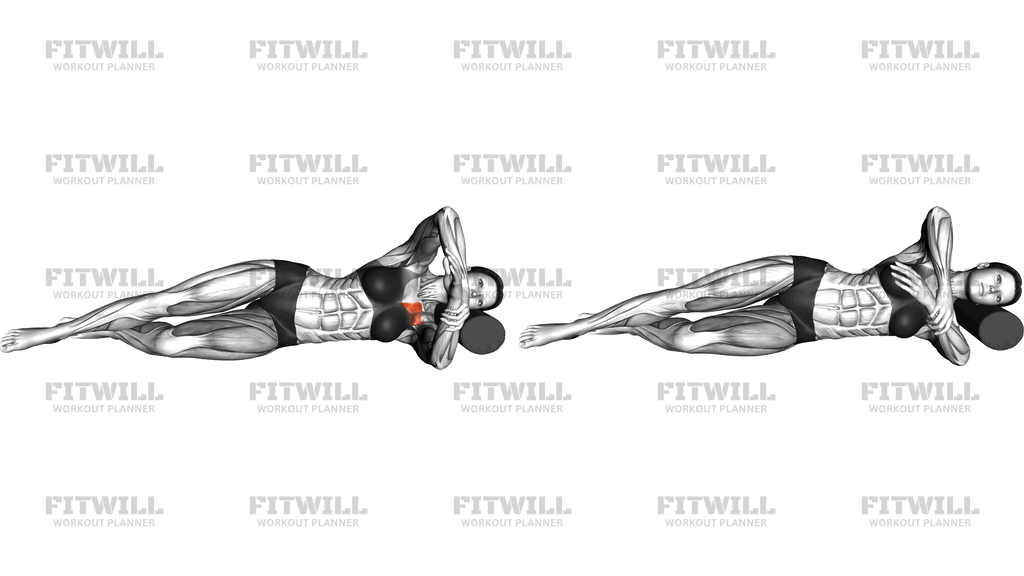
Roll Shoulder Back Rotation Lying On Floor is a floor-based thoracic mobility drill that uses a foam roller under the upper back to open the chest and let the shoulders move through controlled back rotation. The position looks simple, but the goal is very specific: keep the head supported, the ribs organized, and the rotation coming mostly from the upper back rather than the low back.
This exercise is useful when the shoulders feel stiff from pressing, desk work, or overhead training. By resting the upper back on the roller and allowing the rib cage to rotate slowly from side to side, you can encourage thoracic extension, a smoother shoulder blade path, and a calmer position for the front of the shoulders. It is not a power movement and should never feel rushed.
The setup matters because the roller changes where motion happens. When the roller sits across the upper back and the feet stay planted, the chest can open without forcing the neck or lumbar spine to do the work. Keep the elbows wide, the chin neutral, and the pelvis quiet so each rep feels like a deliberate rotation through the rib cage instead of a full-body twist.
Move in a small, controlled range and breathe through the stretch. As you rotate, let one shoulder open toward the floor while the opposite side gently closes, then return to center with control. The best reps feel smooth, symmetrical, and easy to repeat. If you need to bounce or arch hard to find range, the setup is too aggressive.
Use this drill in a warm-up, recovery block, or mobility circuit when you want better upper-back rotation before pressing, reaching overhead, or carrying work. Beginners can do it comfortably with a light setup, and advanced lifters often use it to unwind tight shoulders after heavy training. Stop short of any sharp pinch in the shoulder or strain in the neck, and keep the movement pain-free.
Fitwill
Log Workouts, Track Progress & Build Strength.
Achieve more with Fitwill: explore over 9600 exercises with images and videos, access built-in and custom workouts, perfect for both gym and home sessions, and see real results.
Start your journey. Download today!




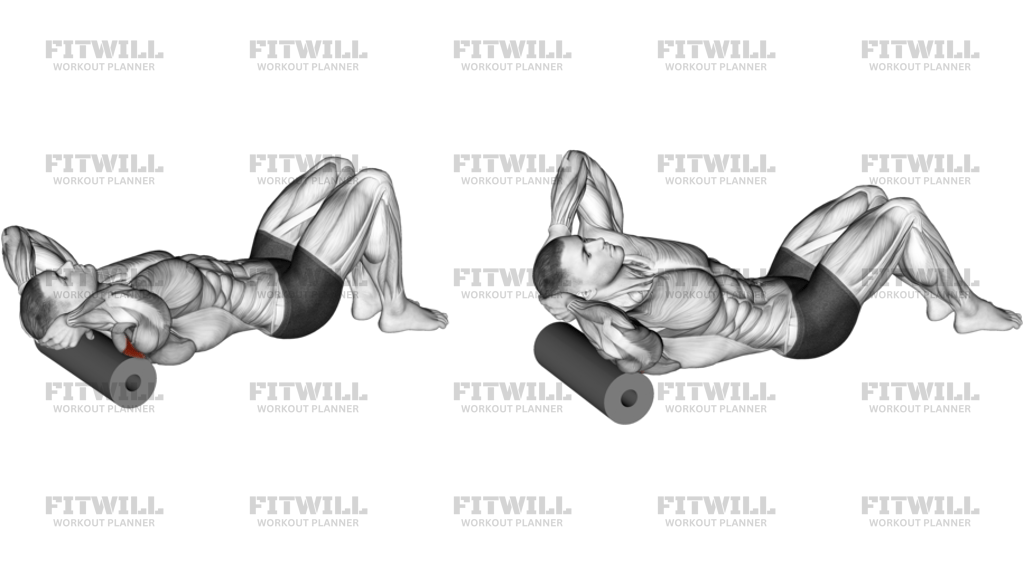
Instructions
- Place a foam roller across your upper back and lie on it with your knees bent and feet flat on the floor.
- Support your head lightly with both hands and keep your elbows wide instead of pulling on your neck.
- Set your chin in a neutral position and keep your ribs stacked before you start the rotation.
- Let your chest rest centered on the roller with your shoulders relaxed and your lower back quiet.
- Slowly rotate your upper back so one shoulder opens toward the floor while the opposite side closes.
- Pause for a breath at the edge of the comfortable stretch without forcing the range.
- Return to center under control, then rotate to the other side with the same smooth tempo.
- Continue for the planned number of reps, keeping the movement small, smooth, and pain-free.
Tips & Tricks
- Keep the roller under the upper back, not the low back, so the rotation stays in the thoracic spine.
- Support your head with your hands, but do not pull on the neck to create more range.
- Let the rib cage rotate before the pelvis does; the hips should stay mostly quiet on the floor.
- Keep your elbows wide and relaxed so the shoulders can open without crowding the front of the joint.
- Exhale as you open into the stretch to help the ribs soften and the chest turn more easily.
- Use a small range if the shoulders feel pinchy; bigger is not better on this drill.
- If one side is tighter, spend a little longer there instead of forcing the easier side to match it.
- Move slowly enough that you can feel the upper back glide over the roller instead of bouncing on it.
Frequently Asked Questions
What does Roll Shoulder Back Rotation Lying On Floor train?
It mainly trains thoracic rotation and shoulder-opening mobility, with the upper back, chest, and shoulder stabilizers working to control the motion.
Where should the foam roller sit on this exercise?
Place it across the upper back, roughly under the shoulder blade area, so the chest can rotate without dumping into the lower back.
Should my lower back twist too?
A little movement is normal, but the main rotation should come from the rib cage and upper back while the hips stay planted.
How much should my elbows move?
Keep the elbows wide and relaxed, then let the chest and shoulder rotate around the head position instead of cranking the arms.
Is this more of a stretch or a strength exercise?
It is primarily a mobility drill, although the core and shoulder stabilizers work to keep the motion smooth and controlled.
What should I do if one side feels tighter on the roller?
Stay within a smaller range on the tight side and breathe there for a moment instead of forcing both sides to look the same.
Can beginners use this movement safely?
Yes, as long as they keep the range small, support the head, and avoid pushing into a shoulder pinch or neck strain.
What usually causes discomfort in this exercise?
Common problems are pulling on the neck, arching the lower back too hard, or trying to force extra range from the shoulders.