Dumbbell Shrug
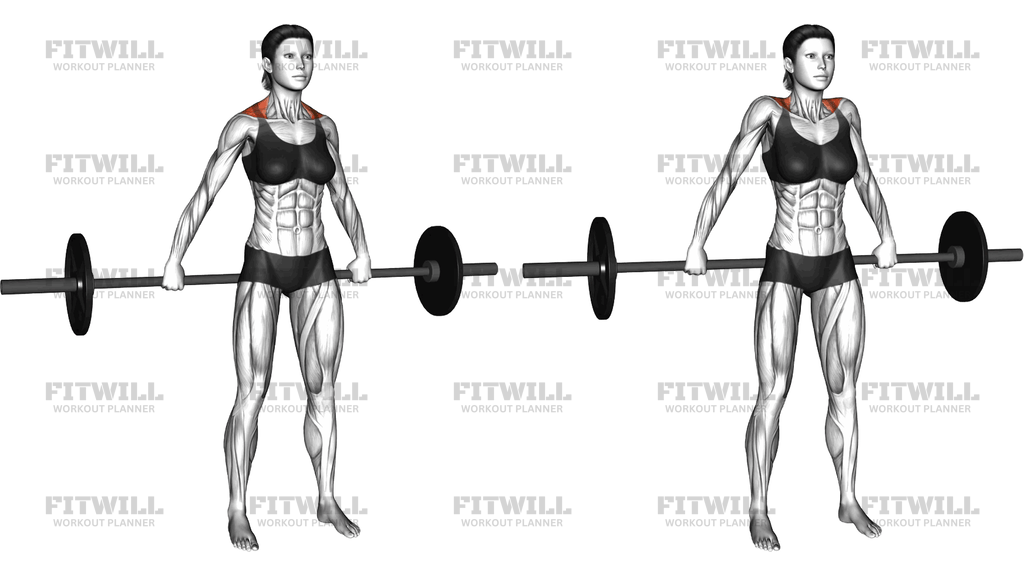
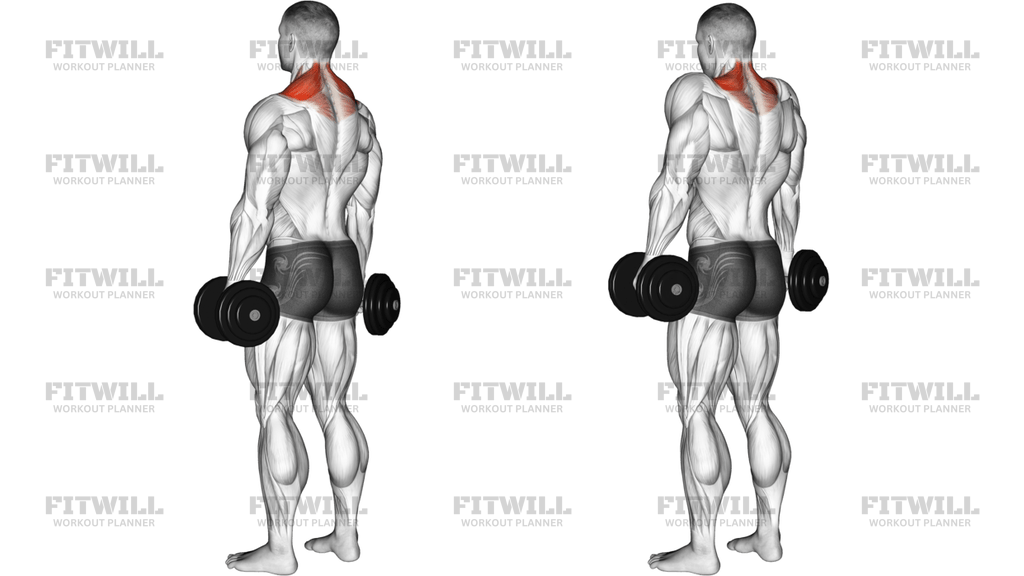
Dumbbell Shrug is a standing trap-building exercise where you hold a dumbbell in each hand and lift the shoulders straight up toward the ears. The image shows the classic version: feet planted, arms long at the sides, and the torso staying tall while the shoulder girdle does the work. That simple setup matters because the shrug only trains the upper traps well when the body does not turn it into a hip drive, a row, or a backward roll.
This exercise is most useful when you want to strengthen the upper trapezius for thicker-looking upper back development, better shoulder girdle control, or support work for heavier pulling and carrying. It is not a deltoid raise and it should not feel like a curl. The elbows stay mostly straight, the dumbbells travel only because the shoulders elevate, and the neck stays long rather than jammed upward.
Position yourself with the dumbbells hanging beside the thighs, palms facing the body, and the feet about hip-width apart. Stand tall with the ribs stacked over the pelvis and the chin gently tucked so the neck does not crane forward. From there, the rep is small but precise: drive the shoulders up, pause at the top, then lower under control until the traps are fully lengthened again.
The best reps look boring from the outside. There should be almost no body sway, no knee bounce, and no circle of the shoulders. If the load is too heavy, the shrug becomes a half-rep with a hard lean or momentum from the legs. If the load is too light, the neck and forearms take over because the traps never have to produce real tension.
Use Dumbbell Shrug as an accessory movement after your main pulling or lower-body work, or as a straightforward trap finisher. Keep the range honest, the motion vertical, and the lowering phase controlled. If you feel pinching at the top of the shoulders or you cannot keep the neck relaxed, shorten the range and reduce the load before adding volume.
[ Workout Log & Planner ]
Put your next workout in Fitwill
Keep your plan and training log ready when you are.


Instructions
- Stand tall with a dumbbell in each hand, arms hanging straight by your sides and palms facing your thighs.
- Set your feet about hip-width apart and keep your weight even through both feet.
- Stack your ribs over your pelvis, lightly brace your midsection, and keep your neck long.
- Let the dumbbells settle just outside your thighs without bending the elbows or swinging the torso.
- Shrug both shoulders straight up toward your ears as high as you can without rolling them backward.
- Pause briefly at the top while keeping the dumbbells close to your sides.
- Lower the shoulders slowly until you feel the traps lengthen again and the arms hang fully long.
- Reset at the bottom before the next rep and keep every rep vertical and controlled.
Tips & Tricks
- Think of lifting the shoulders straight up, not back and around.
- Keep the dumbbells hanging beside the thighs so the arms do not turn the movement into a curl or row.
- Use straps if grip fatigue makes your hands give out before your traps do.
- Pause briefly at the top, but do not hold the shoulders jammed up for multiple seconds.
- Lower under control; the eccentric is where a lot of the trap stimulus happens.
- Choose a load that allows a clean vertical shrug without leaning or bouncing.
- Keep the chin neutral so the neck does not jut forward as the shoulders rise.
- If one side is working harder, slow down and match the height of both shoulders instead of twisting.
Frequently Asked Questions
What muscles does Dumbbell Shrug work?
Dumbbell Shrug primarily targets the upper trapezius. The forearms, levator scapulae, and other upper-back stabilizers help hold the dumbbells and keep the torso steady.
Is Dumbbell Shrug beginner-friendly?
Yes. It is one of the simpler standing dumbbell exercises if you start light and keep the motion strictly vertical.
Should I roll my shoulders during the shrug?
No. Rolling turns the movement into a circle and usually reduces the trap focus. Lift straight up, pause, and lower straight down.
How heavy should the dumbbells be?
Heavy enough that the upper traps have to work, but not so heavy that you have to lean back, bounce, or shorten the range.
Where should the dumbbells travel?
They should stay beside the thighs for the whole rep. The shoulders move up and down; the arms should not swing forward or backward.
Why do I feel this in my neck?
A little neck tension is normal, but if the neck feels jammed or the chin juts forward, the load is probably too heavy or your head position is drifting.
Can I use straps for Dumbbell Shrug?
Yes. Straps are useful when grip strength limits your trap work and you want the set to end because the upper traps are tired, not because your hands are.
What is the biggest mistake in Dumbbell Shrug?
Using momentum from the legs or torso. The rep should stay tall and strict, with the shoulders doing the only visible movement.