Roll Shoulder Blade Reach Lying On Floor
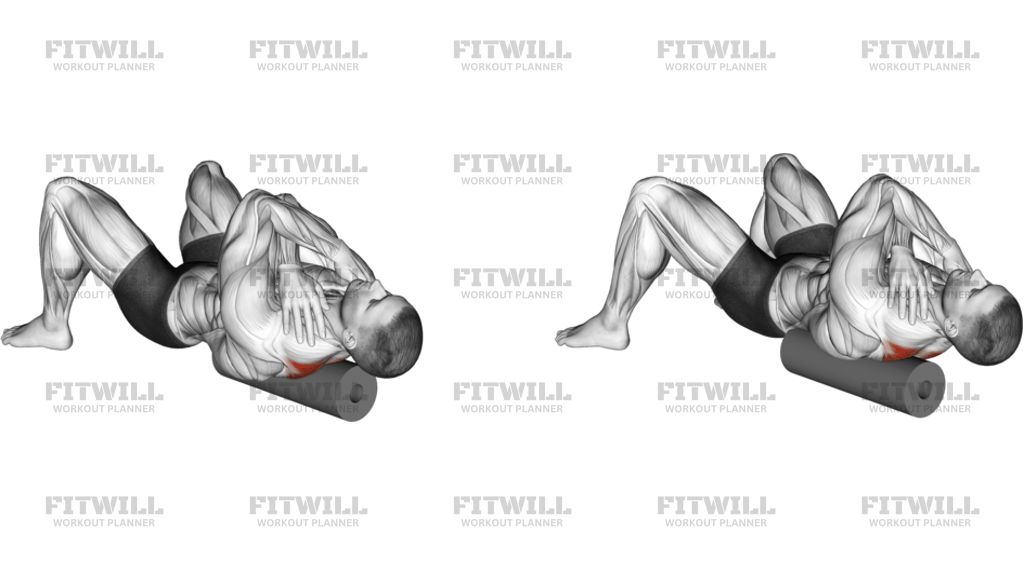
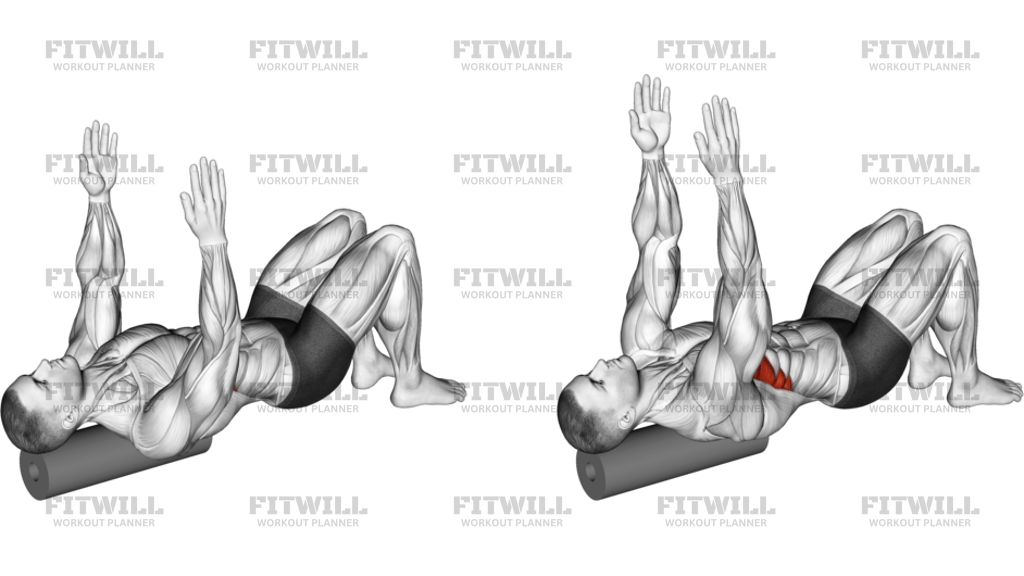
Roll Shoulder Blade Reach Lying On Floor is a floor-based shoulder-control drill that uses a roller under the upper back to teach the shoulder blades to move cleanly around the rib cage. It is less about loading a big range and more about creating precise scapular motion, steady rib position, and a controlled reach through the arms. That makes it useful as a warm-up, a posture drill, or accessory work before pressing, overhead work, or any session where the upper body needs better organization.
With the knees bent and feet planted, the roller supports the upper thoracic spine so the neck and low back do not have to do the work. The exercise usually emphasizes the serratus anterior, front shoulders, chest, and deep core, but the real goal is coordination: the torso stays quiet while the shoulder blades glide forward and back. If you tend to shrug, flare the ribs, or lose shoulder position during push-ups or benching, this drill helps clean that up.
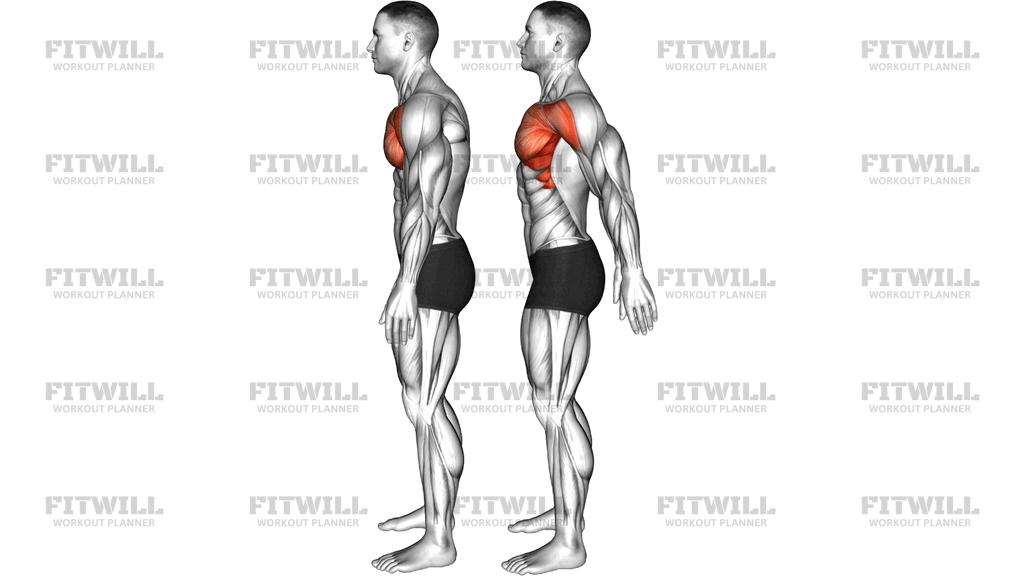
The reach should feel small and deliberate. Arms stay long, elbows stay straight, and the hands travel upward only as far as you can keep the ribs down and the neck relaxed. As you reach, the shoulder blades wrap around the rib cage instead of pinching together, then settle back under control on the way down. The movement is smoother when you exhale through the reach and let the chest stay soft instead of forcing an exaggerated arch.
The roller changes the challenge by asking you to stay balanced while you move the shoulders. If the body starts wobbling, the range is too large or the setup is too high on the spine. That is why this exercise works best when the rep looks almost too simple: the benefit comes from repeatable scapular control, not from fatigue or momentum.
Used well, Roll Shoulder Blade Reach Lying On Floor gives you a clean way to practice shoulder-blade mechanics without heavy loading. It can be paired with pressing prep, shoulder rehabilitation style training, or low-fatigue accessory work when you want better upward reach and more stable ribcage control. Keep the motion honest and the exercise becomes a very efficient drill for upper-body positioning.
[ Workout Log & Planner ]
Put your next workout in Fitwill
Keep your plan and training log ready when you are.


Instructions
- Lie on your back with a foam roller lengthwise under your upper back and head, knees bent and feet flat on the floor.
- Set your feet about hip-width apart so you feel stable from the floor up through the pelvis.
- Reach both arms straight toward the ceiling with palms facing each other and wrists stacked over your shoulders.
- Keep your elbows straight but not locked hard, and let your ribs settle before the first rep.
- Exhale as you reach the hands a few inches higher, allowing the shoulder blades to glide forward around the rib cage.
- Keep the neck long and the chest relaxed so the movement comes from the shoulder blades, not a shrug.
- Pause for a beat at the top, then inhale as you let the shoulder blades return under control.
- Reset the ribs and roller position if your low back arches or your body starts to wobble, then repeat for the planned reps.
Tips & Tricks
- Keep the roller under the upper thoracic spine, not under the low back.
- Think about reaching long through the fingertips instead of lifting the shoulders higher.
- If your ribs pop up, shorten the reach and make the exhale longer.
- Do not bend the elbows; once the elbows flex, the drill turns into a pressing motion.
- A small shoulder-blade glide is enough, so avoid trying to force a big range.
- Keep the chin gently tucked so the neck stays heavy and relaxed.
- Use a smaller reach if the roller makes your torso rock side to side.
- You should feel this most in the serratus area and front shoulders, not in the lower back.
Frequently Asked Questions
What muscles does Roll Shoulder Blade Reach Lying On Floor train?
It mainly trains the serratus anterior and other scapular stabilizers, with help from the front shoulders, chest, and deep core.
Do I need the foam roller for Roll Shoulder Blade Reach Lying On Floor?
The roller adds support and a little instability, but you can do a floor version if the roller makes it hard to keep your ribs and neck organized.
Should my elbows bend during the reach?
No. Keep the arms long so the motion comes from the shoulder blades sliding around the ribs instead of from a pressing action.
How far should I reach on each rep?
Only reach as far as you can without arching the low back or shrugging into the neck. The visible range is usually small.
Why do I feel Roll Shoulder Blade Reach Lying On Floor in my neck?
That usually means you are shrugging or craning the head forward. Reduce the reach, keep the chin gently tucked, and let the shoulder blades glide instead of lift.
Is Roll Shoulder Blade Reach Lying On Floor beginner-friendly?
Yes. It is usually beginner-friendly because your back is supported and the load comes from control, not heavy resistance.
When should I use this exercise?
It works well in a warm-up before pressing, as low-fatigue accessory work, or when you want better scapular control for overhead training.
What is the most common mistake with Roll Shoulder Blade Reach Lying On Floor?
The biggest mistake is turning the reach into a low-back arch or a chest lift. Keep the torso quiet and let the shoulder blades do the work.