Stick Lat Stretch
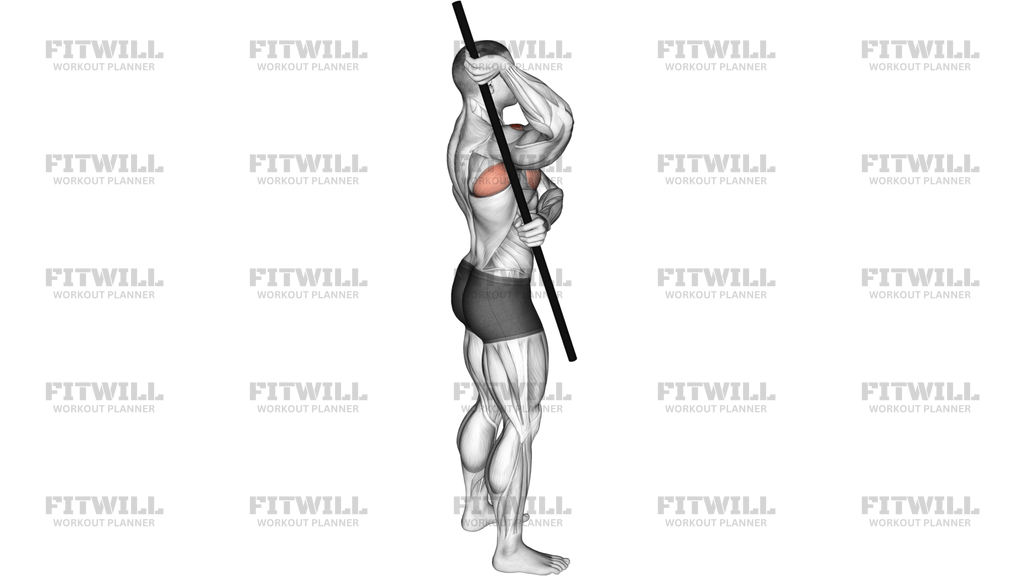
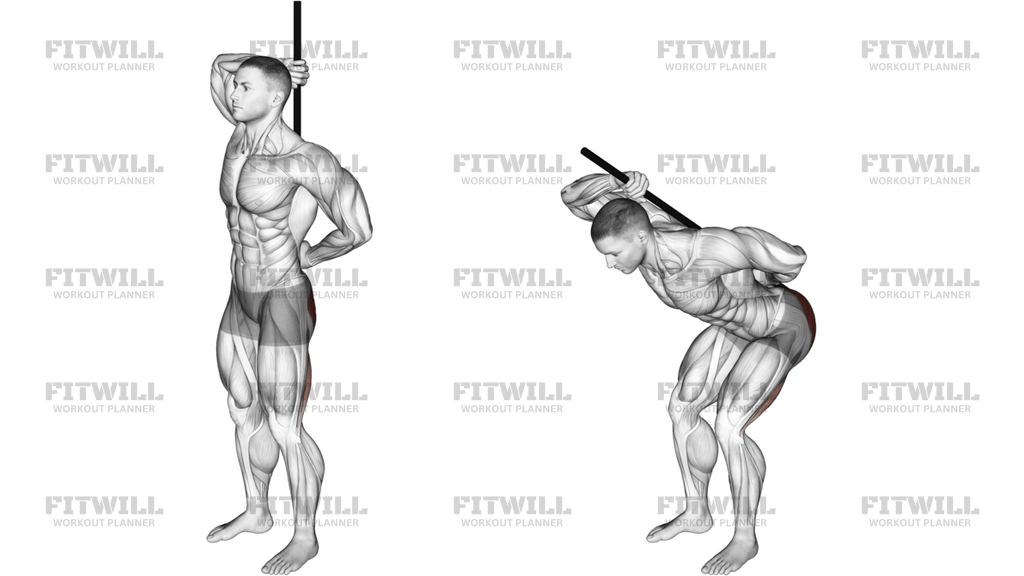
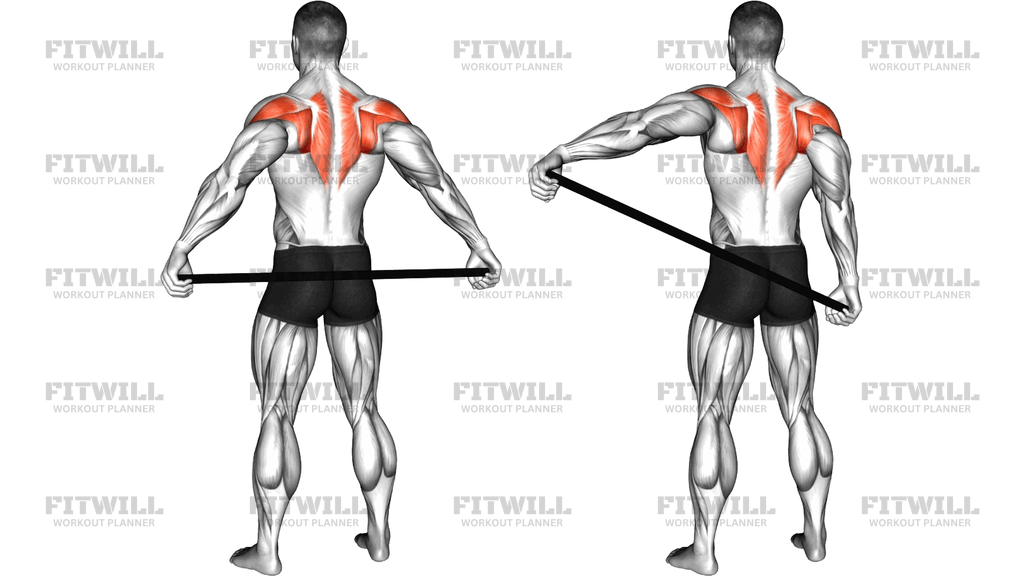
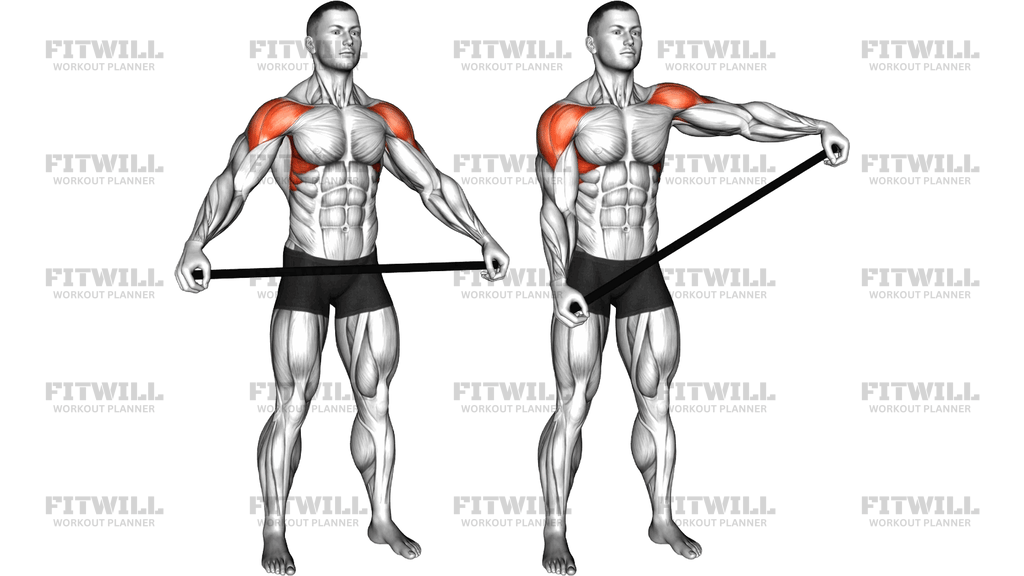
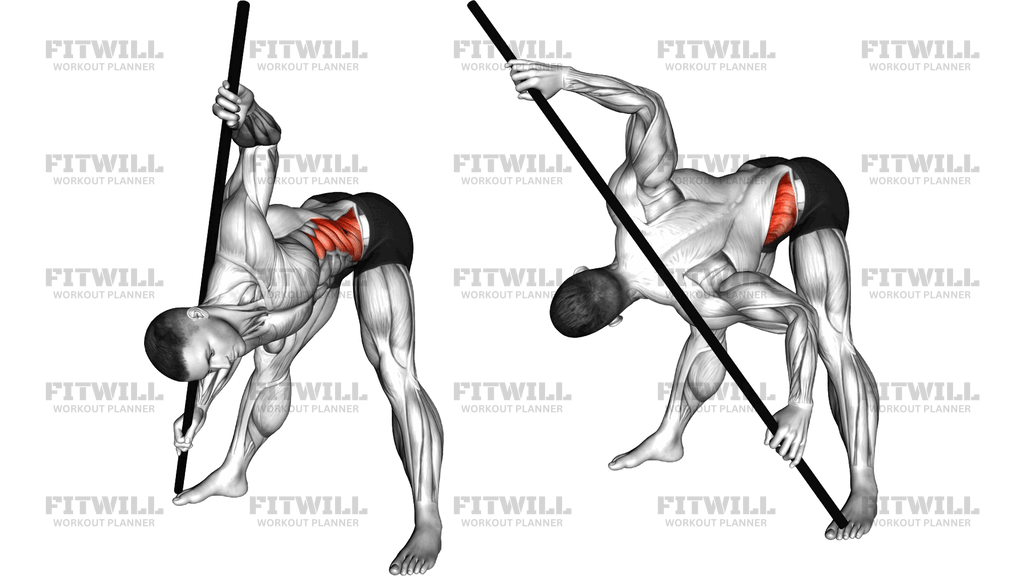
Stick Lat Stretch is a standing mobility drill that uses a vertical stick as a fixed handhold while you hinge forward to lengthen the lats, teres major, rear shoulders, and the side of the upper back. The stick gives you a repeatable anchor, so you can focus on the line from the armpit down the rib cage instead of chasing range with momentum or twisting through the torso.
The key setup is simple but important. Stand tall with the stick planted in front of you, place both hands on the top, and keep the arms long as you fold from the hips. A small knee bend helps the pelvis travel back without forcing the low back to arch. When the hinge is clean, the stretch lands high on the side body and across the shoulder girdle rather than in the lumbar spine.
This movement is useful before pulling sessions, overhead work, or any workout where tight lats are limiting shoulder motion. It can also be used between sets as a reset when the upper body feels compressed from rows, pulldowns, climbing, or desk posture. The goal is not to crank the deepest possible stretch; it is to create a position you can breathe in and hold without pain or pinching.
The best version of the stretch feels long, calm, and controlled. Keep the ribs from flaring, let the shoulder blades move naturally, and use slow breathing to soften the tension you are trying to open up. If the stretch shifts into the front of the shoulder, the neck, or the lower back, reduce the hinge, lower the hand position, or widen the stance until the load is back on the lats and side ribs.
[ Workout Log & Planner ]
Put your next workout in Fitwill
Keep your plan and training log ready when you are.


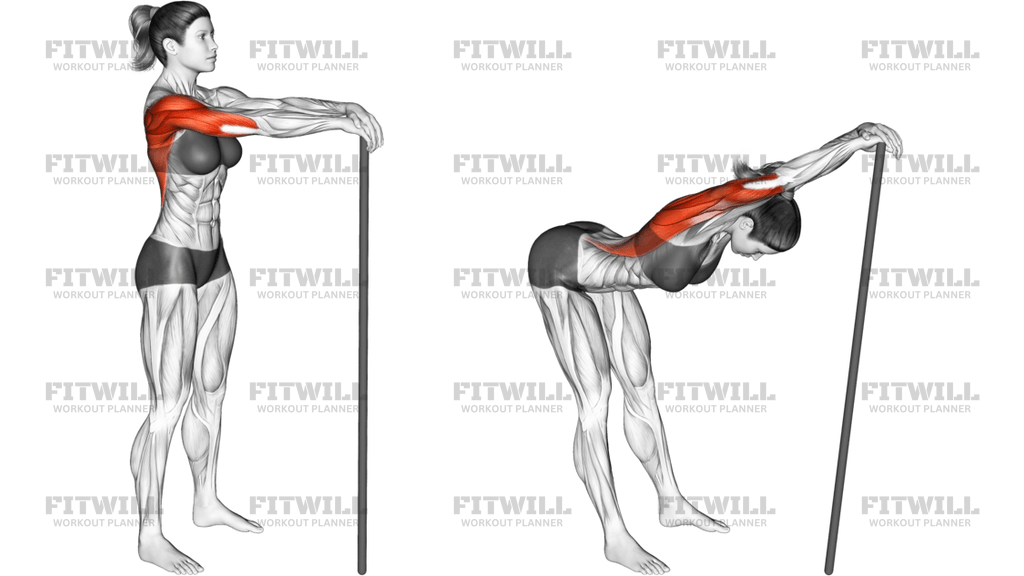
Instructions
- Stand facing the stick with your feet about hip-width apart and the stick planted vertically in front of you.
- Place both hands on the top of the stick and keep your elbows straight but not locked.
- Softly bend the knees so you can hinge without losing balance or arching the lower back.
- Brace lightly through the ribs and lengthen the spine before you move.
- Send the hips back and fold forward from the hips until your chest starts moving toward the floor.
- Keep the stick fixed and let the arms stay long so the stretch builds through the armpit and side ribs.
- Pause in the strongest pain-free stretch and breathe slowly into the sides of the rib cage.
- Return to standing by driving through the feet and bringing the hips forward under control.
Tips & Tricks
- If you feel the stretch mostly in the low back, bend the knees more and shorten the hinge.
- Keep the stick close to your center line so the shoulders can open without drifting forward.
- A wider stance usually makes it easier to keep the pelvis moving back while the torso folds down.
- Think about sending the armpits away from the hips; that cue targets the lat line better than reaching harder.
- The stretch should land on the side of the rib cage and under the arm, not as a sharp pinch in the front of the shoulder.
- Use an exhale to let the ribs soften, then take a slow inhale into the stretched side body.
- Do not bounce at the bottom; a short still pause is better for this movement than repeated jerks.
- If your neck tightens, relax the chin slightly and keep the gaze down instead of craning forward.
Frequently Asked Questions
What does Stick Lat Stretch target most?
It primarily opens the lat line, especially the lats, teres major, and the side of the upper back around the shoulder blade.
How do I set the stick for this stretch?
Plant the stick vertically in front of you and place both hands on the top so it acts like a steady anchor while you hinge.
Should my elbows stay straight on the stick?
Yes. Keep the arms long so the stretch stays in the lat and side-body line instead of turning into a bent-arm shoulder exercise.
Why do I feel this in my lower back instead of my lats?
That usually means you are arching the ribs or hinging too far. Bend the knees a bit more and keep the ribs stacked over the pelvis.
How deep should the forward hinge be?
Only go as far as you can keep a long spine and breathe comfortably. The stretch should feel strong, not forced.
Is this a good warm-up before pull-ups or rows?
Yes. It works well before pulling work, pulldowns, rows, or overhead pressing when the lats are limiting shoulder motion.
What should I do if I feel shoulder pinching?
Reduce the hinge, lower the hand position, or widen your stance. If the pinch stays in the front of the shoulder, stop the stretch.
Can I use this as a quick desk-break mobility drill?
Yes. A short hold on the stick can help restore length through the side body after long periods of sitting or typing.