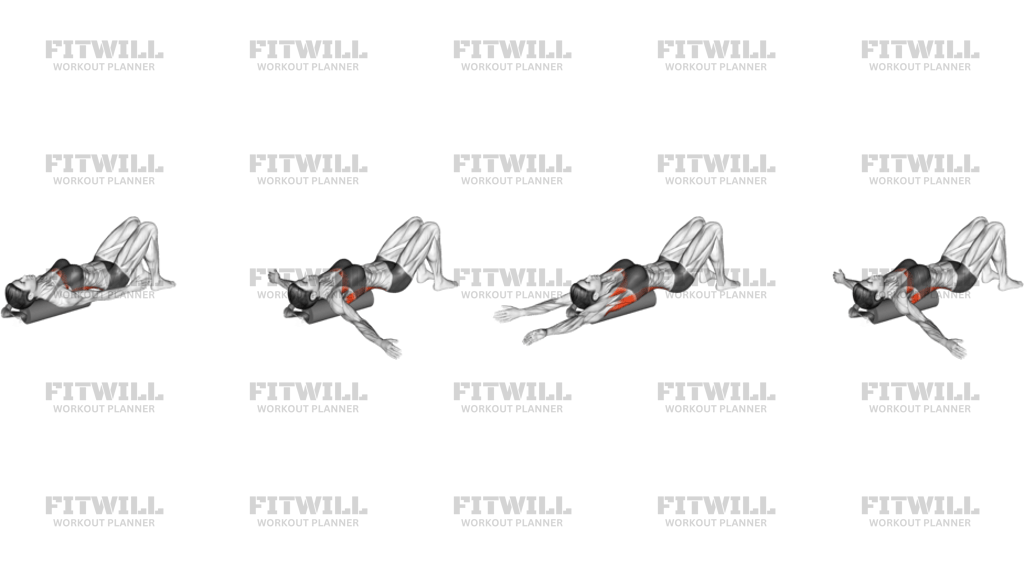
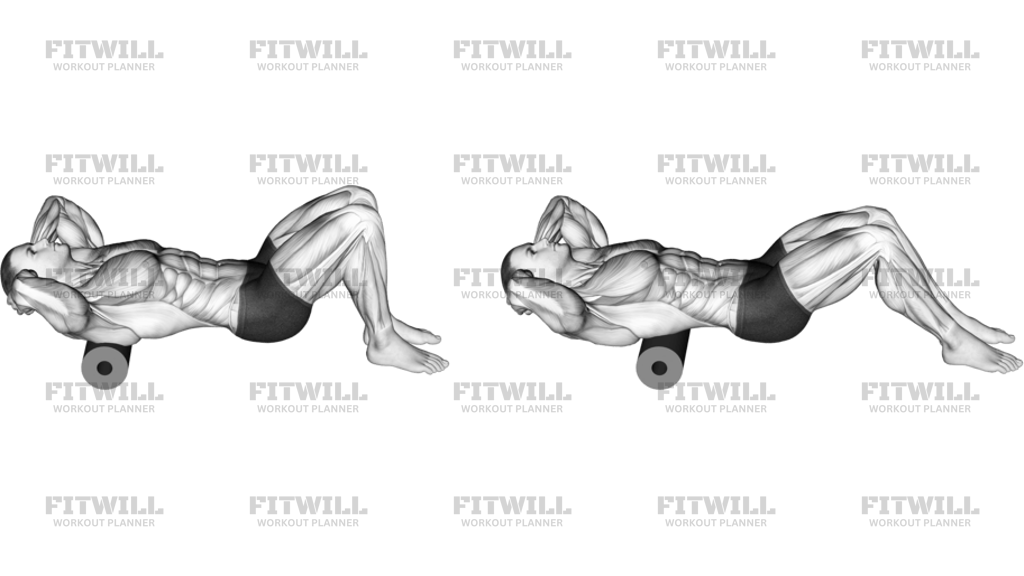
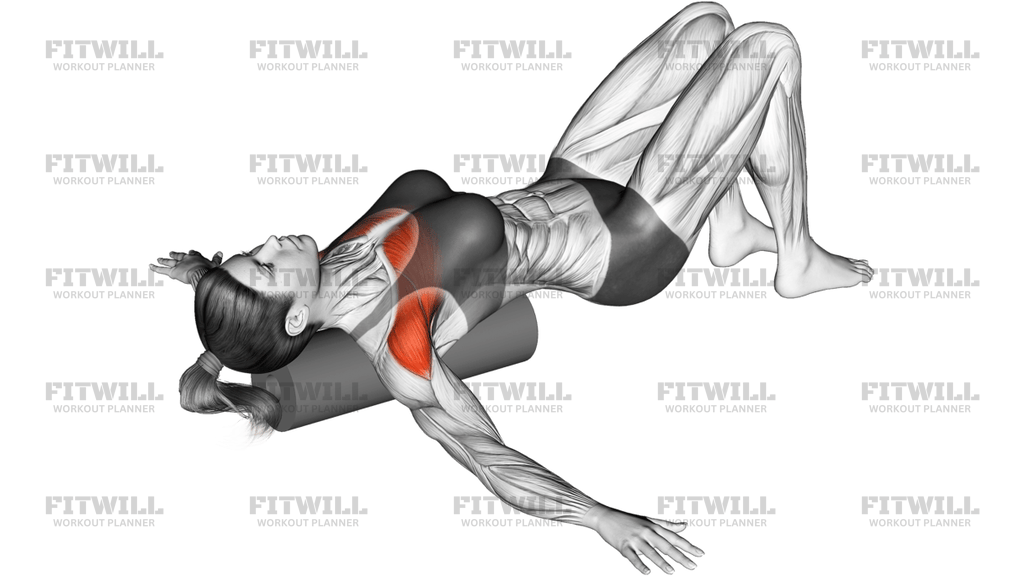
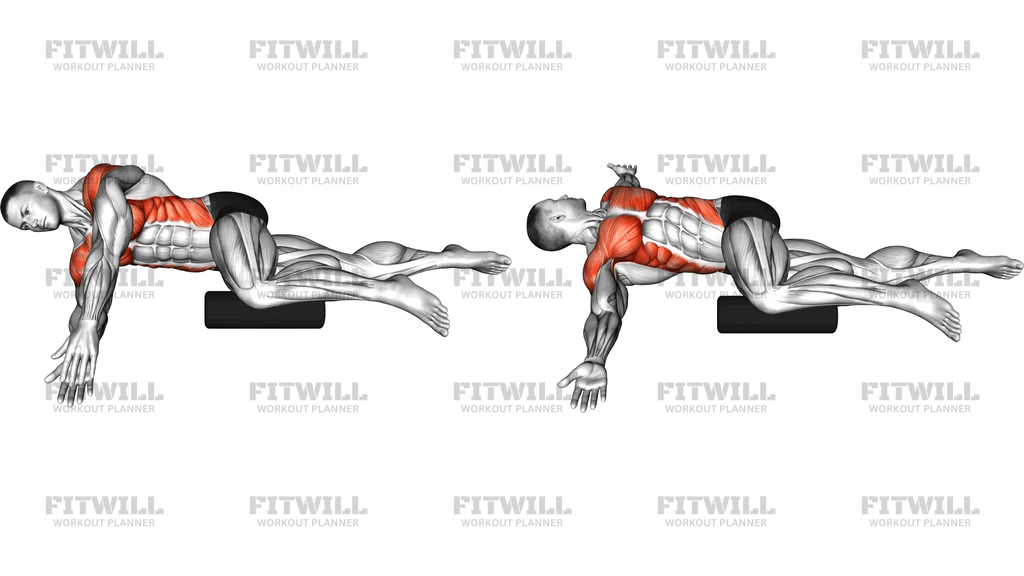
Roll Shoulder Blade Reach Lying On Floor
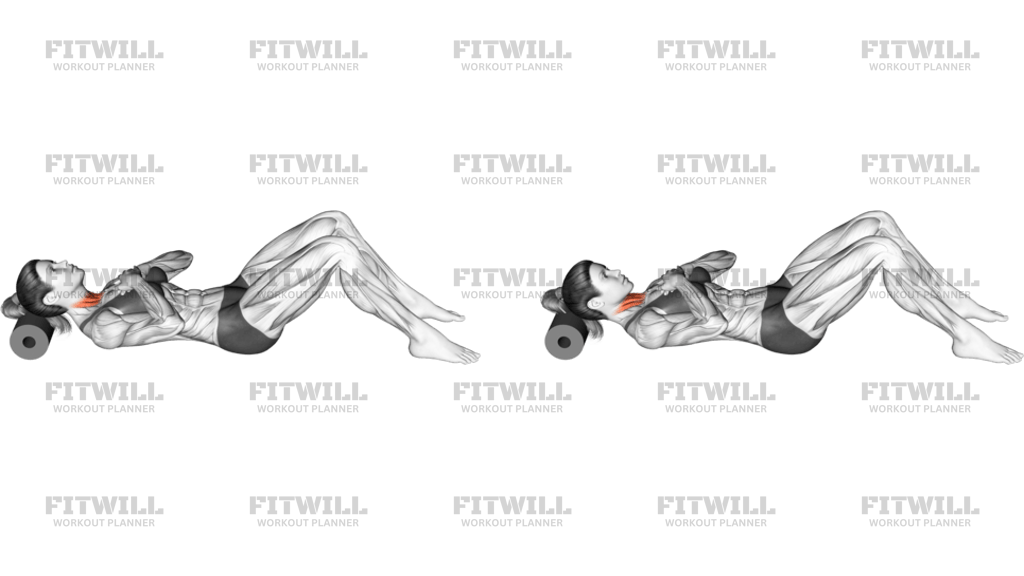
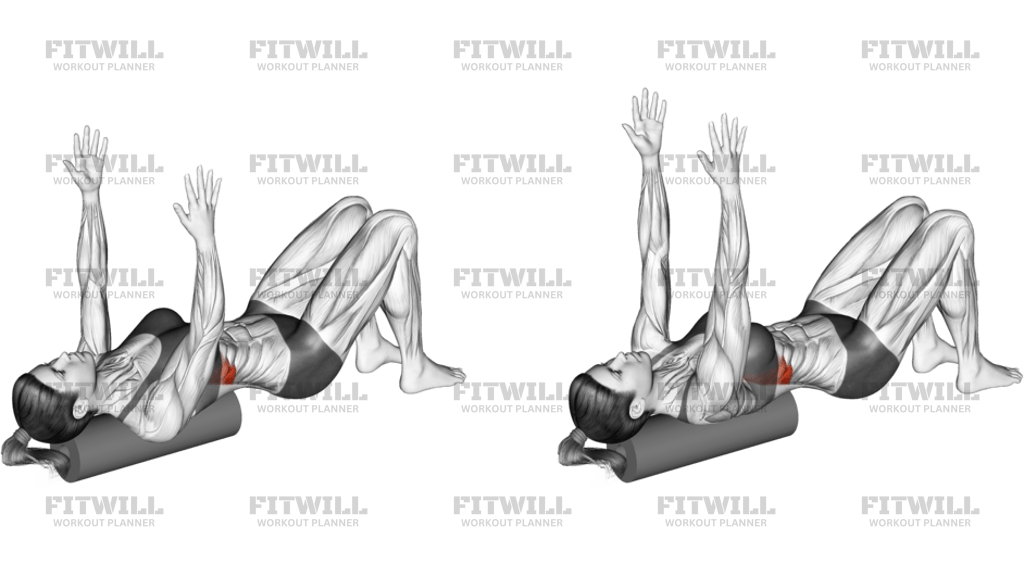
Roll Shoulder Blade Reach Lying On Floor is a floor-based scapular control drill done with a foam roller placed under the upper back. The setup puts the torso in a supported, slightly open position so you can focus on how the shoulder blades move around the rib cage without turning the rep into a press or a crunch. With the knees bent, feet planted, and arms reaching straight up, the exercise emphasizes clean shoulder motion, quiet ribs, and a relaxed neck.
The main value of the drill is in the quality of the shoulder reach. The foam roller changes the feedback you get from the floor and makes it easier to notice rib flare, shrugging, and uneven reach on one side. That makes the movement useful for warm-ups, shoulder preparation, and any session where you want better overhead mechanics, smoother scapular upward rotation, or more controlled reach in the upper body. It is not meant to be a heavy strength exercise; it is a precision movement that rewards small, deliberate reps.
To perform it well, keep the chin gently tucked, ribs stacked over the pelvis, and elbows long while the hands reach toward the ceiling. The shoulder blades should glide forward around the rib cage instead of pinching hard together or creeping up toward the ears. The range is usually modest, and the best reps look smooth from start to finish. If the low back arches, the neck tightens, or the shoulders shrug, the setup is too aggressive and the reach is too big.
This drill fits well before pressing, overhead work, pull sessions, or rehabilitation-style accessory work where control matters more than load. It can also be used in mobility circuits when the goal is to restore shoulder comfort and coordination without fatigue. The safest version is the one that lets you keep the foam roller stable, the breathing even, and the torso quiet while the shoulder blades do the work.
[ Workout Log & Planner ]
Put your next workout in Fitwill
Keep your plan and training log ready when you are.


Instructions
- Place a foam roller lengthwise on the floor and lie back so it supports your upper back, with your knees bent and feet flat.
- Let your head rest lightly, keep your chin slightly tucked, and extend both arms straight up over your chest.
- Set your ribs down and gently brace your midsection so your low back stays quiet.
- Keep your elbows straight and your palms facing each other as you start the reach.
- Reach both hands toward the ceiling by letting the shoulder blades glide forward around the rib cage.
- Pause for a moment at the top without shrugging your shoulders toward your ears.
- Return the shoulder blades to the roller under control and keep the arms long on the way down.
- Repeat for the planned reps, breathing out on the reach and in on the return.
Tips & Tricks
- Keep the roller under the upper back, not under the neck or low back.
- If your ribs pop up, bring your feet a little closer and shorten the reach.
- Think about reaching long through the fingertips instead of pressing hard into the ceiling.
- Let the shoulder blades move around the rib cage; do not pinch them together at the top.
- Keep the neck soft and the jaw relaxed so the upper traps do not take over.
- Use a small, smooth range of motion rather than chasing a big shoulder lift.
- If one side feels tighter, match the smaller side and keep both arms moving evenly.
- Stop the set if you feel pinching in the front of the shoulder or if the roller becomes unstable.
Frequently Asked Questions
What muscles does Roll Shoulder Blade Reach Lying On Floor work?
It mainly trains scapular control and serratus-style reach, with the upper back and shoulder stabilizers helping keep the movement smooth.
Why use a foam roller for this drill?
The roller supports the upper back and makes it easier to feel rib position, shoulder shrugging, and clean shoulder-blade motion.
Should my lower back stay on the floor the whole time?
Yes, keep the ribs down and avoid a big low-back arch. A small natural gap is fine, but the torso should stay controlled.
Do I move one arm at a time or both together?
This version is typically done with both arms reaching together. A single-arm version is possible, but it adds more instability.
Where should I feel the exercise most?
You should feel controlled work around the shoulder blades and upper back, with only a mild stretch through the chest if any.
What should I do if my neck starts working too hard?
Shorten the reach, soften the chin tuck, and keep the shoulders away from the ears. If needed, lower the arms only partway.
Is this exercise good before pressing or overhead work?
Yes. It is a good warm-up drill when you want better shoulder-blade control and cleaner overhead mechanics.
Can beginners do Roll Shoulder Blade Reach Lying On Floor?
Yes. Beginners usually do best with a small range of motion, slow tempo, and a very steady setup.