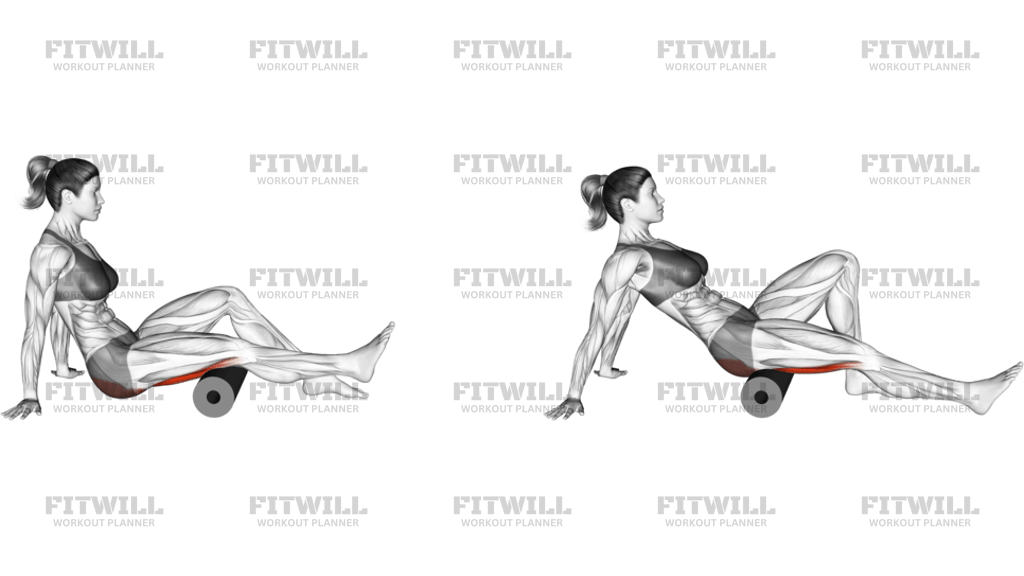
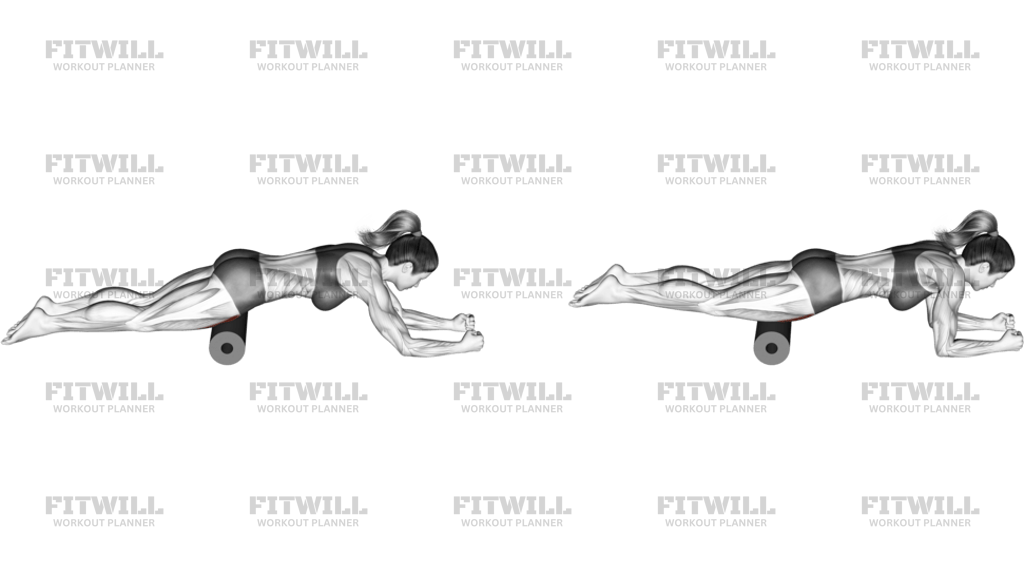
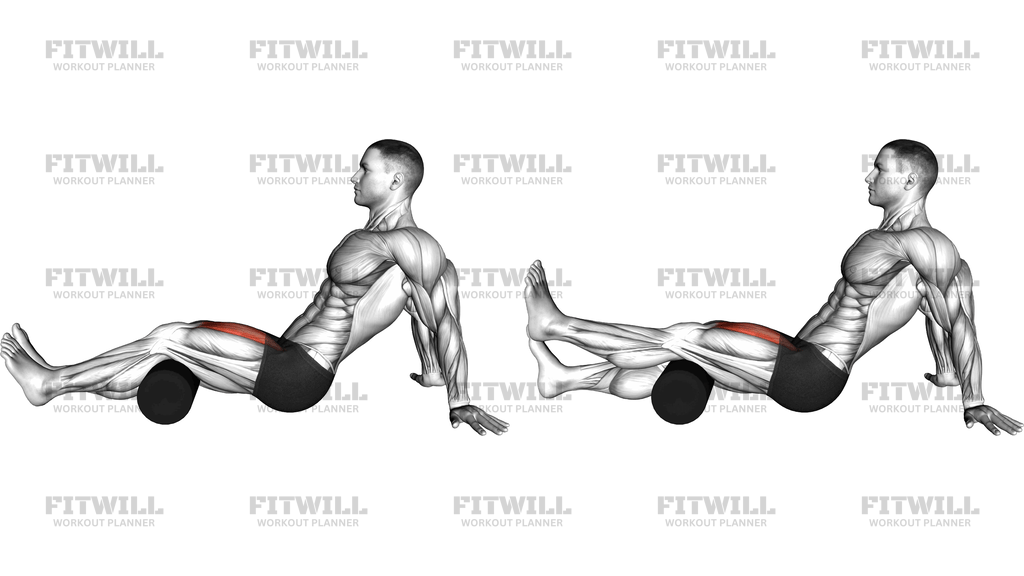
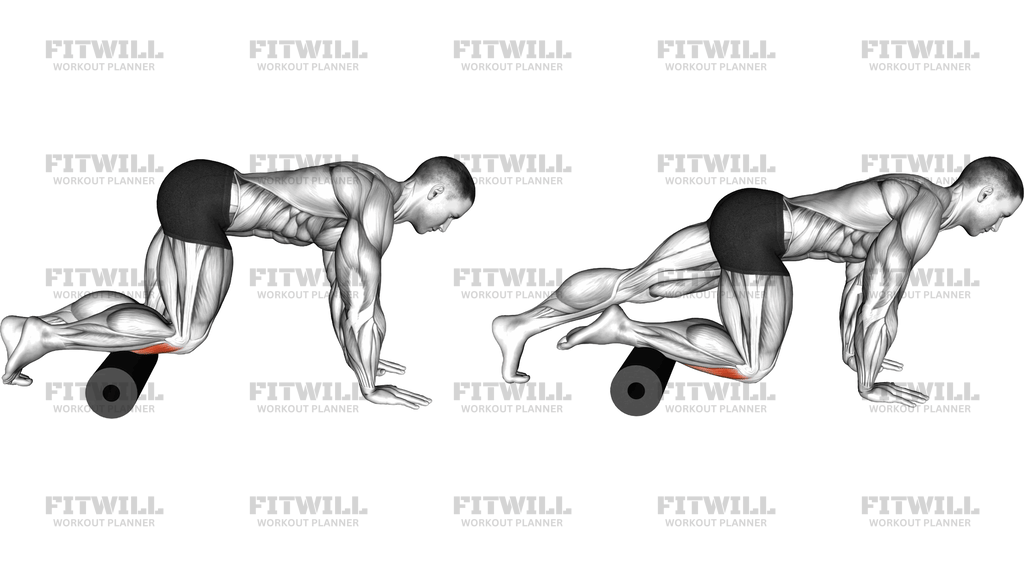
Roll Glute Twist Lying On Floor
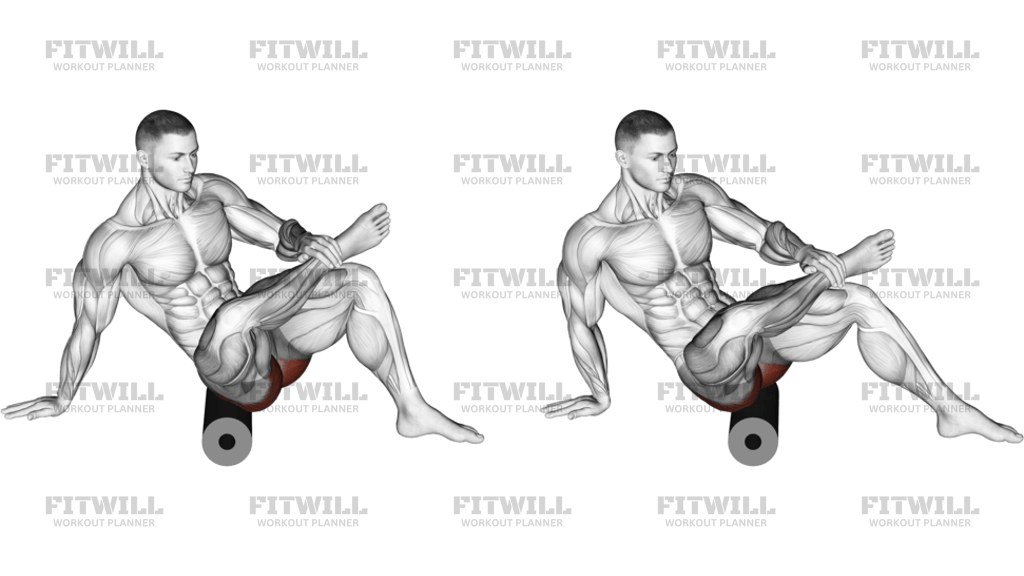
Roll Glute Twist Lying On Floor is a floor-based self-release and mobility drill for the glutes and outer hip. With a foam roller under one glute, you use a gentle figure-four twist to create pressure on the working side while the opposite shoulder and upper back stay heavy on the floor. The exercise is not about speed or load. It is about finding a pressure point in the glute, settling your weight, and letting the hip open without letting the low back take over.
The foam roller changes the feel of the stretch by narrowing the contact area and making the glute work against your bodyweight. That makes setup matter. If the roller sits too close to the tailbone or low back, the movement turns into a lumbar twist instead of a glute release. When the roller is under the fleshy part of the glute and the crossed-leg position is relaxed, the stretch lands where it should: into the glute max, deep hip rotators, and the outer hip tissues around the pelvis.
This drill fits well after lower-body training, long periods of sitting, or any session where the hips feel blocked and you want a controlled reset. It can also be used between heavier sets when you need to bring down tone in the hips without getting off the floor. Because the movement is small and positional, it works best with patient breathing and micro-adjustments rather than big rocking or aggressive rolling.
The key is to keep the shoulders grounded while the pelvis eases toward the twist. You should feel steady pressure, not pinching or numbness. If the pressure jumps into the sacrum, low back, or sciatic line, shift the roller slightly outward, reduce the twist, or take some bodyweight off the roller. Done well, this is a practical recovery tool that improves comfort, hip rotation, and the ability to sit, squat, hinge, and walk with less stiffness.
[ Workout Log & Planner ]
Put your next workout in Fitwill
Keep your plan and training log ready when you are.


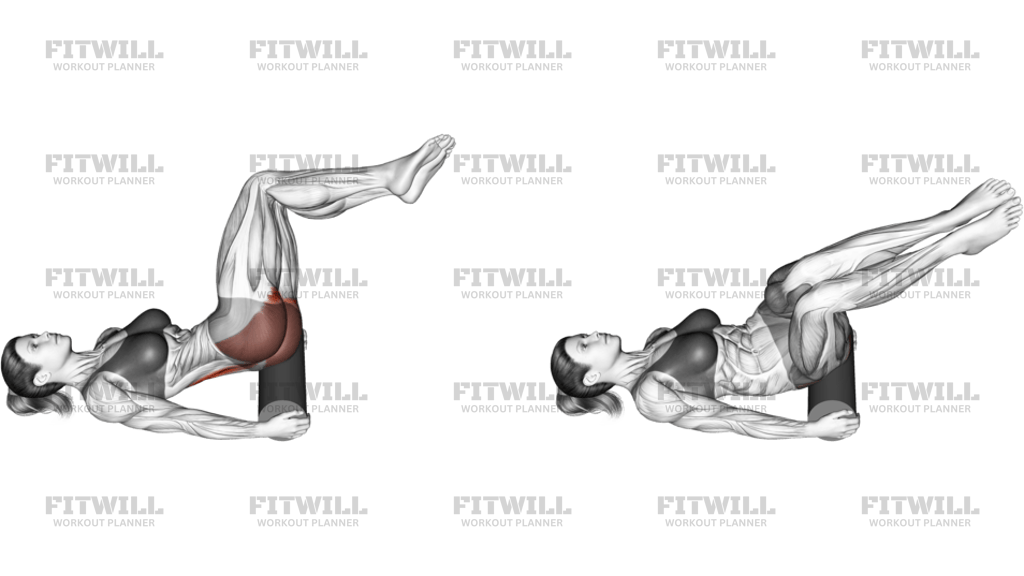
Instructions
- Lie on your back on the floor and place the foam roller under one glute, just outside the tailbone and low back.
- Bend both knees, plant the opposite foot on the floor, and cross the working ankle over the opposite knee to make a figure-four.
- Rest both arms out to the sides and keep the shoulders and upper back heavy against the floor.
- Shift your weight onto the roller until you feel firm pressure in the glute instead of sharp pressure in the spine.
- Slowly let both knees drift toward the side of the crossed leg while the opposite shoulder stays down.
- Pause for two or three slow breaths, letting the glute soften around the roller.
- Make a few small side-to-side shifts to find a tight spot, then settle back into the twist without bouncing.
- Return the knees to center with control, reset your position, and repeat on the other side if needed.
Tips & Tricks
- Keep the roller on the meaty part of the glute; if it slides onto the sacrum, move it slightly outward.
- A small twist is enough. If the lower back starts rotating off the floor, back off the range.
- Use the planted foot to modulate pressure: more foot pressure takes weight off the roller, less pressure increases it.
- Relax the crossed knee so the hip opens gradually instead of forcing the figure-four position.
- Exhale as you let the knees fall to the side; that usually helps the glute release faster than holding your breath.
- If one spot feels especially tight, stay there for a few breaths instead of rolling aggressively across the entire side.
- Avoid numbness, tingling, or sharp pain down the leg; that usually means the roller is too close to the sciatic line or the twist is too deep.
- This works best as a recovery drill, so keep the tempo slow and the pressure moderate rather than trying to grind through it.
Frequently Asked Questions
What does Roll Glute Twist Lying On Floor work most?
It mainly targets the glutes and deep hip rotators on the side that is on the foam roller.
Why is the foam roller under one glute instead of under my low back?
Placing it under the glute keeps the pressure on the hip tissues. If it moves up to the low back or tailbone, the exercise stops working the intended area.
Should my crossed ankle stay on the opposite knee the whole time?
Yes, if the figure-four position feels comfortable. If it pinches, uncross the leg and keep the knees bent while you work a smaller twist.
How long should I stay in each position?
Two to three slow breaths per spot is a good starting point, or about 20 to 30 seconds if you are using it as a recovery hold.
What should I feel during the twist?
You should feel steady pressure and a stretching sensation in the glute and outer hip, not sharp pain in the sacrum or numbness down the leg.
Is this a stretch or a strength exercise?
It is mainly a mobility and recovery drill. The goal is to improve hip comfort and tissue tolerance, not to load the muscle heavily.
Can beginners do this exercise?
Yes. Beginners should keep the twist small, use light bodyweight on the roller, and avoid forcing the knee all the way down.
What is the most common mistake?
People usually twist too far and let the low back do the work. Keep the shoulders grounded and let the motion come from the hip.