Roll Glutes Sitting On Floor
Roll Glutes Sitting On Floor is a seated foam-rolling drill for the glutes and the outer hip. It is usually used to reduce stiffness, improve comfort before lower-body training, or calm down tight tissue after running, squatting, hinging, or long periods of sitting. The goal is not to chase intensity. The goal is to create slow, specific pressure on the glute muscles while keeping the torso relaxed and the breathing smooth.
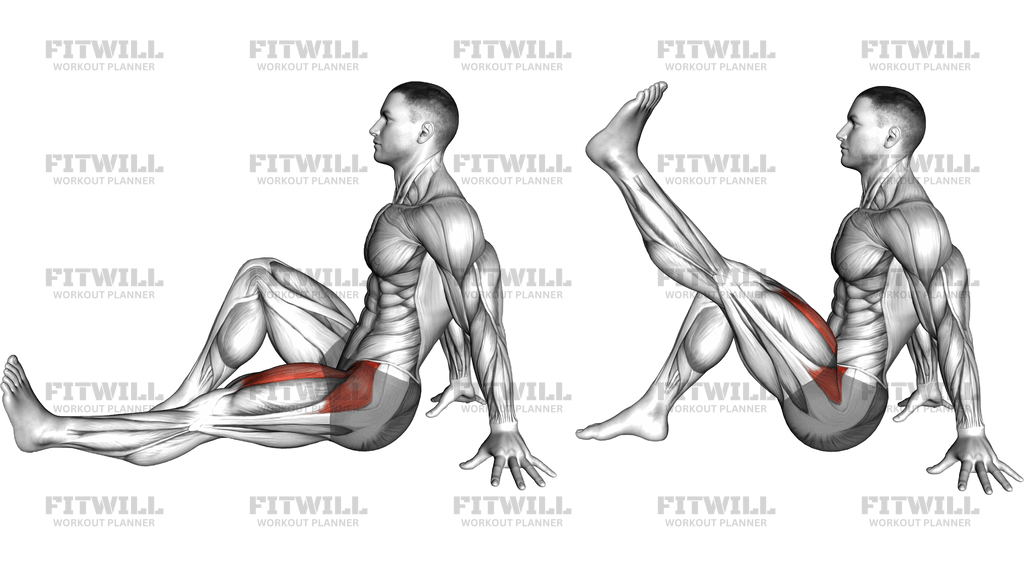
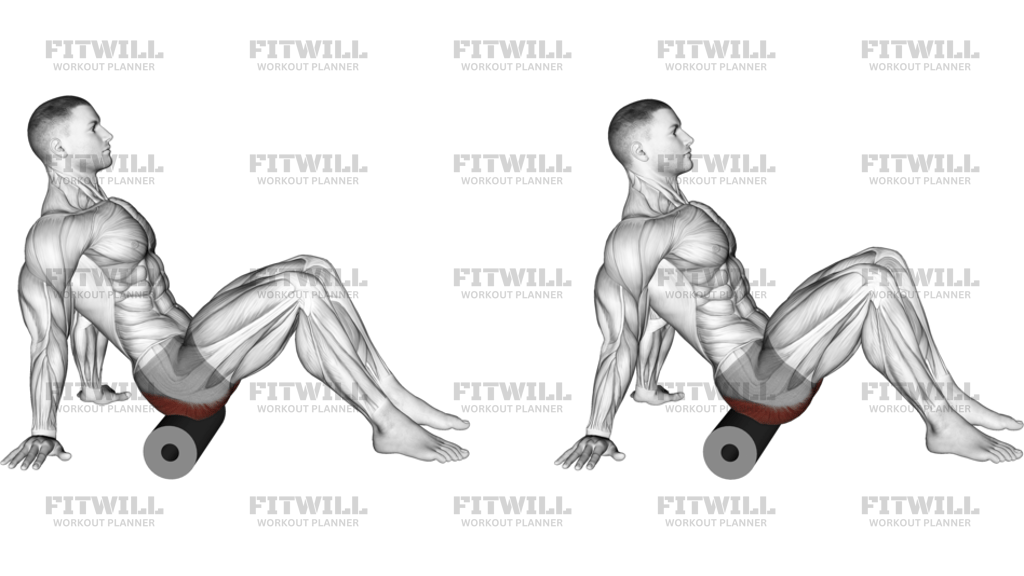
This exercise makes the most sense when the pressure stays on the muscle belly instead of drifting onto the tailbone, low back, or sharp bony points. Sit on the floor with the roller under one glute cheek, knees bent, feet planted, and both hands behind you for support. Use your hands and feet to control how much bodyweight you place on the roller so the pressure feels firm but manageable. That setup lets you work the glutes without tensing everything around them.
The rolling action should be small and deliberate. Shift a few inches at a time so the roller moves along the upper, middle, and lower parts of the glute, then angle the hips slightly to catch the outer side of the hip. When you find a tender spot, pause and breathe out slowly until the pressure eases, then continue with the next short pass. Clean reps here mean steady pressure, not fast back-and-forth motion.
Roll Glutes Sitting On Floor is useful in warm-ups, recovery sessions, and mobility circuits, especially when the hips feel locked up before training. It can also help people who sit a lot and feel the glutes tighten across the day. If the pressure becomes sharp, numb, or irritating, back off immediately and shift some weight into the hands and feet so the roller feels more like massage than punishment.
For beginners, the best version is the one with the lightest pressure that still lets you feel the muscle work. Work one side at a time, then switch, so you can control the placement more precisely and avoid sliding onto the low back. Keep the neck long, the ribs down, and the movement slow enough that you can breathe through the tender areas instead of bracing against them.
[ Workout Log & Planner ]
Put your next workout in Fitwill
Keep your plan and training log ready when you are.


Instructions
- Sit on the floor with a foam roller under one glute cheek, knees bent, feet flat, and both hands planted behind you for support.
- Lift your hips just enough to place firm pressure on the roller without collapsing into the low back or tailbone.
- Set your chest tall, keep your neck long, and use your hands and feet to control how much bodyweight stays on the roller.
- Roll a few inches forward and back so the roller travels from the upper glute near the belt line toward the lower glute near the sit bone.
- Angle your hips slightly toward the outer side of the glute to catch the side of the hip and the upper outer glute.
- When you find a tender spot, stop on it for a few breaths instead of bouncing across it.
- Exhale slowly as you sink into the pressure, then ease off and move to the next spot.
- Keep the rolling slow and controlled until you finish the side, then lower your hips and switch to the other glute.
Tips & Tricks
- Keep most of the pressure on the muscle belly, not directly on the tailbone or the hard point of the sit bone.
- If the pressure feels too sharp, press more firmly into your hands and feet to unload the roller.
- Short rolls work better than long slides; moving one to two inches at a time makes the glute easier to target.
- Turn the pelvis slightly outward to reach the upper outer glute instead of staying locked in one straight-ahead line.
- A slow exhale usually helps the glute relax into the roller more than holding your breath.
- Do not chase numbness or tingling; that is too much pressure for this movement.
- If your lower back starts taking over, lower your hips and shift the roller back onto the glute.
- Pause longer on a dense spot, but keep the pause on muscle tissue rather than on bone.
- This drill works best before training when the pressure is moderate, not maximal.
Frequently Asked Questions
What does Roll Glutes Sitting On Floor work most?
It mainly targets the glutes and the outer hip tissue around them, especially when you roll slowly across the muscle belly.
Should the roller be under one glute or both?
One side at a time is easier to control and lets you place the roller more precisely on the tight area.
How much pressure should I use on the foam roller?
Use enough pressure to feel a clear release, but not so much that you have to tense your whole body or hold your breath.
Where should I not roll during Roll Glutes Sitting On Floor?
Avoid the tailbone, the low back, and sharp bony points. Stay on the soft glute tissue and the outer hip.
Can beginners do this exercise?
Yes. Beginners usually do best with less bodyweight on the roller and smaller, slower passes.
Is Roll Glutes Sitting On Floor a stretch or a massage?
It is closer to self-massage or soft-tissue work than a stretch, because the main focus is pressure and release on the glute muscles.
When should I use Roll Glutes Sitting On Floor?
It fits well in a warm-up or recovery block, especially before squats, deadlifts, lunges, or running.
What should I do if the roller hurts too much?
Shift more weight into your hands and feet, reduce the range, or move the roller slightly away from the tender spot until the pressure feels manageable.
How long should I stay on one side?
A short, focused pass of about 30 to 60 seconds per side is usually enough before switching.