Roll Hamstrings Sitting On Floor
Roll Hamstrings Sitting On Floor is a seated foam rolling exercise for the back of the thigh. It uses your body weight and a foam roll to apply controlled pressure along the hamstrings, making it useful for reducing stiffness, improving tolerance to pressure, and preparing the legs for squats, hinges, running, or other lower-body work.
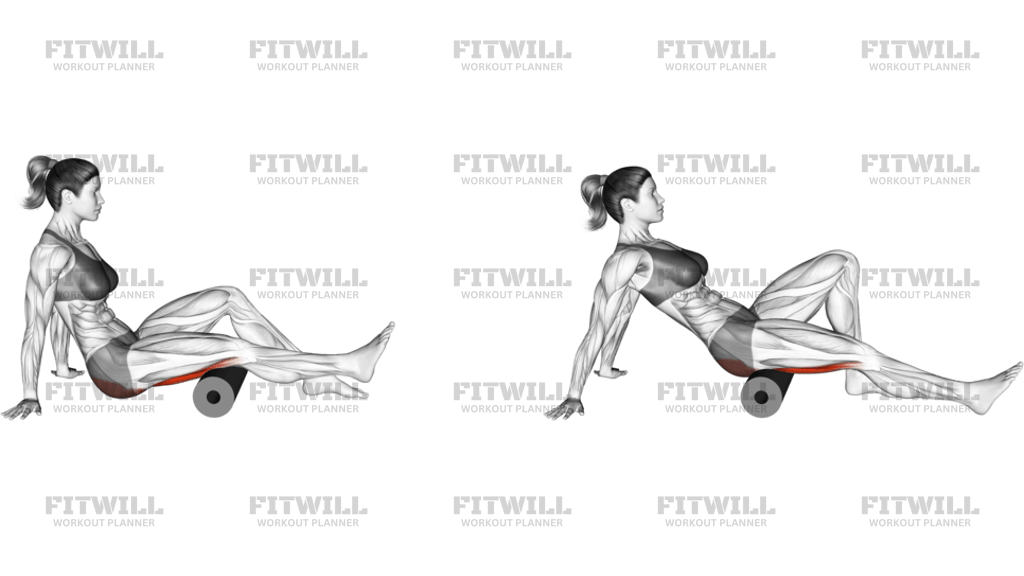
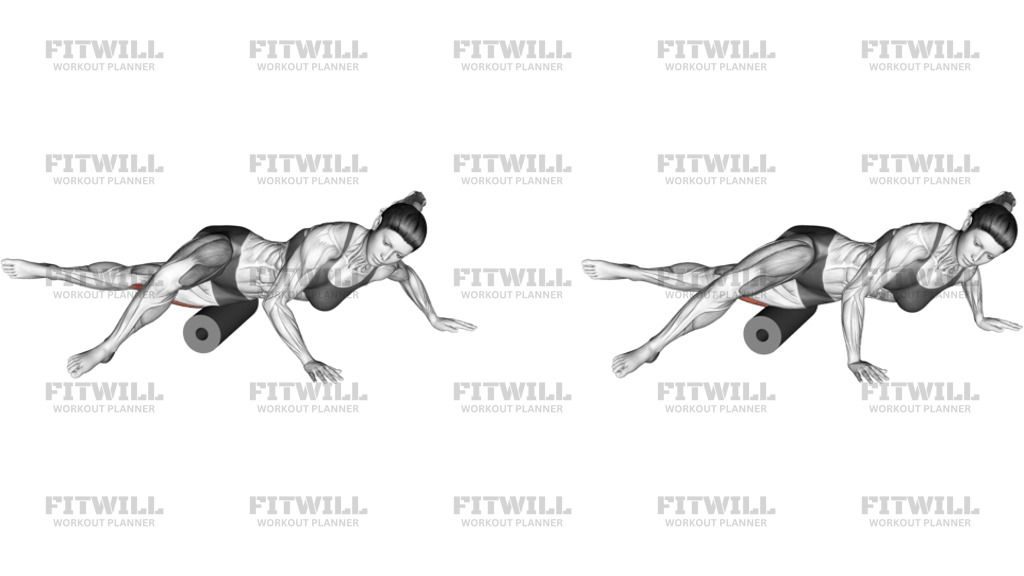
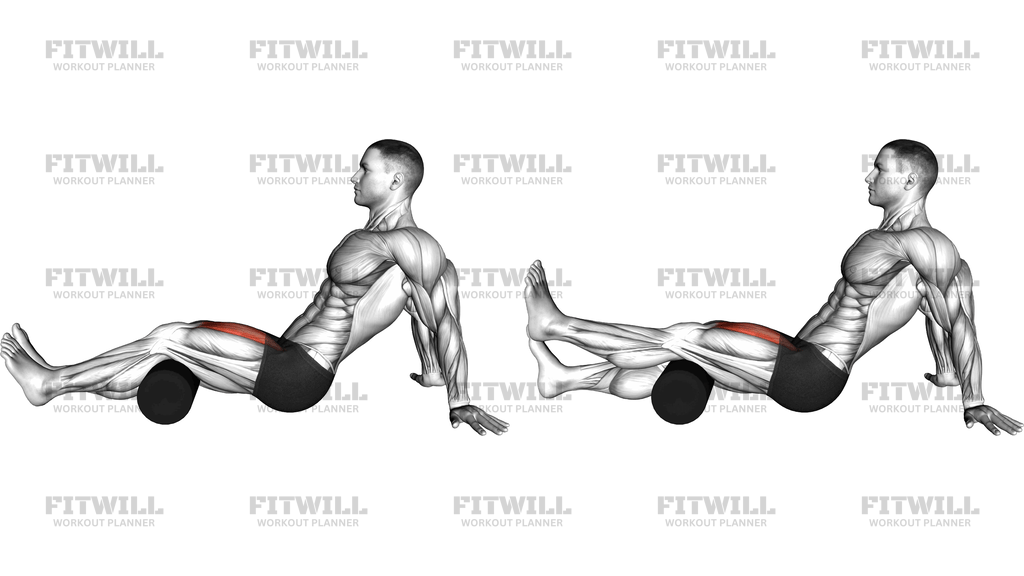
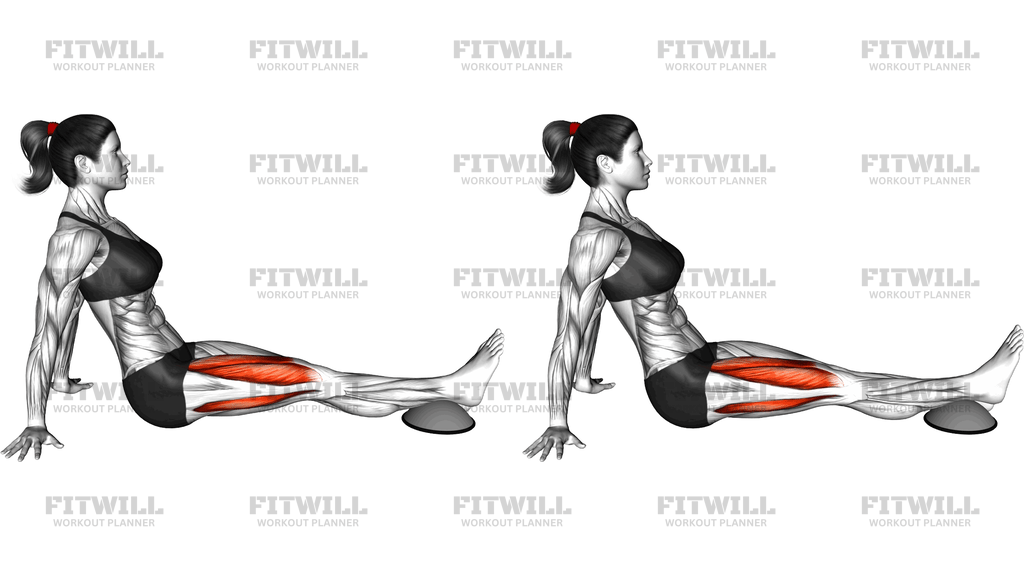
The setup matters because the roller should sit under the meaty part of the hamstring, not on the sit bone at the top of the glute or directly behind the knee. In the image, the hands are placed behind the torso to support the upper body while one leg stays on the floor for balance and the other leg is extended. That position lets you shift pressure without collapsing your posture or sliding too fast over the tissue.
During each pass, move slowly from just below the glute crease toward the area a few inches above the knee, then roll back again with the same control. Small changes in how much weight you place through your hands, and small changes in hip angle or foot position, will change the pressure you feel. A brief pause on a tight spot is fine, but the goal is steady, tolerable pressure rather than aggressive digging.
This exercise is most useful as part of a warm-up, recovery session, or mobility block when the hamstrings feel tight or heavy. It can also help you notice side-to-side differences in tissue sensitivity. Keep breathing relaxed, keep your neck and shoulders from tensing up, and stop short of sharp pain, numbness, or a sensation of pinching behind the knee.
Because this is a soft-tissue self-release drill rather than a strength exercise, the best reps are the ones that feel smooth, repeatable, and controlled. Choose a pressure level you can manage for the full set, then use slower rolls and brief holds to clean up the problem areas without turning the movement into a rush.
Fitwill
Log Workouts, Track Progress & Build Strength.
Achieve more with Fitwill: explore over 9600 exercises with images and videos, access built-in and custom workouts, perfect for both gym and home sessions, and see real results.
Start your journey. Download today!




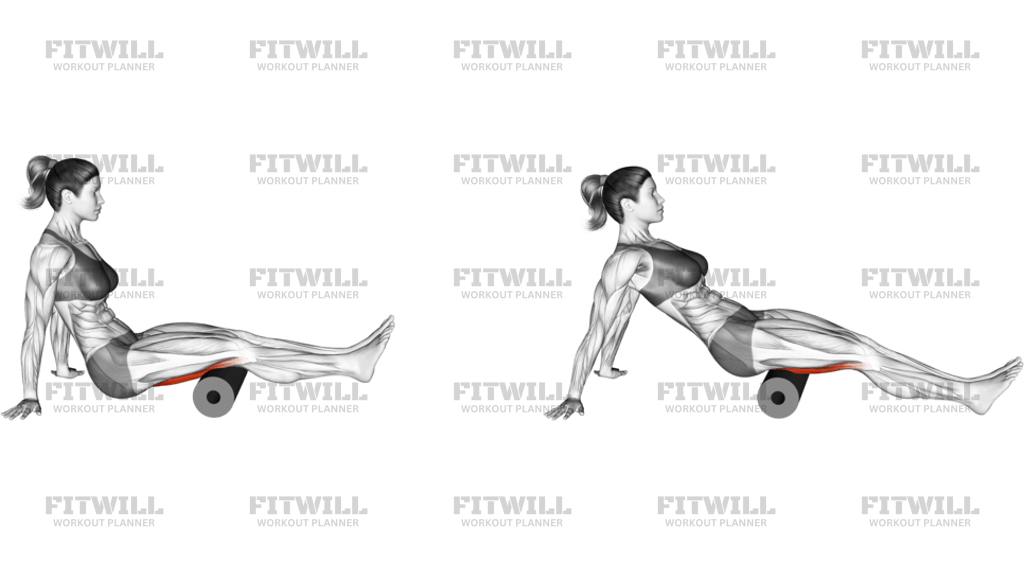
Instructions
- Sit on the floor with a foam roller under one hamstring and your hands planted behind you for support.
- Keep the working leg long and relaxed, and place the other foot on the floor or slightly out to the side for balance.
- Lean back through your arms enough to lift some weight off the roller without losing control of your torso.
- Position the roller between the sit bone and the back of the knee, not directly on either joint.
- Roll a few inches toward the knee and then back toward the glute crease using slow, deliberate arm pressure.
- Pause on a tender spot for a moment, then make small shifts in hip angle or foot position to find a tolerable line of pressure.
- Keep your shoulders down, your neck long, and your chest open instead of hunching over the leg.
- Breathe steadily throughout the set and keep the pressure smooth rather than jerky.
- Switch to the other hamstring after the planned time or number of passes.
Tips & Tricks
- The best pressure comes from a slight lean into the hands, not from aggressively driving your body weight onto the roller.
- Avoid rolling directly over the back of the knee; stay on the muscle belly where the hamstring can actually relax.
- If the top of the hamstring near the sit bone feels sharp, shift a little lower before continuing.
- Use the opposite leg as a kickstand to help you control how much load the roller takes.
- Smaller rolls usually work better than big sweeping passes, especially when the tissue is sensitive.
- If both hamstrings feel very different, give the tighter side fewer but slower passes instead of trying to match speed.
- Keep the torso slightly tall through the chest so you do not collapse and dump pressure into the lower back.
- Stop short of numbness, tingling, or sharp pain; this should feel like firm pressure, not a nerve flare-up.
Frequently Asked Questions
What is Roll Hamstrings Sitting On Floor meant to do?
It is a foam rolling drill for the hamstrings that helps apply controlled pressure to the back of the thigh.
Where should the foam roller sit during this exercise?
Place it under the hamstring between the sit bone and the back of the knee, not on either joint.
Should I keep one leg on the floor while I roll?
Yes, the non-working leg usually helps you balance and control how much body weight goes into the roller.
How hard should the pressure feel?
It should feel firm and tolerable, with enough pressure to notice tight areas but not so much that you brace or tense up.
Can I hold on one sore spot for a while?
A short pause is fine, but keep it brief and avoid grinding aggressively into the tissue.
What is the most common mistake with seated hamstring rolling?
People often roll too fast or place the roller too close to the knee or sit bone instead of on the muscle belly.
Is this exercise good before squats or running?
Yes, it can work well in a warm-up or mobility block when the hamstrings feel stiff or heavy.
What should I do if the pressure feels sharp or numb?
Reduce the load, move the roller slightly, or stop the set if the sensation feels sharp, tingling, or irritated.