Roll Hamstrings And Glute Sitting On Floor
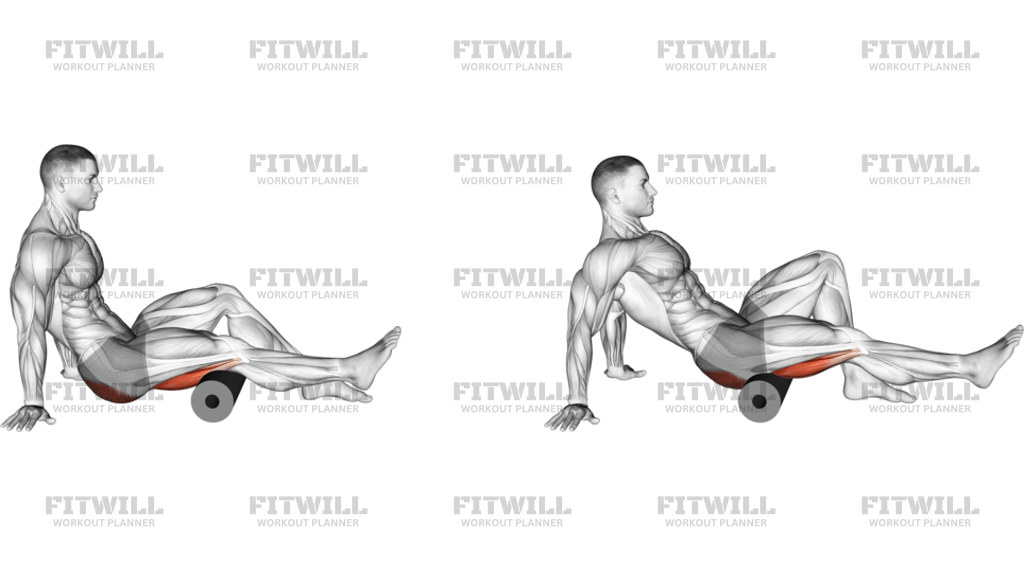
Roll Hamstrings And Glute Sitting On Floor is a seated floor rolling drill used to release tight tissue around the hamstrings and glutes. The setup shown in the image places one hip and upper hamstring on a roller while the hands stay behind you for support, so you can shift pressure without losing balance. It is less about lifting load and more about finding steady pressure, smooth travel, and a position you can hold without shrugging, twisting, or collapsing into the shoulder line.
The movement is useful when the backs of the thighs feel stiff before training, after long sitting, or after lower-body sessions that leave the glutes and hamstrings feeling crowded and dense. Because the roller sits under the lower glute and proximal hamstring, small changes in body weight change the amount of pressure quite a lot. That makes the exercise effective, but it also means the best result comes from controlled shifts rather than aggressive rocking or fast repetitions.
To do Roll Hamstrings And Glute Sitting On Floor well, sit tall enough to support your weight through your hands and keep one leg extended while the other leg can bend to help steer pressure. Roll slowly from the crease where the hamstring meets the seat down toward the upper hamstring, then back toward the lower glute if that tissue tolerates it. The motion should feel like you are searching for a tight spot, pausing on it, and then easing away slightly instead of grinding directly through pain.
This drill works well in warm-ups, mobility sessions, recovery days, or at the start of a lower-body workout when you need the hips to move more freely. It can also help lifters, runners, and anyone who sits for long periods maintain better comfort through the back of the thigh and outer hip. Keep the pressure moderate, stay off the lower back, and avoid rolling directly on the sit bone or behind the knee, where the tissue is less suited to direct compression.
Roll Hamstrings And Glute Sitting On Floor should leave the area feeling looser, not irritated or bruised. A good set uses enough pressure to create a clear sensation in the hamstring or glute, but not so much that you tense your neck, hold your breath, or lose control of the supporting shoulder. If the roller feels too sharp, adjust by supporting more of your body weight with your hands, shortening the travel, or turning the pelvis slightly until the contact is manageable.
[ Workout Log & Planner ]
Put your next workout in Fitwill
Keep your plan and training log ready when you are.


Instructions
- Sit on the floor with the roller under one glute and upper hamstring, and place both hands on the floor slightly behind your hips for support.
- Keep one leg extended and the other knee bent so you can shift pressure onto the side you want to work.
- Lift your hips just enough to let the roller settle into the lower glute and top of the hamstring.
- Brace lightly through your trunk and keep your chest open so you do not round your lower back.
- Shift your body a few inches forward and back to roll from the glute-hamstring crease into the upper hamstring.
- Pause on any tight spot for a breath or two, then ease off the pressure before moving again.
- Turn the working foot in or out slightly if you need to bias the outer glute or the inner hamstring edge.
- Keep the motion slow and controlled, using your hands to regulate how much weight sits on the roller.
- Switch sides and repeat the same slow passes on the other glute and hamstring.
- Lower your hips to the floor and reset before leaving the roller.
Tips & Tricks
- If the pressure feels too sharp, keep more weight in your hands instead of forcing the roller deeper.
- Short, one- to two-inch passes usually work better than long scooping rolls on the hamstring attachment.
- Avoid rolling directly behind the knee; stay higher on the upper hamstring where the tissue can tolerate compression better.
- A slightly bent support knee makes it easier to aim pressure into the glute instead of sliding onto the low back.
- If your shoulder tires first, raise your chest a little and reposition your hands farther behind you.
- Stop on a knot only until the tissue softens, then move off it; grinding through pain usually makes the area tense up more.
- Keep your jaw and neck relaxed so the pressure stays in the glute and hamstring instead of spreading tension through the upper body.
- Use a slower exhale while you sit on the tightest spot to help the muscle drop around the roller.
- Roll one side at a time rather than bouncing side to side, which makes the contact less precise.
Frequently Asked Questions
What muscles does Roll Hamstrings And Glute Sitting On Floor target most?
It mainly targets the hamstrings and glutes on the side you place over the roller, with the hands and trunk working only to support your body position.
How do I set up Roll Hamstrings And Glute Sitting On Floor correctly?
Sit with the roller under one upper hamstring or lower glute, put your hands behind you, and keep the opposite leg available to help steer pressure and balance.
Should Roll Hamstrings And Glute Sitting On Floor hurt?
No. You should feel firm pressure and mild discomfort, but not sharp pain, numbness, or a pinching sensation behind the knee or in the low back.
What is the biggest mistake with Roll Hamstrings And Glute Sitting On Floor?
Most people roll too fast and too far. That turns the drill into a rocking motion and makes it harder to find the exact tight spot in the hamstring or glute.
Can beginners do Roll Hamstrings And Glute Sitting On Floor?
Yes, as long as they keep the pressure light, use the hands for support, and work with short passes instead of forcing a deep roll.
How long should I stay on one spot during Roll Hamstrings And Glute Sitting On Floor?
A brief pause of one or two breaths is usually enough. If the spot stays painful or the muscle guards hard, move on and come back later.
What if the roller feels better on my glute than my hamstring?
That is common. Shift your pelvis slightly and bend or straighten the support leg until the roller sits more on the tissue you want to address.
Is Roll Hamstrings And Glute Sitting On Floor a good warm-up exercise?
Yes. It works well before squats, deadlifts, running, or lower-body sessions when the back of the thigh and glutes need to feel less stiff.
Can I use a tennis ball instead of a roller for Roll Hamstrings And Glute Sitting On Floor?
You can, but the contact will be much more intense and less forgiving. A roller is usually easier to control for the hamstring and lower-glute area.