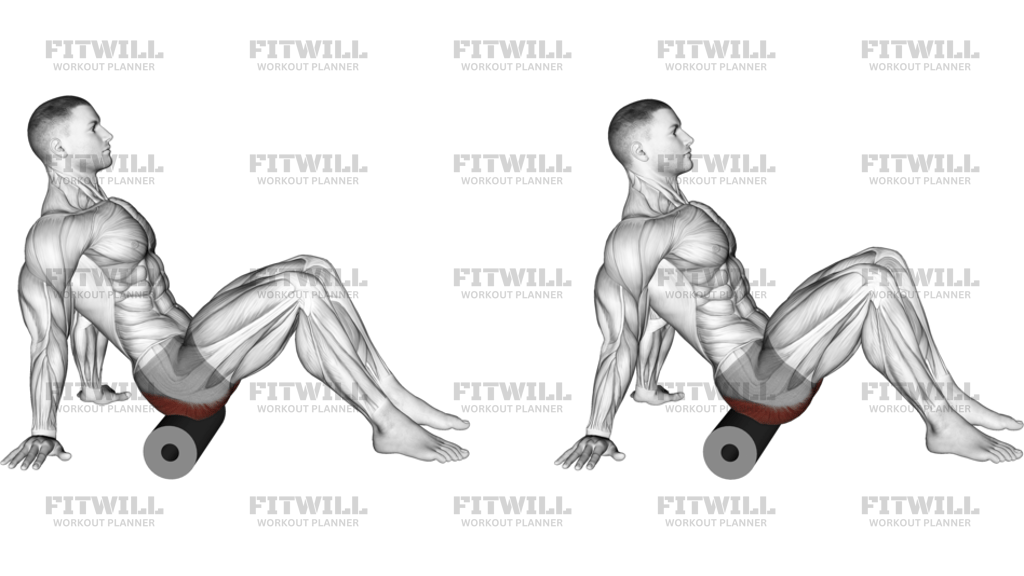
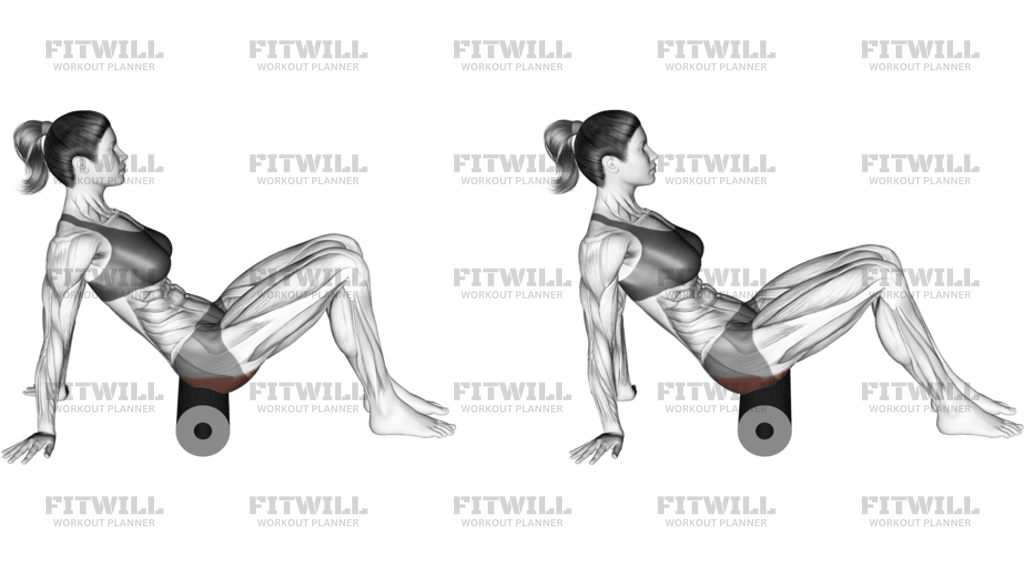
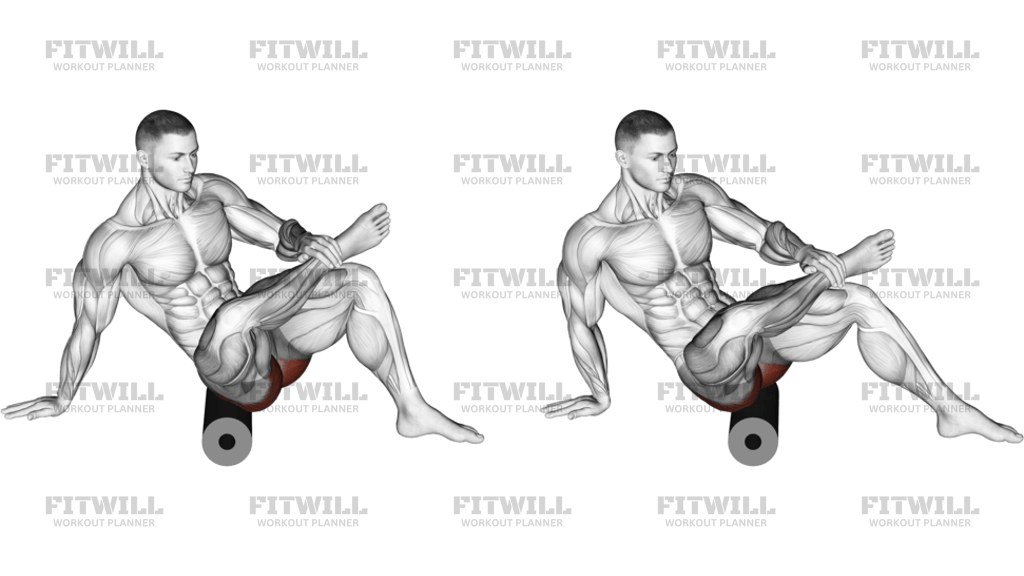
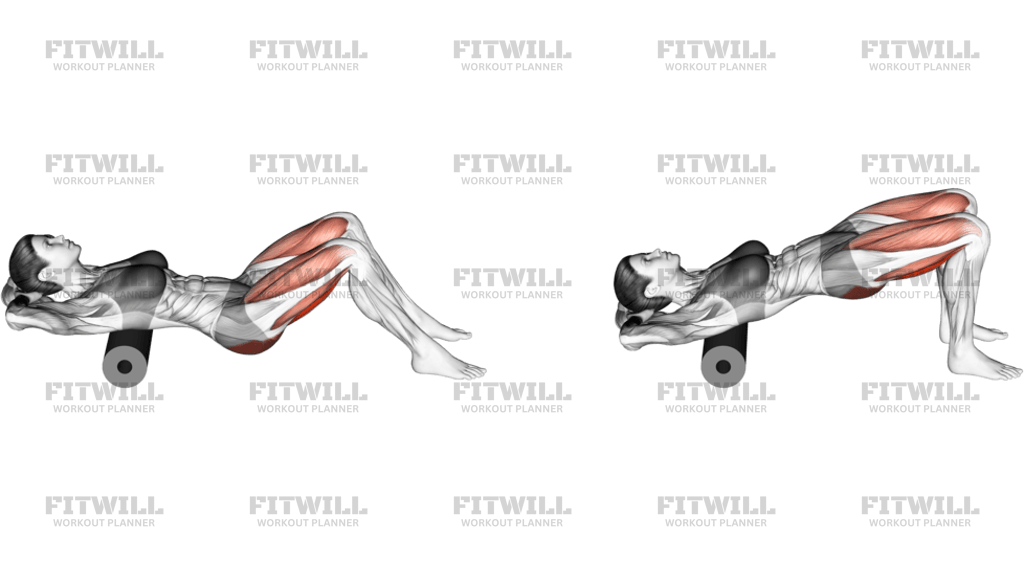
Roll Recumbent Hip External Rotator And Hip Extensor Stretch Crossed Leg
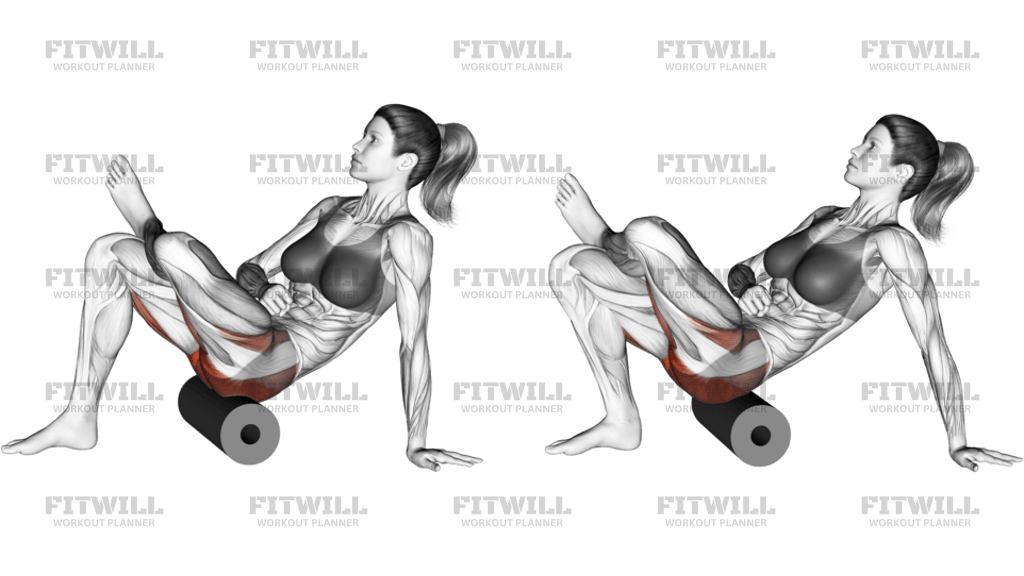
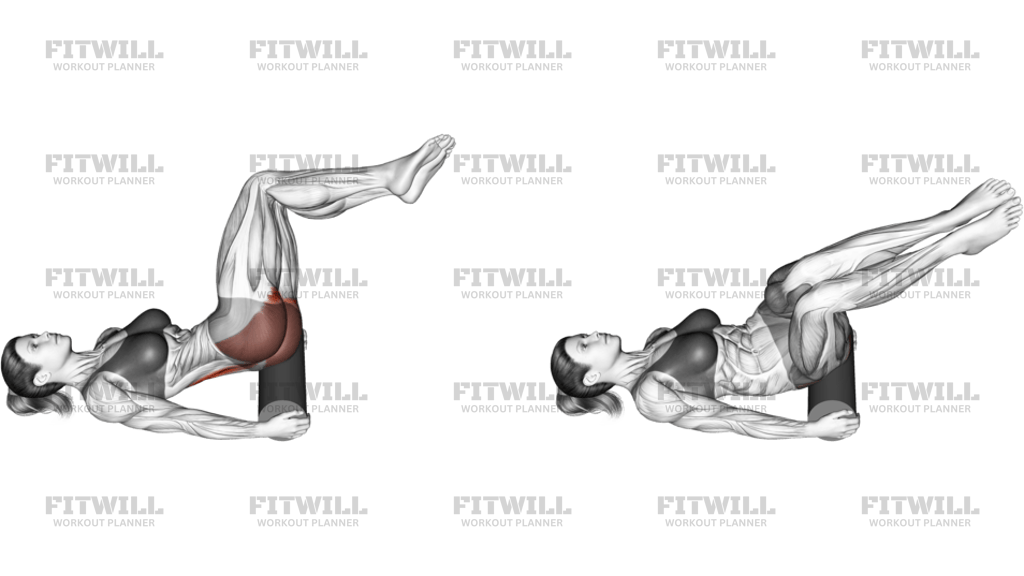
Roll Recumbent Hip External Rotator and Hip Extensor Stretch (Crossed Leg) is a reclined figure-four foam-roller mobility drill for the outer hip and glute on the crossed-leg side. The setup places body weight over the gluteal mass and deep hip rotators so you can release a tight hip without loading the spine or forcing a big, aggressive stretch. It is most useful when the hip feels stiff from sitting, running, squatting, or any session that leaves the glutes and external rotators feeling locked up.
The target area is mainly the glute max and the small external rotators around the back of the hip, with the hamstrings helping when you shift farther toward the sit bone. The crossed-leg position matters because it opens the hip in a figure-four shape and lets the roller press into the tissues you actually want to influence. If the knee is cranked down or the torso is dumped back too far, the pressure quickly shifts away from the hip and into the low back or the knee, which defeats the purpose of the drill.
Set the roller under one glute, cross that ankle over the opposite knee, and support yourself with your hands behind you. From there, lean back just enough to feel clear pressure in the working hip, then make tiny forward-and-back shifts to find the tender spot. The goal is not a long rolling sweep; it is controlled repositioning, brief pauses, and steady breathing until the tissue softens. Keep the chest open, the neck relaxed, and the pelvis steady so the roller stays on the glute rather than wandering up toward the sacrum or down toward the hamstring.
Use this movement as a warm-up, between lower-body lifts, or during recovery work when you want to restore hip motion without fatigue. Keep the pressure tolerable, not sharp, and reduce your bodyweight on the hands if the sensation gets too intense. Beginners can start with very small ranges and short holds. Stop if you feel numbness, tingling, or pain in the knee or low back, because those are signs that the position needs to be adjusted before continuing.
[ Workout Log & Planner ]
Put your next workout in Fitwill
Keep your plan and training log ready when you are.


Instructions
- Sit on the foam roller with one glute centered on the roller and the opposite foot flat on the floor.
- Cross the working-side ankle over the opposite knee to make a figure-four position.
- Place both hands behind you on the floor and lift the chest slightly so you can lean back under control.
- Shift your weight onto the crossed-leg glute until you feel firm pressure in the outer hip and buttock.
- Keep the crossed knee relaxed open instead of forcing it down toward the floor.
- Make tiny forward-and-back or side-to-side shifts to search for the tightest spot in the glute.
- Pause on that spot for a few slow breaths, letting the pressure settle instead of bouncing.
- Reduce pressure with your hands, then uncross the leg and reset before repeating on the other side.
Tips & Tricks
- The roller should sit under the fleshy part of the glute, not directly on the tailbone or lower back.
- A small change in torso angle can move the pressure from the glute max toward the deep rotators or upper hamstring.
- If the stretch feels sharp at the knee, back off the figure-four angle instead of trying to push the knee lower.
- Use your hands to control pressure; more weight on the hands means less compression on the hip.
- Stay with short, deliberate pauses rather than long sweeping rolls across the whole pelvis.
- Exhale slowly when you settle onto a tender spot so the hip can soften without bracing hard.
- Keep the rib cage from flaring up, or the stretch tends to drift into the low back instead of the hip.
- Numbness, tingling, or pinching is a sign to change the setup or stop, not to push through.
Frequently Asked Questions
What does Roll Recumbent Hip External Rotator and Hip Extensor Stretch (Crossed Leg) work most?
It mainly targets the glute max and the deep external rotators of the hip on the crossed-leg side.
Why is the ankle crossed over the opposite knee?
The figure-four position opens the outer hip and lets the foam roller press into the glute and external rotators more directly.
Where should the foam roller sit during this stretch?
Place it under the working glute, slightly off the center of the pelvis, so you feel pressure in the buttock rather than the low back.
Should I stay still or keep rolling?
Use tiny shifts and brief holds. This drill works better as a controlled release than as a long, fast roll.
How hard should the pressure feel?
Strong enough to notice a tight spot, but not so hard that you lose breathing control or feel joint pain.
What if I feel it in my knee instead of my hip?
Ease off the figure-four angle and stop pressing the knee down. The stretch should stay in the outer hip and buttock.
Can beginners use this movement?
Yes. Beginners should use more hand support, smaller shifts, and shorter holds until they learn how much pressure feels useful.
When is this exercise most useful?
It works well after lower-body training, after long sitting, or in a warm-up when the hips feel stiff and externally rotated.